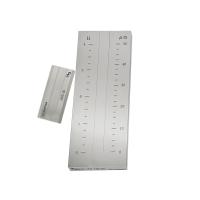
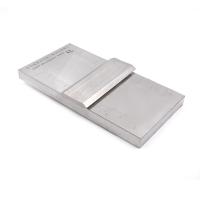
The fineness of the paint indicates the degree of dispersion of the pigment contained in the paint in the paint, and it also detects whether the paint contains impurities that affect the smoothness of the appearance of the paint film. Fineness is also called grinding fineness. If the fineness is small, it can make the coating smooth and uniform, which not only plays a certain role in the gloss, appearance, hiding performance and decoration of the coating, but also is beneficial to prolonging the protection life. The rough coating not only affects the appearance and brightness, but also affects the durability of the coating. For example, the coatings used by outdoor traffic vehicles are often affected by climate, temperature, and humidity changes and attacks. The roughest part of the coating is also the most vulnerable to damage first, so that the entire coating is gradually aged and destroyed. For this reason, the fineness requirements for the antirust primer can be appropriately relaxed, while the fineness requirements for the topcoat should be higher. Determination of the particle thickness of pigments and impurities in the paint is determined according to the national standard GB/T1724-79. The instrument used is the sub-plate Fineness Meter, which is expressed in microns. When in use, drop the sample into the deepest part of the groove, then touch the plate vertically with a scraper, pull the paint across the entire length of the groove at an appropriate speed, and immediately observe the position where the particles in the groove are evenly exposed to the light at an angle of 30° , which is the fineness of the sample. This method is easy to operate, easy to clean, and fast in test speed, and is suitable for on-site production control. However, it should be noted that the consistency of the sample should meet the requirements of the product standard to avoid errors in the test method.

The detection of fineness is to spread the paint into films with different thicknesses, and observe at what thickness the pigment particles appear, which is called the fineness of the paint. The actual measured value is the size of the largest solid particle in the paint, indicating the degree of its coarse particles. It should be pointed out that these coarse particles are not the size of individual pigments or extender pigment particles, but the size of agglomerates that exist after the pigments are ground and dispersed during the production process of the color paint. The particle size of a single pigment or extender pigment is a few tenths of a micron, and once aggregated, it can be as large as tens of microns or even hundreds of microns. The color paint can only disperse the large pigment agglomerates into small pigment agglomerates during the grinding process. . Paint with fine particles and good dispersion, the pigment can be wetted better, and the space between the particles is less filled by the paint. Therefore, the grinding fineness is one of the important internal qualities of anti-corrosion coatings, which has a great influence on the impermeability of the coating film, and the coatings with fine particles and good dispersion degree are not easy to precipitate and agglomerate during storage. And so on, improve the storage stability.

Of course, fineness is not as fine as possible, too fine a requirement will not only prolong the grinding time and occupy the grinding equipment, but also affect the adhesion of the paint film, which needs to be treated differently according to the variety and application. Generally speaking, the fineness required for primers and topcoats is different. At present, the fineness of primers in my country is not required to be greater than 50 μm or 60 μm, and the fineness of decorative topcoats such as alkyd and amino is not greater than 20 μm. There are individual varieties. Reach below 15μm.