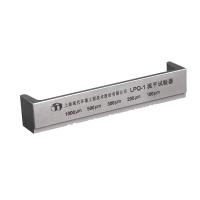
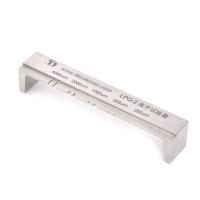
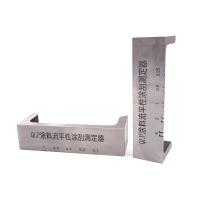
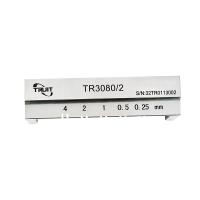
Leveling refers to the ability of the coating film to flow from an irregular and uneven surface to a flat and smooth surface after construction. It is an important item in the construction performance of coatings. The leveling of the coating film is the combined effect of gravity, surface tension and shearing force. Therefore, the premise of leveling is whether the coating can moisten the surface of the workpiece and whether it has good fluidity, which is related to the composition, performance and quality of the coating. construction method etc. In the national standard CB/T1750-79 (88) "Measurement Method for Leveling of Coatings", the method of measuring the leveling property is stipulated, which is divided into two types: brushing method and spraying method. The brushing method disappears and the smooth paint film is formed The time required to evaluate, expressed in minutes. The measuring force method of the brake coating method is to adjust the paint to the construction viscosity, brush it on the tin plate to make it smooth and even, and then use a brush to wipe a brush mark in the middle of the coating film longitudinally, and observe how long the brush mark disappears and the coating film It returns to a smooth surface again, and whether it is qualified is stipulated by the product standard. Generally, the coating film with good leveling property can be leveled within 10 minutes. Spraying method Observe the time when the paint is sprayed on the surface of the test piece to achieve a uniform, smooth, wrinkle-free (no orange peel or goose peel) state.

The leveling process of the wet film is the homogenization process of the surface tension of the wet film surface. This homogenization process can be affected by wet film thickness, solvent evaporation, surface tension difference and viscosity. The surface tension difference is the driving force of leveling, and the rest are the constraints of leveling. In the process of solvent volatilization, the thicker part of the wet film will have a higher solvent content, so the thinner part is prone to convection up and down to homogenize the substances contained in it. Poor, that is, poor surface tension, which causes the surface flow of the wet film. If the film has lost its effective fluidity due to the continuous volatilization of the solvent, and the surface flow has not been able to equalize the surface tension, that is, it is still flowing, then the surface flow and up-and-down convection are "frozen" and become Surface defects, i.e. defects from wet film leveling, can be improved with leveling aids.
Leveling additives are linear resins with limited compatibility (for coating surfaces). Unlike surfactants, it is not a molecule of amphoteric structure, so its properties are also different from surfactants, and it can move to the surface of the wet film without moving to other interfaces, because of its immiscibility, and as it does not The improvement of miscibility increases the degree of enrichment on the surface, thus forming a "shell" on the Kun film, which hinders the volatilization of the solvent, and prolongs the flow time to a certain extent to obtain more leveling possibilities. At the same time, this layer of "shell" is like a floating layer on the water surface, which "stabilizes" the surface area of the wet film, weakens the flow of the surface layer, and thus weakens the "trace" of flow. The choice of limited miscibility linear resin as a leveling aid depends on its incompatibility with the coating and its surface tension, so it involves details such as relative molecular weight and structure. For example, acetate butyrate fibers have different viscosities (relative molecular weights), different contents of acetic acid, butyric acid and hydroxyl groups, and thus have different dissociation parameters (miscibility) and surface tensions to choose from.

This type of leveling aid inhibits the volatilization of the solvent and prolongs the flow time of the flex film, so it also intensifies the tendency of sagging under the vertical plane. In addition, due to the limited compatibility, the paint film is not uniform, which will damage the mechanical properties and gloss to a certain extent, so it needs to be matched carefully and the appropriate minimum dosage should be taken. Silicone oil is also commonly used in this type of leveling aid. Silicone oil is polydimethylsilane with low relative molecular weight. The surface tension can be reduced to 20mN/m, so it has been used for many years. However, it has many disadvantages, mainly because the compatibility is very small, and the dosage is very small (about 0.01%). A slight excess will form droplets in the coating body. It will spread and shrinkage, and because the dosage is too small, it is not easy to disperse evenly, even if it is not excessive, it can also cause shrinkage due to local excess; in addition, it is also enriched on the surface of the film to make the wetting tension of the dry film Reduction is not conducive to the adhesion of recoating. In order to use more accurately and mix more evenly, the usual method is to prepare a dilute solution or add it after absorbing it on the volume pigment. In order to improve the shortcomings of silicone oil and maintain its advantages, it has also been modified, and different groups such as alkyl groups, aryl groups, hydrophilic polysulfides, and lipophilic polyesters have been attached to polydimethylsiloxane. on-chain to adjust its compatibility and other properties. For leveling aids, polyether absorbency is more suitable, and it has greater (adjustable) compatibility than silicone oil, so it has a greater tolerance for dosage range. Polyether has poor thermal stability and is not suitable for baking paint. This type of leveling aid also includes resins such as butylated N-urea-formaldehyde, melamine, internal acrylate and polyvinyl acetal, which have limited mixing properties for specific coatings. Capacitance and low surface tension.

Although the powder coating has no inter-regional surface tension difference caused by solvent volatilization, it is not as uniform as the liquid coating, so the inter-regional surface tension difference on the surface of its molten film is very significant, and the gelation time is also shorter. , There is not sufficient leveling time, so the leveling performance of powder coatings is worse than that of liquid coatings. The mechanism of improving the leveling of powder coatings is the same as that of liquid coatings, using leveling aids to equalize the difference in surface tension in the interval. At present, the main leveling aids are homopolymers and copolymers of acrylates, such as poly(n-butyl acrylate), and copolymers of 2-ethylhexyl acrylate. Silicone is also added. Their molecular structure should match the applied powder coating, such as the introduction of ester groups, linear or branched, hydroxyl or carboxyl groups, etc. In order to mix the leveling aid evenly and conveniently into the powder coating, it is often made into a masterbatch with the resin.