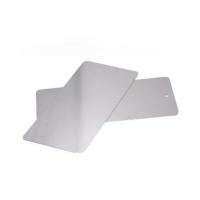
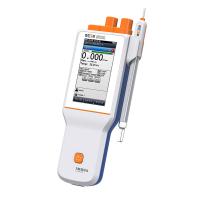
At present, the commonly used water resistance testing methods generally include the following: room temperature water immersion method, boiling water method, and accelerated water resistance method.
(1) flooding method at room temperature
The normal temperature water immersion method is a commonly used method, which is suitable for most varieties such as alkyd and amino paints. The national standard GB/T 1733--93 stipulates that 2/3 of the area of the painted sample should be placed in distilled water at a temperature of 23°C ± 2°C, and taken out after the immersion time specified in the product standard is reached. For phenomena such as loss of light and discoloration, instruments can also be used to measure the rate of loss of light and the degree of decrease in adhesion of the paint film. This method is simple and easy to implement, but the water quality used has a great influence on the water resistance of the paint film.
(2) boiling water method
The boiling water method is suitable for the coating film of objects that are often in contact with containers filled with hot water and hot soup. When measuring, dip 2/3 of the area of the painted sample in boiling distilled water, take it out after reaching the time specified in the product standard, and visually inspect damage phenomena such as blistering, rust, loss of gloss, and discoloration. In this method, the boiling water should always be kept in a boiling state. In order to maintain the same liquid level during the test, it is also necessary to supplement it with boiling water.
(3) Accelerated water resistance method
Although the flooding method at room temperature is simple and easy to implement, it takes a long time to test some coatings, which affects the turnover of products. In order to shorten the cycle and speed up the test process, "GB/T 5209-85 Paints and varnishes - Determination of water resistance - Waterless method" stipulates that the flowing water method at 40°C ± 1°C is used to regulate the water quality. Use a circulation pump or feed dry, oil-free compressed air to keep the water flowing, and the conductivity of the water should not be greater than 2μS/m.
Through the test, it can be found that the white amino paint reaches the same level of damage when compared with the normal temperature water immersion method at 40°C ± 1°C, and the acceleration rate is about 6 to 9 times . The test that used to take 3 days can now be shortened to the same day and the results can be obtained, which greatly improves the test efficiency.