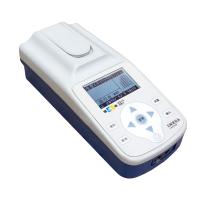
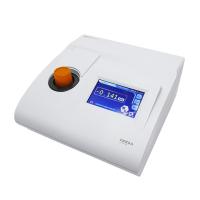
What is Turbidity?
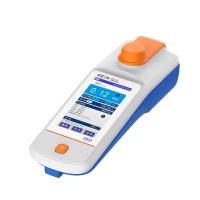
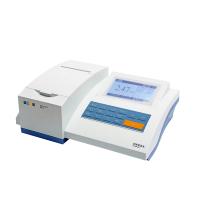
Turbidity is an optical property that refers to the clarity of a liquid. Turbidity in water is caused by individual suspended particles or colloidal matter that scatter or block light transmission: the higher the concentration of suspended particles/colloidal matter, the higher the turbidity. These particles are usually too small to be detected by the human eye. Therefore, turbidity measurements need to be performed using a Turbidity Meter or a turbidity analyzer. A suitable method of controlling a process that requires turbidity monitoring is to use an in-line turbidimeter. The online turbidimeter can continuously measure turbidity and can be used for process control. Everyday examples of cloudy fluids:
milk-water with emulsified protein/oil droplets
Wastewater - Contains Suspended Particles
Wheat beer - contains yeast cells
Why is Turbidity Measurement Important?
In many cases, turbidity sensors are used to assess water quality or the efficiency of filtration processes. Turbidity measurements are important indicators in many industries and applications because they not only affect the yield of an industrial process, but also detect factors that are detrimental to the system.
What Affects Turbidity Measurements?
As mentioned above, turbidity measurements determine the degree to which particles suspended in a liquid medium scatter light. Scatter depends on
Particle Concentration: Higher particle concentrations result in higher scattered light and therefore higher turbidity readings.
Particle shape and size: Particles smaller than 1/10 the wavelength of visible light scatter light symmetrically. Larger particles (typically larger in diameter than the wavelength of visible light) scatter light asymmetrically. Therefore, when measuring turbidity, the scattering angle needs to be considered.
Light wavelength: As mentioned above, the intensity of the scattered light depends on the particle size. Additionally, the presence of color in the liquid can reduce the light measured at the Detector. As a result, consideration needs to be given to using the appropriate wavelength of light for turbidity measurements.
Due to the above three points, turbidity can only be used as a property of the sample if the measurement method is standardized. For example, in many brewery applications, the liquid to be tested is light yellow in color and contains yeast particles. Therefore, to check whether the filter penetrates, and for quality assurance, the amount of forward-scattered light and side-scattered light is measured at angles of 25° and 90° compared to the light source. Red (650 nm) and blue (460 nm) light sources are also specified in the Turbidity and Color Monitoring Guidelines.
What are common interferences in turbidity measurements?
Turbidity measurements can be adversely affected by light-absorbing or fluorescent substances. This interference can be reduced even better by using wavelengths other than visible wavelengths (i.e. 860 nm near infrared).
Air bubbles can interfere with the measurement of turbidity, so it may be important to choose an installation point with the fewest air bubbles.
Window scale is also critical in turbidity measurements. The new technique and ratiometric principle compensate for color changes of the sample, aging of the lamp used as light source and fouling of the optical window.
What is a Turbidity Meter?
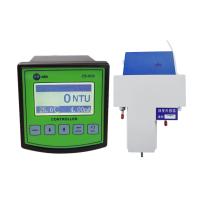
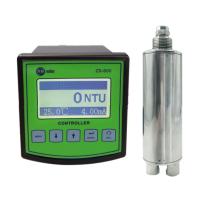
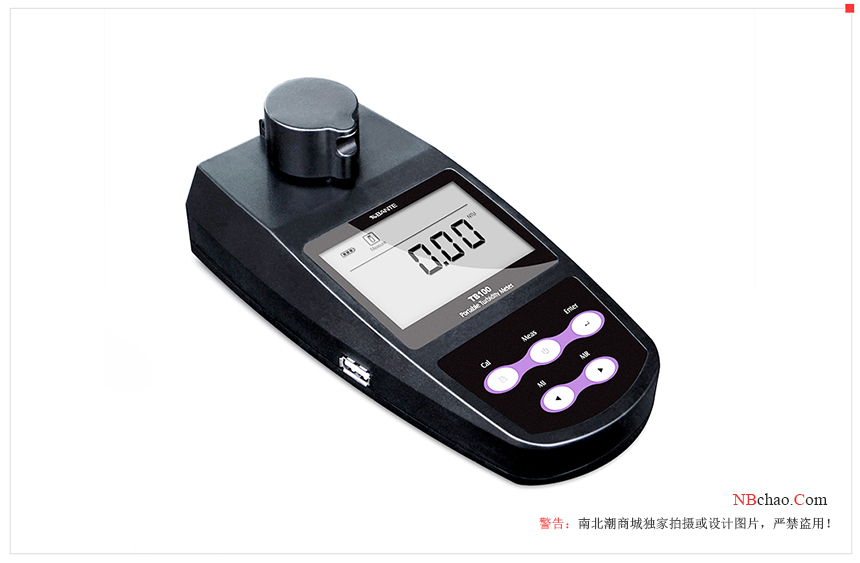
A turbidimeter is a sensor that measures turbidity. Turbidity sensors have two things in common:
Light source – such as light emitting diodes (LEDs)
One or more light Detectors – usually photodiodes
What are the common turbidimeter measurement methods on the market?
There are several types of online turbidity sensors / online turbidimeters, which are optimized for specific measurement ranges and different applications.
Forward Scattered Light/Absorption: Turbidity sensors using this technology are designed for low to medium turbidity applications.
Backscattered light: These sensors are designed for high concentration samples with suspended particles up to 250g/l. Depending on the application, the sensors are available in stainless steel or polysulfone for pharmaceutical and wastewater treatment.
How do you calibrate a nephelometer?
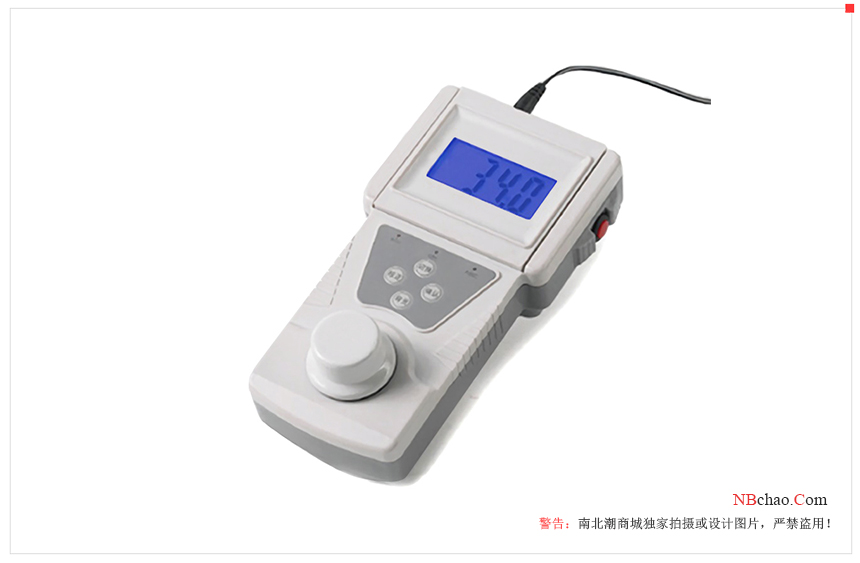
Calibration of a turbidimeter can be accomplished in three different ways using the transmitter. The first method is called manual calibration. This is the fast but lowest level of calibration. The user can change the offset and slope, then calculate and display the measurement.
The second type is called multi-point calibration. This type of calibration achieves the proper linearity for the process being measured. Two-, three-, four- and five-point calibrations can be performed – usually offline with an unmounted sensor.
The third category is process or field calibration. This is an online calibration where the operator can enter the process calibration menu on the transmitter and save the current turbidity reading. The operator then takes a sample of the process fluid to measure against the laboratory instrument to obtain a reference turbidity measurement. Depending on the in-line turbidimeter and transmitter, a multi-point in-situ calibration can be performed.
Turbidity analyzers / online turbidity sensors are used in many industries such as:
Biotechnology
Pharmaceutical Industry
chemical processing
petrochemical
food and drink
brewery
How do you choose the right turbidity sensor?
Turbidity sensors should be selected according to the required measuring range and application. A wide range of versatile turbidity sensors to meet the needs of many different applications, such as:
fermentation
Biomass growth (optical density)
crystallization
phase separation
water in oil
filter breakthrough
activated sludge
Post filtration and yellowish measurement of beer
waste water