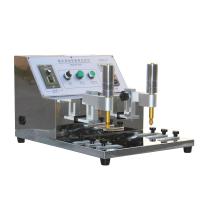
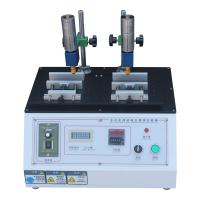
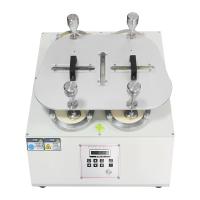
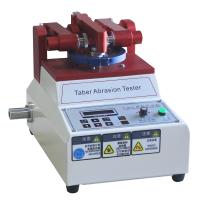
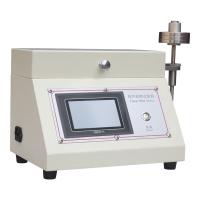
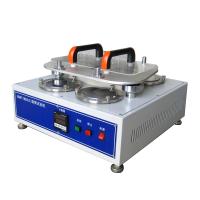
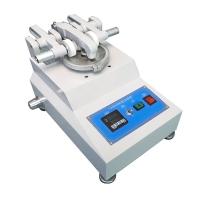
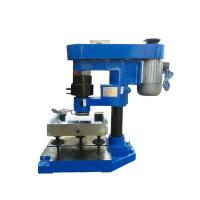
Before choosing rubber, it is necessary to test its performance. The manufacturer knows very well the raw material specifications he is looking for. Before raw materials are recycled in the production cycle, quality checks are performed to ensure the hygiene of the purchased materials. Samples are Testers according to their different characteristics. For example, the grip of a scooter handle needs to be soft and flexible. Therefore, the composition of the rubber varies, so it is the seller's and the manufacturer's responsibility to meet the requirements of the management quality at the first step.
Let's examine some tests to understand the key properties of the rubber.
Tensile Tester – Tensile strength evaluation is very important for testing in almost all industries. However, in the rubber industry, it is performed differently. Depending on the requirements, it is first treated in different climatic conditions. The effect of these climatic conditions on the tensile properties of the samples will be evaluated. According to the test standard, cut dumbbell-shaped samples using a pressure cutting die. Store in a hot Air Oven or deep freezer depending on intended use.
In some cases, it can be tested without any environmental treatment. External force is applied to the sample to check at what point the sample breaks without any slippage. In some cases, verification tests may also be performed.

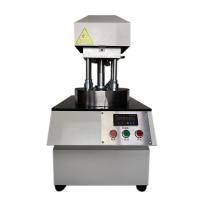
DIN Abrasion Tester – Rubber components are prone to wear due to friction caused by other materials. Damaged rubber O-rings in bathroom fittings are a common example. Due to overuse and external stress, the ring gradually loses some parts, causing it to break. On a DIN abrasion Tester, the sample is clamped into a cylindrical shape. The sample is rubbed on abrasive paper fixed on a cylindrical drum. The sample will move from left to right on the cylinder while maintaining a circular motion. On the other hand, a cylindrical drum with abrasive paper rotates on its axis. The cylinder rotates 48 times as the sample covers its stroke from left to right. This total enables one sample to cover 40 meters in one round of testing. The difference in sample weight before and after testing is the percent wear.
Muffle Furnace – It is very important to determine the percentage of ash in a rubber sample. The processed rubber contains a predetermined amount of ash. Any changes in quantities will result in undefined behavior of the product under actual operating conditions. Samples are completely burned before being incorporated into the production cycle. The carbon content becomes the smoke and the remainder is the ash content, which is calculated to determine the percentage relative to the sample weight. Now, what sounds so simple is actually a complex task. First, it is difficult to reach the temperature at which the rubber sample burns completely. Any human error in calculating the remaining ash weight can lead to false observations. Muffle furnaces are specifically designed to do this job. The temperature reaches 900 °C, 1200 °C and 1400 °C. It comes with a crucible bowl for burning the sample and the ash is weighed together with the bowl.

Durometer – As the name suggests, this tells how hard an elastomer is. Can its hardness be determined by the indentation depth of a standard size and shape impact gauge? Hardness can be obtained by comparing the applied force with the initial and final forces. Rubber hardness is calculated according to Shore A. That's why in Presto we refer to durometers as Shore A devices. It's a simple device that plugs into a sample, and the observations are displayed on the screen in a human-readable format.
Compressibility and Recovery Tester – Rubber compresses easily when force is applied and returns to its position when force is released. Sometimes the rubber flexes a bit due to the force. In this test, the sample is subjected to a certain load for a period of time, such as hours or days. After the test is complete, the deflection is measured. In some applications, it is important to know the behavior when a load is applied. Gaskets for pressure cookers are a very common application where the rubber takes both force and heat. If the gasket is deformed, it will cause steam leakage.