Salt spray chamber is also known as corrosion Test Chamber, this test instrument is widely used in industries where metal plays a key role. Salt spray chambers are used to judge the behavior of samples in a humid environment full of salt. Every metal behaves differently under the same conditions. For example, iron may tend to corrode easily in 2ml of mist, while gold may not be affected in the same mist. Having a test instrument is not enough. More remember: how to use it effectively. Here is a checklist of things to look out for when using a salt spray chamber to check the corrosion resistance of metals.
Make sure to keep the lab temperature below 45℃. Since the salt spray chamber absorbs ambient temperature from the surrounding environment, it can reach a maximum temperature of 45℃. It is always recommended to operate at low temperatures for accurate results. However, the temperature inside the chamber may rise to 49℃
This device uses a NaCl solution to generate a salt spray. Maintain the pH of the solution by keeping the solution container close to the chamber. A pH imbalance may not provide accurate results. Auxiliary chambers can be mounted up to 8 feet adjacent to the chamber.
Be sure to check the fog level for proper effect. About 1-2ml mist is produced per hour. If it decreases, you need to check the working condition of the instrument. However, if more than 2ml of mist is produced, there is no need to worry.
Be sure to orient the specimen at a 20º angle. According to JIS, the sample needs to be placed at a specified angle under the test condition, and if the condition is not met, it will be regarded as an incorrect test condition.
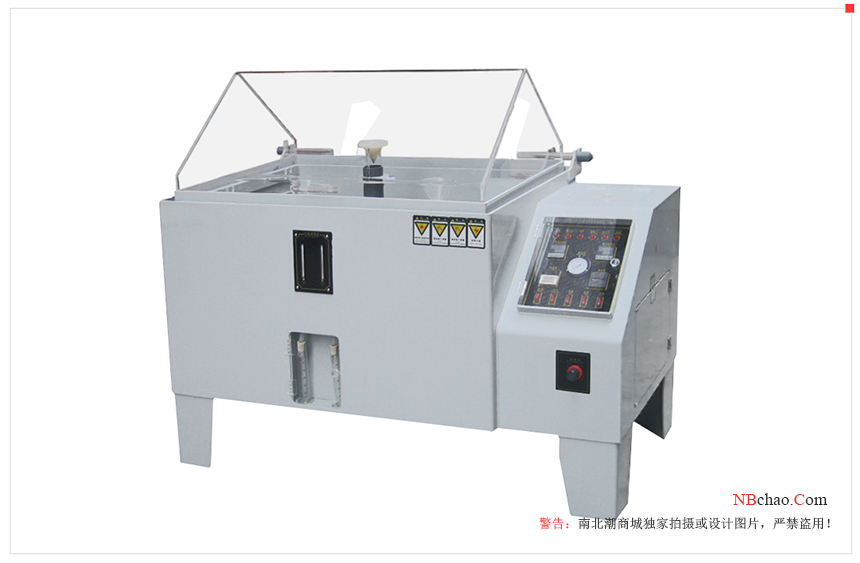
Be sure to keep the automaton in the center of the chamber. In some models, the manufacturer makes the automaton mobile and it can be placed anywhere in the chamber, it is always recommended to keep it in the center. It produces mist, and if it is not placed in the center, the mist distribution in the mist chamber will not be even.
Do not open the chamber after the test has started. Opening the chamber may cause mist in the surrounding atmosphere to dissipate. This means that after closing the lid, the test will start from zero. According to the standard, the test can be "paused" for a period of time to check the status of the internal samples.
Do not place the Test Chamber near areas prone to corrosion.
Do not open the chamber lid immediately. The Presto corrosion Test Chamber has the function of automatic purge air, which can make the mist settle down in the form of mist. When the test is to be 'paused', the air purge can be performed manually, and when the test is complete, the automatic air purge will be activated.
Do not place test samples near walls. There should be some space between the sample chamber wall and the sample to allow air flow. If the sample is close to the wall, it will cause high temperature and the result will be inaccurate.
Do not run the test when the NaCl solution is low as this may cause damage to the device.