The Importance of Aquarium Water Quality
Like all living things, the fish and aquatic plants in your aquarium depend on highly specific environments to survive. These basic conditions vary from species to species and depend on the environment in which they evolved.
Aquarium Water pH
pH measures the acidity or alkalinity of water. A pH of 7 is neutral, the lower the number increases for acidity and the more the number increases for alkalinity.
Many fish species can thrive at a certain pH level, usually in the 6.5 to 7.5 pH range. However, some fish require specific pH conditions outside of this range. It is a good idea to know the desired pH range for the fish you plan to keep in your aquarium. It is also important to ensure that all fish in the same tank have a similar pH range.
The pH of tap water that fills most aquariums is usually between 6.5 and 7.5. However, pH levels can drift over time, so it's important to test your aquarium water regularly. Water treatment may sometimes be required to support healthy aquatic populations.

Why Monitoring Your Aquarium's pH Is Important
In most cases, if left untreated, the pH will drop over time due to the addition of acid to the water. Where do these acids come from? Here are some common sources:
Carbon dioxide dissolved in the air in the tank
tannins leaching from plants into water
Bacteria that digest waste acidify the tank through the nitrogen cycle
Unfortunately, there is no sign of any changes, so frequent monitoring is the only way to ensure the water remains healthy and habitable.
Tips for Testing Aquarium Water pH
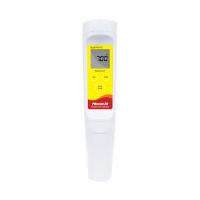
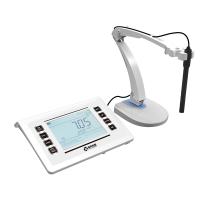
An accurate way to test the pH of your fish tank water is with an electronic pH meter. You may be able to purchase a pH meter from your local pet supply store. Or, if you own an iPhone, iPad, or Android, you can use our smart sensor to turn your smart device into an aquarium pH meter.
Adjust the pH of fish tank water
You can lower the pH of your aquarium with commercially available peat moss or a pH lowering agent. Likewise, you can raise the pH of your aquarium with an alkaline buffer. The hardness (or mineral content) of your water can affect your ability to adjust the pH of your aquarium water, since minerals act as a buffer.
Larger aquariums or commercial aquariums may benefit from using an aquarium monitoring system with an aquarium pH controller. Aquarium pH controllers can be used to regulate the addition of chemicals to aquarium water so that the pH can be controlled automatically.

Other Important Aquarium Water Quality Parameters
dissolved oxygen
Dissolved Oxygen is the form of Oxygen available for Fishing in the Aquarium. Oxygen is the same as fish, and it is needless to say that it is important for fish survival. Undetected low oxygen levels can impair fish development and reproduction, and even lead to death.
ORP
ORP or Oxidation Reduction Potential is another testable parameter that can be used to understand the level of dissolved oxygen. Water contaminated by waste may have lower oxygen content and lower ORP. Measuring ORP may help determine BOD, or biological oxygen demand, which measures the amount of oxygen needed to decompose organic waste produced.
Why Monitor Dissolved Oxygen and ORP Species
Fish that need to breathe consume oxygen, but so do plant life at night and bacteria that help decay organic matter. Although oxygen can be added to tanks through photosynthesis and surface agitation, frequent monitoring is of paramount importance in determining dissolved oxygen levels and ORP, so these adjustments can be made as needed.