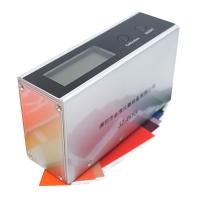
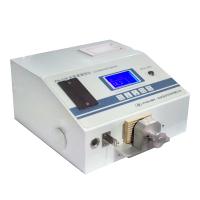
Glossiness is a surface property that makes an object look shiny and shiny, and is related to the specular reflection of the object's surface. For a high-quality, commercial-quality printed image, high gloss is a desired property, and a glossy image has a wider tonal range than a matte surface. When printing on high-gloss surfaces, it can make the black in the image deeper and the color more saturated. Since specular reflection often affects the readability of textbooks, high gloss is not a desired property for textbook paper.
Several types of gloss may be related to the surface properties (smoothness) of the paper industry, and paper and board mainly exhibit two types of gloss. One is specular gloss. It is a special gloss requirement for medium gloss materials such as coated paper and calendered paper. It looks like bright spots inside, and the other is ordinary gloss, which is a gloss type related to low gloss paper. It shines brightly from the angle of view.
Different methods of gloss measurement can be used to measure different aspects of the gloss phenomenon. The paper industry has adopted the 75 specular gloss measurement method, which refers to the angle between the incident angle and the viewing angle in the vertical plane of the inspection surface. Experiments with the choice of this angle showed that this angle had a suitable correlation with visual order. TAPPE T480 uses 75%. TAPP also has a 20° method (7653) for evaluating high-gloss paper and board. Such as coated paper and cast coated paper. Both methods are necessary because of the wide variation in gloss of paper and board. Sometimes the resolution is poor when measuring high gloss materials with 75. Sometimes full-blown illumination with small measurement angles is necessary to obtain Corian specular reflections on low-gloss paper.
The measurement of gloss is not only closely related to the measurement angle, but also related to the light source and receiver aperture. Standard methods determine values and tolerances for all of these factors. Standards also include requirements for uniformity of light and sensitivity of receivers to light of various wavelengths.
Because gloss measurement involves visual effects, the spectral response of the Detector should be adjusted to match the spectral sensitivity of healthy eyes, and the spectral response of the Detector should meet the CIE (Commission Internationale de 'Eelainge) luminous efficiency factor.
The calibration of the measuring ruler of the 75° gloss meter (TAPPI T480) is based on the gloss value of black glass with a refractive index n=1.54 being 100. On this scale, the gloss value of a perfectly flat mirror surface is 384.4. The 20° specular gloss (TAPPI T653) calibration is the same, and the 20° gloss value of a completely flat mirror surface is 2190
In practice, the black hole with a gloss value of 0 is installed at the lower end of the measuring ruler, and the upper end is a black glass plate, and its standard gloss is 98.