1. Definition and content
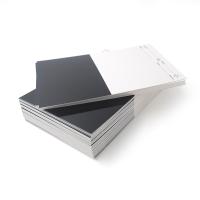
Pigment hiding power is also one of the important optical properties of pigments. When the pigment is dispersed in the medium to form a coating film, the opacity of the coating film is completely produced by the pigment, and the evaluation of the hiding power of the pigment is actually the evaluation of the ability of the pigment to cover the substrate in the coating film. Paint (color paint) hiding power is generally expressed as the substrate area that can be covered by a unit volume or mass of paint (color paint) (that is, the spread rate). In Chinese standards, it is expressed by the minimum amount of paint required to cover a unit area. Correspondingly, the color paint is converted into the amount of pigment. Pigment hiding power is defined as the area of the substrate that can be covered by a unit mass of pigment, and is generally expressed by the minimum amount of pigment required to just cover a unit area of the substrate.
2. Test method
(1) Comparison of white pigment contrast ratio (hiding power) in standard GB/T 5211. 17- 1988.
(2) Principle The sample and the standard sample are made into paint paste in the same way, and the thickness and the same coating film are respectively prepared, and the contrast ratio . Compare the contrast ratio of the sample and the standard to evaluate its covering quality.
(3) Add appropriate amount of No. 200 solvent oil to the alkyd resin for operation as the developer, add appropriate amount of glass beads, grind the sample and standard sample paint slurry in the paint preparation machine, add appropriate amount of drier, and use a Spin Coater. The lacquerware is prepared on the polyester film with substantially the same thickness of the coating film, and the contrast ratio of the two is measured and compared.
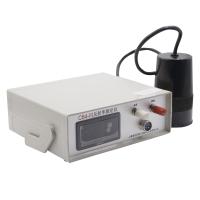
(4) Instrument paint mixer and rotary paint mixer.