Hardness is one of the important properties of the paint film. It represents the mechanical strength of the paint film. The dry paint film must have a certain hardness in order to withstand external physical damage and protect the surface of the coated object. The physical meaning of hardness can be understood as the resistance of the paint film surface to other hard objects acting on it. Through the load of a certain mass, acting on a small contact area, the ability of the paint film to resist deformation (including deformation caused by collision, indentation, abrasion, etc.) can be determined. It is used to determine the degree of damage resistance of coatings under external forces, such as collision and friction.
There are many methods for measuring the hardness of the coating film. At present, there are three commonly used methods, namely, the pendulum damping hardness method, the scratch hardness method and the indentation hardness method. These three methods express different types of resistance of the coating film, each representing a different stress-strain fire system.
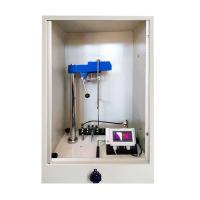
(1) Pendulum damping hardness method. Two steel balls embedded under the cross bar of the pendulum contact the coating film sample. When the pendulum swings at a certain period, the fixed mass of the pendulum presses the coating film, causing the coating film to form According to the resistance, the hardness of the coating film is determined according to the time required , and the coating film with a long attenuation time of the swing has a high hardness. This detection method is also called pendulum damping test . The instrument used is called pendulum damping Tester, and the common ones are: Konig pendulum, referred to as K pendulum; Per-soz pendulum , referred to as P pendulum. A general conversion relationship cannot be established between the measurement results of these two pendulums. Usually only one of the pendulum instruments is specified to be used during product testing , and the measurement results of the pendulum Tester are measured in seconds. The thickness of the coating film and the material of the substrate have an influence on the damping time, and also depend on the complex elasticity and viscoelasticity of the coating. The results of the pendulum damping test are related to the environment , and should be carried out under controlled temperature and humidity conditions without the influence of airflow. The advantage of the pendulum damping test method is that it does not damage the coating film. Now these two types of pendulum Hardness Testers have been adopted by CHINA's national standard GBT 1730-88 {Determination of Pendulum Damping Test for Paint Film Hardness".
When the thickness of the coating is measured with a pendulum Yangni Tester, the main reason for the swing attenuation is the absorption of mechanical energy by the coating. The swing decay time is inversely proportional to the loss modulus, and the loss modulus is used to indicate the ability to absorb mechanical energy. Because from the discussion on the determination of dynamic properties , the loss modulus in the glass state region and the rubber state region are relatively low, it can be speculated that the swing time in these two regions is long, and in fact the pendulum test measures the soft rubber This is evidenced by the coating's longer decay time. Therefore, some people think that the pendulum test is the detection of the loss modulus of the coating rather than the hardness of the coating film.
(2) Scratch hardness method The method of scratching or scratching the coating film with a hard object on the surface of the coating film is used to measure the hardness of the coating film. Commonly used are the pencil hardness method and the scratch needle method .
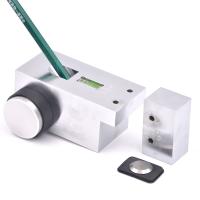
The pencil hardness method has two methods: manual operation and instrument test. It uses a pencil with known hardness to measure the hardness of the coating film, and the pencil hardness of the coating film is not damaged by the plow (manual operation). Hardness (instrumental test) is taken as the hardness of the coating film. Pencils should be high-grade drawing pencils that meet the standards manufactured by the specified manufacturers, and the pen cores should be cut out according to regulations. Different countries adopt different pencil hardness grading. According to CHINA's national standard GB/T 6739-86 "Measurement Method of Coating Hardness Pencil", there are 13 grades of pencils from 6H to 6B, 6H is the hardest and 6B is the softest. As an arbitration test, an instrument test method is used, and the general instrument model is QHQ type pencil scratch Hardness Tester.
The scratch test method uses the needle tip of the instrument to scratch the coating film, and uses the scratch resistance of the coating film to represent the hardness of the coating film. It is expressed by whether it is penetrated by the stylus under the specified load, or the minimum load required for the stylus to penetrate the coating. CHINA's national standard "GB/T 9279-88 Color Luan and Clear Hazel Scratch Test" stipulates that an automatic instrument is used as the instrument for the Zhonggu test, and the results obtained are relatively accurate. When the hardness is measured by the scratch method, the coating film is not only affected by pressure, but also by shear force, which also reflects the adhesion of the coating film. Therefore, the hardness characteristics of the film measured by it are different from those of the pendulum damping test method. .
(3) The indentation hardness method uses a certain quality of the indenter to press the removal film, and measures the hardness of the coating film from the length or area of the indentation. The national standard (CB/T9275- -88 paint and varnish Bucklez indentation test) specifies the method of using the Buchholz Tester to test the hardness of the coating film. The measured indentation length shows the hardness of the coating film. The resistance of the layer to the indenter of the instrument . The indentation hardness is more obvious in the hard film, and the result is related to the thickness of the coating film. For indentation hardness value of the hard film is higher than that of the thick film. From actual measurements, the indentation test is inaccurate for elastic coatings .