1. Scope and description
This method is applicable to the visual colorimetric determination of the color of the liquid by the Lovibond Colorimeter, and the color of the liquid is expressed by the Lovibond chromaticity value. It can be used for color determination of varnishes, varnishes and thinners.
The Lovibond colorimetric method is to place the sample in the sample cell of the Lovibond Colorimeter, and use the red, yellow, and blue primary color filters with the unit values of the Lovibond color scale to visually match the sample. When the color of the sample is the same, the color of the sample is represented by the chromaticity scale unit value of the three color filters.
2. Instruments and Materials
(1) Lovibond Colorimeter
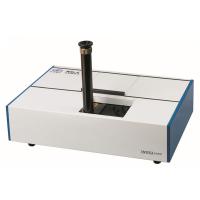
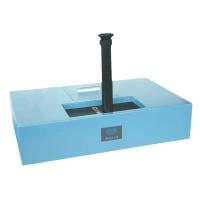
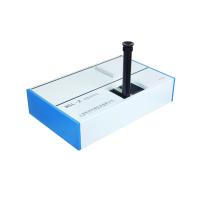
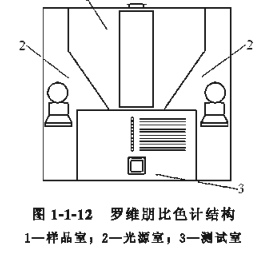
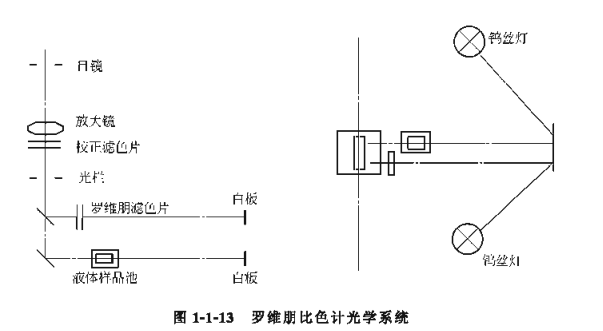
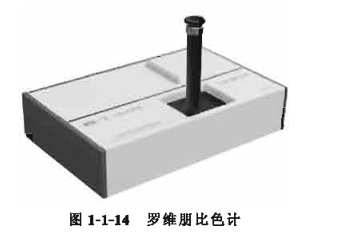
The structure is shown in Figure 1-1-12, the optical system is shown in Figure 1-1-13, and the instrument is shown in Figure 1-1-14; the Lovibond is as follows.
Red color filter: 0. 1~0.9, 1.0~9.0, 10. 0~70.0;
Yellow color filter: 0. 1~0.9, 1. 0~9.0, 10. 0~70.01
Blue color filter: 0. 1~0.9, 1.0~9.0, 10. 0~40.0;
Neutral gray filter: 0.1~0.9, 1.0, 2.0, 3.0;
The minimum reading is 0.1 Lovibond color scale units.
(2) The sample cell is 10.0mm, used for measuring dark samples; 25.4mm, used for measuring light-colored samples, and 133.4mm, used for measuring extremely light-colored samples.
3. Measurement method
(1) Check the instrument according to the requirements of the instrument manual to make it reach the specified state, place the standard white board at the specified position, pour the liquid to be tested into the sample pool specified in the product standard, and put it into the instrument.
(2) Observe the sample from the eyepiece, and adjust each color filter to match and combine until the color composed of the three color filters is consistent with the color of the sample. Record the unit value of the chromaticity scale of each color filter and the specification of the sample cell used.
(3) When using one or two color filters for visual matching, if the color filter is darker than the sample, it is necessary to add to make the two color and brightness consistent.
4. Result presentation
The color of the sample is expressed by the unit value of the chromaticity scale of each color filter, the specification of the sample cell and the unit value of the chromaticity scale of the neutral gray filter.
5. Reference standard
National standard GB/T 1722 "Determination of color of varnishes, varnishes and thinners".