1 definition
Folding endurance refers to the number of times the cardboard can withstand reciprocating 180°folding under a certain tension, expressed in the number of times of reciprocating folding.
2 instruments
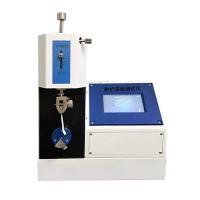
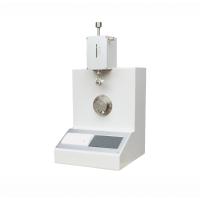
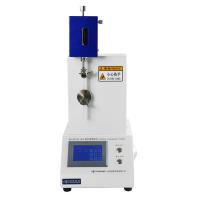
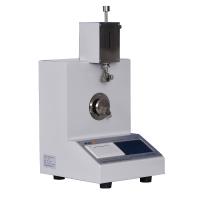
The folding endurance shall be measured with a Schober type folding endurance Tester meeting the following requirements.
① Samples with a thickness of 0.25~1.4 mm.
② The distance between the two clips is 130 mm.
③The thickness of the folding blade is 1.0 mm, the width of the knife slit is 2 mm, and the contact between the end of the blade and the sample is semicircular, and its radius is 0.5 mm.
④ The diameter of the folding stick is 10 mm. The distance between the folding roller and the moon piece is 2 mm.
⑤The initial tension of the sample before folding is 9.8 N (1.0 kg), and the maximum tension of the sample during folding is 12.8 N (1.3 kg).
⑥The number of reciprocating folding mulberry per minute is 100-120 times.
3 Calibration of the folding Tester
Calibration of the distance between the blade and the folding roller. Calibrate the parallel state and distance between the four folding rollers and between the folding roller and the blade with a plug ruler
Calibration of spring tension: When using weights to calibrate vertically, add a tension of 9.8 N (l kg) to a clip (including the quality of the clip itself, and then adjust the spring tension of the clip, and the stretching distance of the clip should be equal to 5 mm , that is, the first engraved line of the clip. Adding a tension of 12.8 N (1.3 kg) (including the mass of the clip itself), the distance between the clips should be equal to 13 mm, which is the second engraved line.
4 Test preparation
Samples were taken according to standard methods.
Follow standard methods for temperature and humidity treatment.
Cut a sample with a width of 15 mm and a length of 140 mm, with no less than 10 vertical and horizontal samples. Tests are performed under standard atmosphere.
5 Test steps and result calculation.
① Clamp the sample parallel to the clamp of the Tester, apply an initial tension of 9.8 N (1 kg), and fold it back and forth until the sample breaks. For cardboard with significant difference in properties between the front and back sides, when clamping the sample, the front side of half of the sample and the back side of half of the sample should be folded outward first.
Note: Clamp the cardboard in the two clamps, stretch and then relax the spring, the sample should remain flat. If the edge of the sample is wrinkled or the two sides are not elastic, it means that the sample is not clamped and the sample is sliding in the clamp.
②In each packaging unit, cut samples from different paper samples taken out, and measure no less than 10 pieces in the vertical and horizontal directions. and the minimum value.
Calculated results are rounded to integers.