Intermediate paint, also known as intermediate paint, is composed of synthetic resins, pigments (fillers), additives and solvents. Generally, the color (filler) of the intermediate paint is relatively high, and the pigment base is relatively large. The main function is to increase the adhesion between the primer and the top coat, improve the fullness of the top coat, and increase the thickness of the paint film to enhance the quality of the paint layer. . The thickness of the coating directly affects the performance and service life of the coating. Of course, the longer the service life, the better, but considering various factors, it is generally recommended to adopt a design for 5-10 years, which is more reliable and realistic.
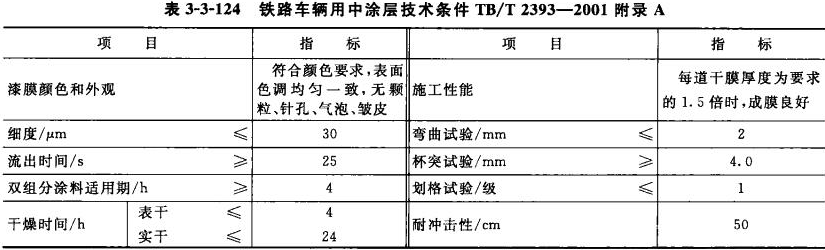
The thickness of the coating is very important to the service life. Experiments have proved that in a certain corrosive environment, when the coating matching is determined, there is a linear relationship between the coating thickness and the protection life. In actual painting, it is difficult to spray the primer or topcoat too thickly, and it is also uneconomical. In order to increase the thickness of the coating, it is generally realized by the middle coating (Table 3-3-124).