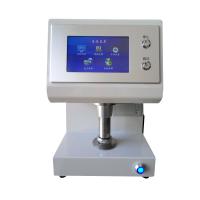
1.1 Quantitative weighing instrument
The basis weight is one of the most basic performance indicators of paper materials, and the level of basis weight will affect various indicators of paper materials, especially its physical and mechanical properties.
Quantitative determination mainly involves sample cutter, quadrant scale and balance weighing instruments. Quadrant balance is a dial scale, its structure is more complex than electronic balance, its maintenance work is more important, and then to ensure the accuracy of detection data. First of all, always check the screw connection of each part on the quadrant scale to prevent loosening. The calibration of the zero point of the quadrant scale pointer and the scale value on the dial needs to be repeated several times to ensure that the calibration effect is accurate. Do not move the calibrated and adjusted instrument at will to avoid damaging the benchmark; pay attention to prevent the pointer from vibrating violently during use.
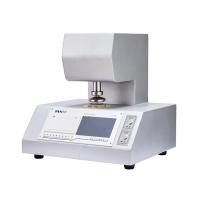
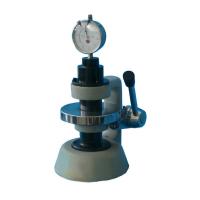
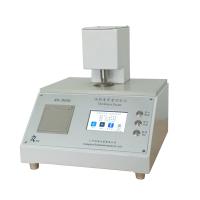
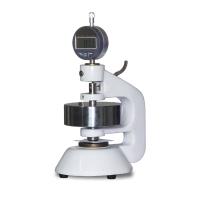
1.2 Thickness gauge
Thickness gauge is a special testing instrument for paper and cardboard thickness, which is divided into two types: electric type and manual type. Like other testing instruments, the use of the Thickness Gauge also needs to be carried out under standard conditions, such as ambient temperature, flat and stable workbench, etc. The testing instrument uses an indicator to display the detected value. The indicator should be installed firmly, and the pointer in the indicator should be flexible and stable. Use a block gauge instead of a paper sample to verify the indicated value, and use the zero return error of the indicator to indicate its zero position stability, and the zero return error should not exceed 1/2 of the division value of the indicator. Gravity calibration and measurement parallelism calibration must be carried out in accordance with standard regulations, and the instrument calibration cycle should preferably not exceed half a year.
The tightness refers to the weight per unit volume of the paper product, and the tightness is calculated from the quantitative and thickness values. Bulk is an index to measure the density of paper, and it is a main index of light offset printing paper. This index is obtained by calculating the tightness. And the detection accuracy of the thickness value is obtained.
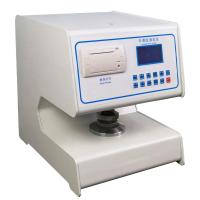
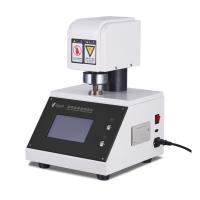
1.3 Smoothness meter
The smoothness index of paper products reflects the flatness of the paper surface, the apparent smoothness in the free state, and the level of smoothness mainly depends on the appearance structure of the paper. The measurement of this index is the time required for a certain volume of air to pass through the gap between the sample surface and the glass surface under a certain pressure under a certain degree of vacuum. For the smoothness index, in addition to the paper sample's own properties such as air permeability and thickness, the main factors affecting the smoothness test results are the test pressure and pressurization time.
During the use of the instrument, prevent dust from entering the interior of the instrument, keep the instrument clean, and be careful not to scratch the glass surface when cleaning it. The sheeting rubber pad should be checked regularly. Use a magnifying glass to observe whether there are cracks and scratches on the surface of the rubber pad. It is better to replace the rubber pad every six months or a year, so as to ensure that the test is carried out under constant conditions.
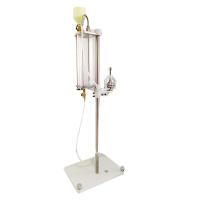
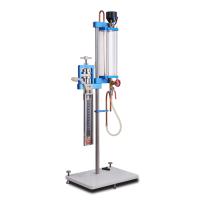
1.4 Air permeability Tester
The air permeability index reflects the size of the internal porosity of the paper. The tighter the paper, the smaller the air permeability index and the lower the absorption capacity. The air permeability index can also indirectly reflect the moisture-proof ability of the paper product. The determination of the air permeability index is the amount of air per minute that passes through the paper under certain area and vacuum conditions.
The key points of air permeability meter verification are the tightness of the instrument and the water surface position of the U-shaped pressure gauge. During the verification, the pressure should be adjusted slowly to prevent the water in the U-shaped tube from entering the air box. Avoid using aging rubber pads when verifying the air tightness of the instrument. . When maintaining the instrument, we must first pay attention to the flexibility of each valve and the firmness of each connection point to ensure that the pressure screw and scale can move flexibly. Rubber accessories need to be guaranteed not to age to ensure the airtightness of the air permeability meter.