Indentation hardness is a type of hardness. Hardness is an indicator of the strength of the anti-corrosion layer. It refers to the property of the anti-corrosion layer to resist deformation when the anti-corrosion layer acts on the surface of the anti-corrosion layer. resistance to pulling ability. Hardness is a relatively comparative performance index, which can be measured by different methods such as indentation and scratches.
The indentation hardness index of the pipeline anti-corrosion layer is also aimed at the construction of the pipeline. When the anti-corrosion layer pipe is placed on the sink, the anti-corrosion layer at the bottom of the pipe must withstand the pressure on the anti-corrosion layer caused by the self-weight of the pipe, and the color particles on the surface of the construction site. The combined force between the anti-corrosion layer at this time to resist deformation characteristics is expressed by the indentation hardness index.
This force must not be underestimated. Foreign pipeline companies attach great importance to this indicator when selecting the pipeline anti-corrosion layer. However, my country's pipeline industry does not pay much attention to this index, which is very meaningful when large-scale pipeline projects are established. For example, steel pipes with a diameter of 1016 mm and a thickness of 16 mm are used in my country's West-East Gas Pipeline Project, and the weight of each pipe is more than 8 tons. Therefore, the pressure of the pipe's own weight on the anti-corrosion layer at the bottom of the pipe is considerable. If there are some hard and angular gravels in the ground soil at this time, the anti-corrosion layer will be stressed and deformed. Different anti-corrosion layers have different strengths and different abilities to resist deformation.

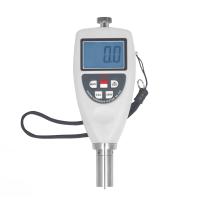
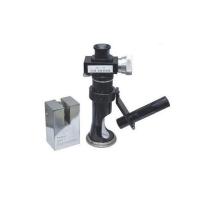
The standards for polyethylene anti-corrosion coatings derived from foreign countries have the requirements for the determination of indentation hardness indicators. The structure of the indentation Hardness Tester is shown in Figure II-7. This standard refers to the provisions of the German Industrial Standard DIN 30670-91. Photo Figure 11-6 is the laboratory of CE Techrncloeies Laborutoris in the United States, and the indentation hardness test is carried out according to the American ASTM G17 standard.
According to the regulations of DIN 30670-91 in Germany, the indenter of the ring Hardness Tester is a metal rod with a bottom diameter of 1.8mm or a cross-sectional area of 2.5mm2 , and the total downward pressure after loading should be 10MPa.
When testing, place the anti-corrosion layer test piece at the measured temperature for 1 hour, then slowly drop the indenter on the test piece, and set the scale indicator to zero within 5 seconds. Then apply the load on the indenter, and read the indentation depth of the specimen after 24 hours, which is the indicated value of the scale indicator. This value is the indentation hardness value of the anti-corrosion layer.
In addition to indentation hardness, there are also testing methods such as pencil hardness and Rockwell hardness. my country's national standard stipulates that the hardness of the coating film should be measured by a pencil Hardness Tester. This standard is GB/T 6739-1996 "Pencil Test Method for Coating Film Hardness", which is used for the determination of the hardness of ordinary paint films.