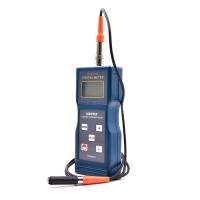
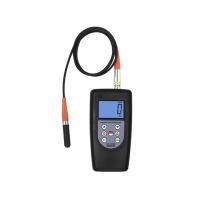
The anti-corrosion coating in the shipbuilding industry pays more attention to the film thickness of the anti-corrosion layer. For this reason, CSSC promulgated CB/Z227-86 "Measurement Method for Ship Coating Film Thickness" in 1986, which was revised and published as CB in 1994 /T 3718. CR/T 3718 stipulates that the dry film thickness of more than 85% of the inspection points is not less than the specified thickness, and the dry film thickness of the remaining inspection points is not less than 85% of the specified thickness.
Article 8.1.7 of HCJ 229 "Code for Construction and Acceptance of Anti-corrosion Engineering of Industrial Equipment and Pipelines" "The number and thickness of anti-corrosion layers should be in accordance with the design requirements, and the negative error of 5% is qualified."
The coating of steel structures should follow GB50205 "Code for Construction and Acceptance of Steel Structure Engineering". Article 4.11.4 of the "Code" stipulates the determination of the thickness of the anti-corrosion layer on the surface of the steel structure. "The thickness of the outdoor anti-corrosion layer, the indoor anti-corrosion Thickness, when there is no design requirement, the allowable negative deviation is 25μm".
Article 4.4.3 of SL 105-95 "Water (Conservancy) Engineering (Engineering) Metal Structure Anticorrosion Code" "The thickness of more than 85% of the measuring points should reach the design thickness, and the minimum thickness of the measuring points that do not reach the design thickness It shall not be less than 85% of the design thickness (5 measuring points per 10m²)".

Article 6.3 of SY/T 0315-97 "Technical Standards for Fusion-bonded Epoxy Powder External Anti-corrosion Coating of Steel Pipelines": Article 2 of "Factory Inspection of Steel Pipes with External Anti-corrosion Coating" stipulates that the anti-corrosion coating Thickness Gauge is used to measure the thickness of the steel pipe along the length of each steel pipe Take three positions at random. Measure and record the thickness of the anti-corrosion coating at any four points evenly distributed in the circumferential direction of each position. Those that do not meet the requirements for anti-corrosion coating thickness should be recoated according to the provisions of Article 7.0.2 of this standard. "
In the oil and gas oil tank inner surface anti-corrosion coating specification, it is stipulated that the detection of the thickness of the anti-corrosion layer should be divided into three parts: tank top, tank bottom and tank wall, and each 1m² is a detection area to take 2 points , the thickness of the thinnest point shall meet the design requirements, if more than one point in each area is unqualified. If the unqualified area exceeds 5%, the area where the thickness of the anti-corrosion layer is less than 90% of the specified thickness should be overcoated, etc.