Determination of opacity (GB/T 1543- 1988)
Non-transparency is the ratio of the whiteness of a multi-layer pattern to the whiteness measured under a single layer of pattern lined with black fleece.
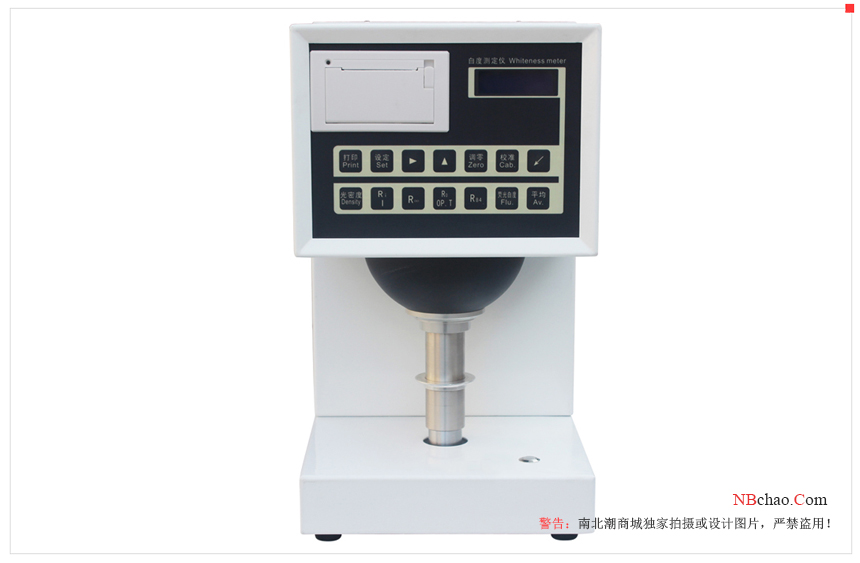
The scanned instrument can still use an optoelectronic Whiteness Meter by overlapping several strips of paper until opaque by using a blue filter to pass through the light source. Then, take out a measured strip of paper, pad it with black velvet below, and measure the whiteness of the strip again. Use the following formula to calculate transparency:
Opacity (%) = [R (single layer)/R (multi layer) ] x100
Where R (single layer) - the reflectance measured by a layer of paper pad black velvet,%;
R (multilayer) - measured reflectance,% for a multilayer paper.
The transparency of general newsprint is 95%, and the transparency of relief printing paper is 87%. If the transparency of Paper is lower than 85%, "transparent printing" may occur during Printing.
Determination of glossiness (GB/T 8941-1988)
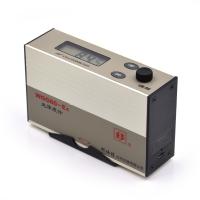
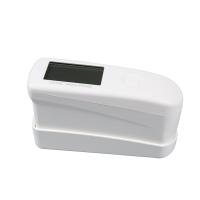
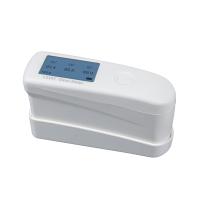
The measurement method of glossiness is to use a variable angle Gloss meter, often irradiated with 75 ° angle light, and paper with good surface gloss will have a large reflection value, and vice versa. Glossiness is divided into two types: white paper glossiness and Printing glossiness. Generally speaking, glossiness refers to the glossiness of white paper. There are three types of angles selected: 20 °, 45 ° and 75 °.
The glossiness of coated paper can be as high as 60%. Generally, the glossiness of printed drama paper is about 20% to 30%.
Paper with good glossiness has good anti-gloom ability. If the ink absorption is too strong, the surface of the Printing product will be light and dull.