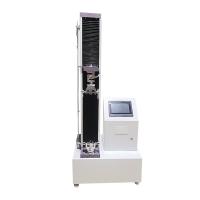
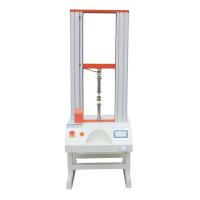
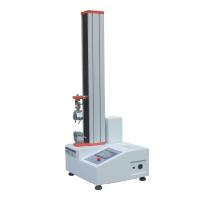
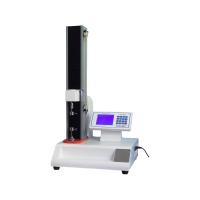
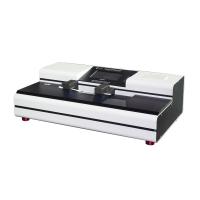
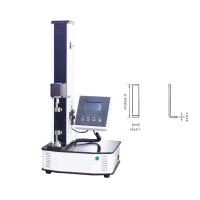
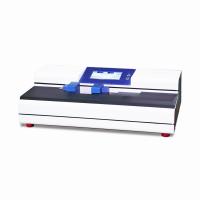
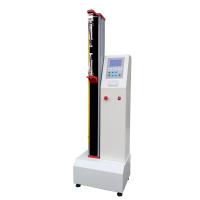
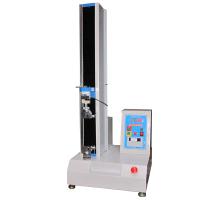
Tensile strength indicates the ability of the paper itself to resist tension. In other words, it is the maximum tensile force that a paper strip of a certain unit width can withstand before breaking under the conditions of the specified test method . When the pattern is stretched under tension, it will stretch in the direction of the force. Until the note was pulled off, the extension reached its limit. The ratio of the extended length at this time to the length of the original paper pattern is called the elongation (expressed in % ) . The commonly used testing instrument is the Sclopper tensile strength testing machine, also known as the pendulum Tensile Testing Machine. The structure of the machine mainly includes three parts: transmission speed change, tension measurement, elongation measurement and so on. Before carrying out the measurement, check whether all parts of the testing machine are in standby state. Both the pointer and scale should point to the zero point accurately. Then, get the paper strips cut vertically and horizontally (10 pieces of each). Then loosen the two vertical sample clamps, and clamp the paper strip in the middle (the distance between the clamps is 180mn). Start the machine, and the lower clamp grain moves down slowly according to the requirements, so that the paper strip is forced to pull the pendulum to rotate an angle. When the paper strip breaks, the pendulum stops, and the numbers on the force dial and the elongation scale are read out. The scale pointed by the pointer is the force that the paper strip can bear, which is called absolute tension. Expressed in kg/15mm.

The tensile strength test is based on the principle of force balance, and is determined by measuring the number indicated when the paper is broken. The measuring range of the tensile strength testing machine is: 0~1kg, 0~10kg, 0~30kg, which can be selected according to the strength of different quantitative paper. The formula for calculating the tensile strength is (the result takes three significant figures)
S =F÷L
In the formula, S—tensile strength, kN/m;
F——average tensile force , N;
L - the width of the test strip, mm.
Tensile Strength( kN/m ) = average tensile force ( N ) / width of test paper strip ( mm )
The elongation is obtained by dividing the elongation of each paper strip when it is broken by the length of the original paper strip.
Elongation (%) = elongation of paper strip ( mm ) / distance between sample clamps ( mm )
Tensile strength and elongation are very important indicators for printing paper, especially for rotary printing paper. When the rotary printing machine is started, the paper roll must be dragged. If the tensile strength is not enough, the phenomenon of "paper break" will inevitably occur, which will bring trouble to the printing work. The degree of elongation of the paper will also reduce or increase the "frequency" of such paper breaks. Because of the high elongation, it can improve the distribution of internal stress in the paper, ease the pulsating tension, and avoid fracture due to stress concentration. A low elongation is the opposite.