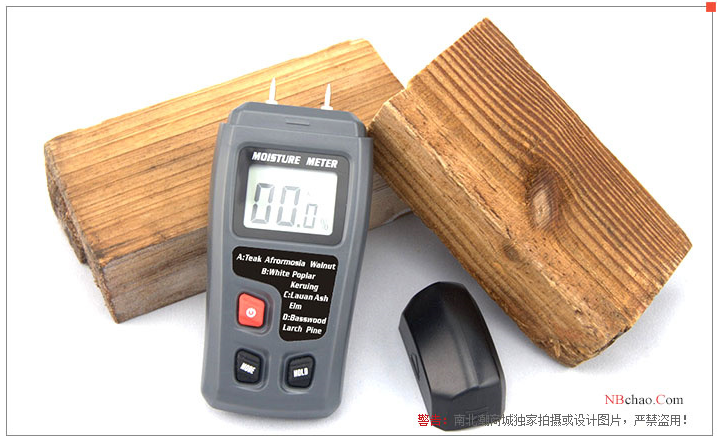
In order to better handle and print paper, screen printers need to be able to identify paper, they need to be able to identify front and back of the paper, as well as vertical and horizontal directions, and can determine the moisture content of the paper.
In the printing process, in order to achieve better results, it is necessary to accurately measure the moisture content in the paper. Paper moisture is the weight ratio between the water in the paper and the fibers. The moisture content in paper depends on the composition and relative humidity of the paper. The amount of water vapor in the air is called the humidity of the air. Absolute humidity refers to the number of grams of water in 1 cubic meter of air in the state of water vapor. The maximum amount of water vapor that 1 cubic meter of air can absorb is called the maximum humidity or saturation point, and the maximum humidity depends largely on the temperature. The ratio of absolute humidity to maximum humidity is called relative humidity, expressed as a percentage:
Relative humidity = absolute humidity ÷ maximum humidity x 100%
For example, the temperature of the screen printing factory is 20°C, and the indoor air can absorb up to 17.3 grams of water vapor per cubic meter. If it is assumed that there is 10.4 grams of water vapor per cubic meter of air in the screen printing workshop, then the relative humidity will be:
Relative humidity=10.4÷17.3×100%≈60%
In general, paper producers produce and store paper at a relative humidity of 50-55% and a temperature of 18°C, which is also the most satisfactory indoor temperature for screen printing paper. If the paper is used and the room where it is placed is too humid, two edges at right angles to the direction of the paper fibers will appear waviness. If damp paper is used or stored in a room with high temperature, it will cause so-called "disc paper" due to the evaporation of moisture.
As a rough guide, it can be assumed that a sheet of paper that absorbs 10% humidity will stretch by 0.1%, or 1 mm per meter, a figure that cannot be ignored by screen printers who do large format printing of.
Other criteria generally used for paper qualification are that the paper should be able to absorb the right amount of ink and that the drying time should not adversely affect the ink; the paper should have as little effect on ink durability as possible; the paper should be rectangular and flat when cut ; Paper should not easily generate static electricity, and should not contain any ingredients or substances that are easy to fall off. Also note that there are long-grain paper and short-grain paper. The fiber direction of long-grain paper is parallel to the long side of the paper, and the fiber direction of short-grain paper is parallel to the short side of the paper. If these two kinds of paper are mixed together, when overprinting There must be a big deviation.

