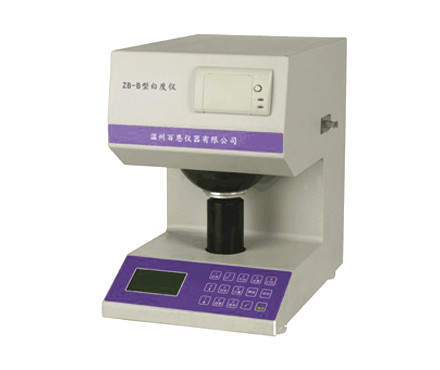
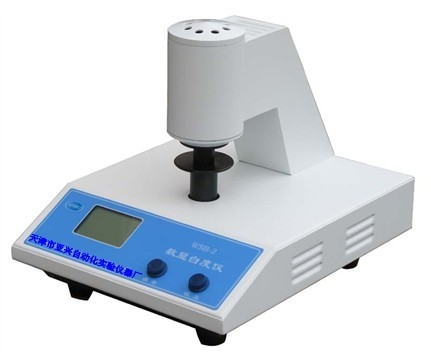
Paper brightness, paper whiteness, and shading are three of the most commonly misunderstood paper selection variables in print projects. However, they both play an important role in determining how the final product will look.
While it's easy to understand what the terms "brightness, white, and shade" mean, there can be a lot of confusion about their technical definitions and how they affect the final product's appearance.
It should be noted that although the brightness and whiteness of the papers are somewhat similar, they are not interchangeable.
paper brightness
Brightness measures how reflective a specific wavelength of blue light is. Brightness is measured on a scale of 0 to 100 - the higher the number, the brighter the paper. In other words, 95 gloss paper reflects more light than 85 gloss paper and therefore appears brighter.
Measuring this reflection using specific blue light ignores longer wavelengths, including green and red. Therefore, even if the brightness is the same, two papers with the same brightness will be visually very different. Specifically, blue light used to measure brightness has a wavelength of 457 nanometers (nm).
paper whiteness
Brightness measures the reflection of light at a very specific wavelength, while whiteness measures the reflection of light at all wavelengths in the visible spectrum. Therefore, whiteness measurement is more in line with our visual perception. Therefore, there is generally a consensus that the higher the whiteness scale (also using a 0-100 scale), the whiter the paper. A paper with a high whiteness value may appear blue in the full spectrum of visible light, depending on the light source it is viewed under.
A common measure of whiteness, D65 illuminance represents outdoor daylight. The standard, called CIE Whiteness, was developed by the France-based International Commission on Illumination (also known simply as CIE). Of course, indoor lighting changes the look of the paper, and the difference between fluorescent and incandescent lighting is even greater.
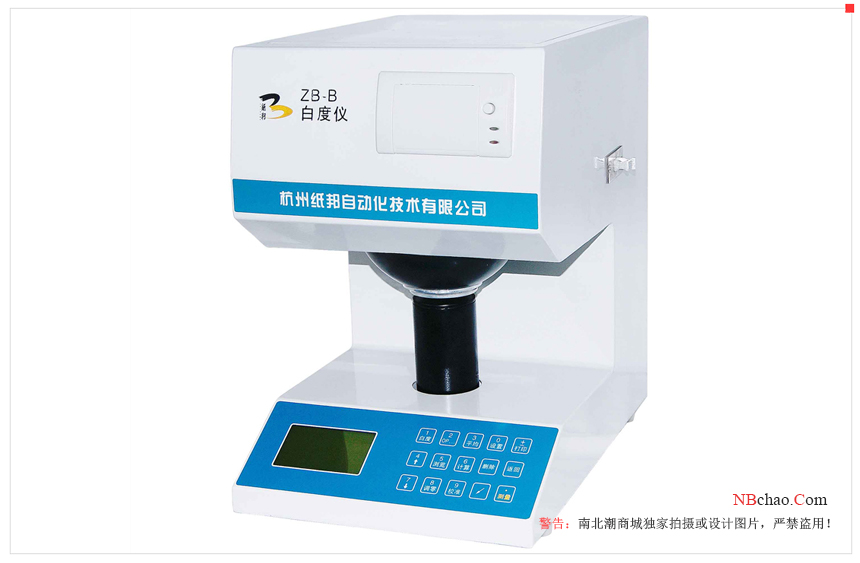
paper shadow
Shadows, on the other hand, do not take into account any light reflections. Instead, it represents the color of the paper. There are three common white shade groups:
true white
blue White
milky
As mentioned above, a blue-white shade is often used on paper because it appears to be a "whiter" white than true white. These papers are often labeled "bright white" or "high white." It has this tint because it reflects more blue.
The milky white absorbs the blue reflected by the bluish white, thus giving it a yellowish appearance. As the name suggests, pure white reflects the entire color spectrum evenly, which is of course the definition of pure white.
The choice of shade is especially important in book printing. In addition to considering your own preferences, you also want to make sure that the shade of the paper provides visual comfort for the reader. The better choice depends a lot on the content of the book. If you are interested in book printing, find out more at BestBookPrinting.com, our book printing division.
When brightness and whiteness are off the charts
If you've looked at various papers, you've likely seen brightness and whiteness levels beyond the aforementioned 100 scale. The 100 limit applies to standard paper made using only pulp. However, additives can be added to make the paper appear brighter or whiter.
These additives are known as optical brighteners (OBAs), and they reflect UV or UV light into visible light in terms of brightness. In other words, this reflects more visible light than is emitted by the actual light source. Likewise, fluorescent OBA will increase the whiteness value above 100.
North American Paper Standard
Outside of the paper and printing industries, paper brightness is a common measurement in North America. The 0-100 scale is generally based on TAPPI Standard T451 of the Technical Association of the Pulp and Paper Industry. Outside of North America, the International Organization for Standardization's ISO standard 2469 is generally used.
As mentioned above, the standard for whiteness measurement is CIE whiteness.
Again, despite the similarities between whiteness and brightness, the measurement systems used to measure each are completely independent and uncorrelated.