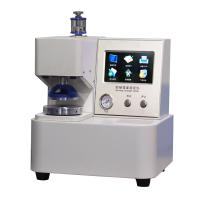
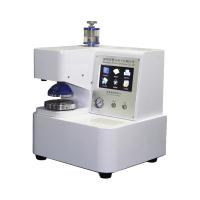
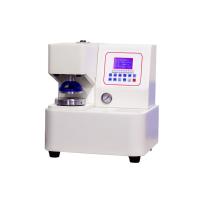
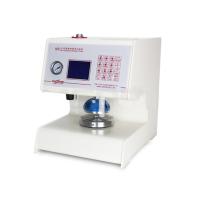
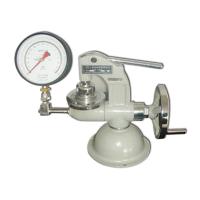
In the textile industry, tensile testing cannot be performed everywhere. You can test the warp and weft direction of woven fabrics. This is even more important for knowing the strength of the fabric. But what about nonwovens? You can't test them because the tension applied to them won't be concentrated at one point. In this case, a burst strength Tester is used to determine the strength of the fabric. Certain fabrics (like sacks, netting, parachute fabric) experience consistent pressure from all directions. These types of fabrics cannot be successfully tested on a tensile Tester.
During testing, we cannot assume that the direction of fracture extension has the weakest strength. When pressure is applied evenly in all directions, the fabric will experience the same pressure in all directions. When a fabric fails due to a continuum of burst strengths, the material ruptures at the point of lowest elongation at break. This happens when stress is applied to the fabric in all directions, with the weaker material breaking first.
According to the British Standard, pressure cannot be applied directly to the sample cloth. Because this will not apply even pressure on the fabric. Therefore, a ring clamp is used to clamp the fabric to the rubber diaphragm. Typically, glycerin is used as a medium for applying air pressure. Clamp the sample to the septum and apply pressure on the septum until rupture.
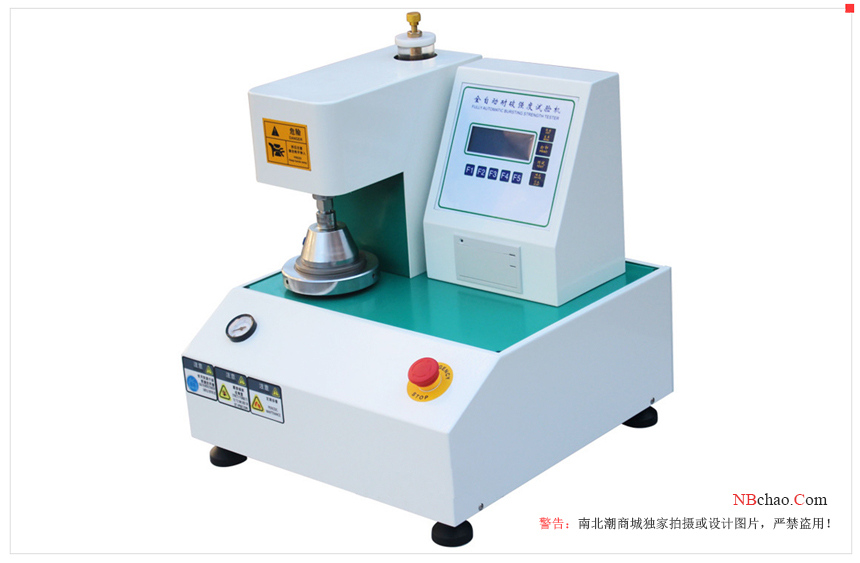
The samples to be tested are available in two sizes, 30mm or 113mm in diameter. Although both samples behaved differently, it was observed that the larger diameter sample ruptured at lower pressure. According to the test standard, 10 samples will be tested to obtain accurate test results. To start the test, the sample is clamped to the rubber diaphragm. Hydraulic pressure is applied to the sample until it ruptures. Alternatively, creep testing can be performed to estimate the ability of a fabric to hold pressure over a certain time frame. The test will be performed for 20 to 23 seconds.
With this test, the following observations were recorded:
Burst expansion, unit: mm
medium is glycerol
Average bursting strength, kN/m²
Test Procedure for Determining Bursting Strength of Fabrics
Rupture test evaluation is a satisfactory method of determining fabric quality. Not only strength, but also an idea about tear resistance can be drawn from this test. Under actual working conditions, you can't guess from which direction the fabric will experience more stress. Thus, a uniform omnidirectional pressure is exerted on the sample. Fabrics tested in this test are typically used in high performance applications. Therefore, no chance.
In order to carry out the test, first a sample is prepared. Samples are usually circular. The pouch is clamped by ring clamping. This can be done by pneumatic mechanism or manually. Need to ensure proper gripping of the sample. Neither too tight so as not to cause incorrect readings nor too loose so as not to cause slippage when pressure is applied. This test can be performed in two ways. Creep testing or applying pressure until the sample ruptures. The pressure at which the sample ruptures is considered a criterion for the pouch