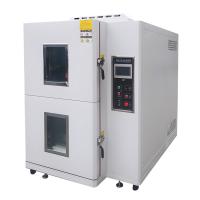
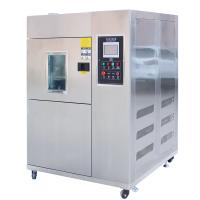
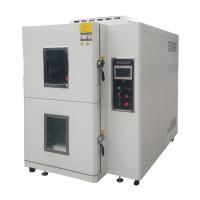
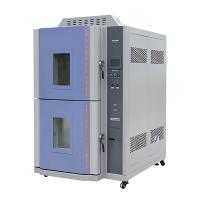
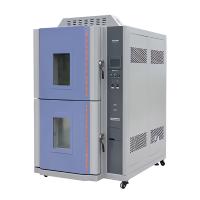
Whether any product is easy to use and durable has two standards, one is the rigid standard from the quality supervision department, and the other is the use standard from the user. The thermal shock Test Chamber is one of the reliability testing equipment that needs to be used in the design and testing stages of the product. It belongs to the environmental test category in the reliability test. Of course, it is also somewhat different from the ordinary environmental Test Chamber. The thermal shock test The main purpose of the box is to detect what changes will occur when the product changes rapidly in temperature, so as to obtain the service life, use environment and defect improvement of the detected product.
1. What are the uses of the thermal shock Test Chamber?
The thermal shock Test Chamber is suitable for the safety performance test of electronic components, providing reliability test, product screening test, etc. At the same time, through this equipment test, the reliability of the product can be improved and the quality control of the product can be carried out.
2. How to choose a thermal shock Test Chamber?
1. Shock temperature: Shock temperature refers to the maximum temperature range that the test area can actually rise and fall to. Note that it is not the limit temperature of the preheating and precooling chamber.
2. Test load: This parameter directly affects how many test items can be placed.
3. Recovery time: refers to the time it takes for the test workpiece to switch from one temperature point to another temperature point. Common standards stipulate ≤5min.
4. Defrost time: The longer the defrost interval, the better. Now some manufacturers can defrost once in 1000cycles, which is very satisfactory. The shorter the defrosting interval, the less airtight the device is!
5. Sensor placement: The specification requires that the sensor should be placed inside the test area. Some manufacturers place the sensor inside the air duct. Although it is only 10cm away from the test area, the energy difference is quite large. And it cannot truly reflect the temperature change on the surface of the test workpiece.