1. Instructions for use
1 Scope
1.1 It is suitable for judging fabric pilling and other abrasion-related changes on the surface
1.2 This method is suitable for all kinds of knitted fabrics, leather and woven fabrics
1.3 Not suitable for fabrics with a thickness exceeding 3mm
1.4 is also applicable to samples that have been washed or dry-cleaned
2. Principle
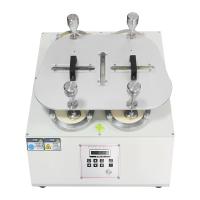
2.1 Install the sample on the Martindale Abrasion Tester and run it at a fixed number of revolutions
2.2 Put the rubbed sample under the standard light source and use the standard chart to rate it.
3. Equipment and reference materials
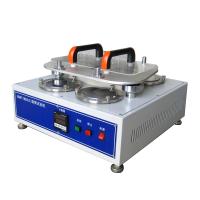
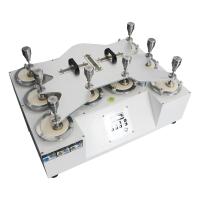
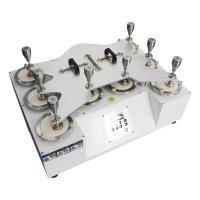
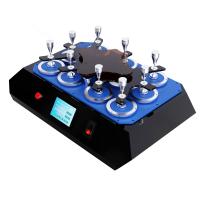
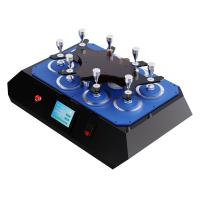
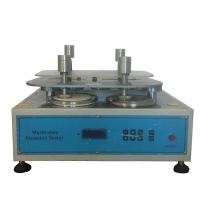
3.1 Martindale Abrasion Tester
3.2 Standard felt: weight 750±50g/m², thickness 3±0.3mm
3.3 Standard friction fabric Combed plain weave fabric made of wool 195 g/m²
3.4 Standard foam lining: density 29~31kg/m², thickness 3±0.01mm
3.5 Rating Charts: A set of pictures arranged from "Very Pilling" to "No Pilling" to show different degrees of pilling.
3.6 Fabric shears: the diameters are 38mm and 140mm respectively.
3.7 Rating box: cool white fluorescent light source
4. Specimen Preparation
4.1 Unless otherwise specified, the sample should be washed and dry-cleaned before taking the sample according to the final use of the fabric.
4.2 The position of the joint sample needs to be at a place far from the edge of the cloth and the distance exceeds 1/10 of the width of the entire cloth width
4.3 Do not take samples from areas that are wrinkled or have fabric defects that affect the test results
4.4 Taking samples Take a group of circular samples on the fabric
4.5 The samples do not contain the same weft yarn
5. Environmental conditions
5.1 The sample is conditioned under the specified constant temperature and humidity conditions
2. Operation method
1. Install the standard felt with a diameter of 165mm and the cotton cloth with a diameter of 165mm on the grinding table in sequence
2. Mount the specimen face down on the specimen holder
3. Put the sample holder on the grinding table, insert the central shaft into the sample holder
4. Set test times
5. After the number of tests is set, press the start button "TEST" to test and enter the test state. After the number of tests is reached, the equipment will automatically stop, remove the sample and then rate it
3. Rating
1. Stick the sample on the cardboard with double-sided tape
1.2 Rating in the rating box, with a view of close to 45 degrees, can be rated
1.3 Usually at least 2 people are required to rate independently, and the distance between the observer and the sample is 300-500mm
1.4 The sample is placed on the left, and the original is placed on the right
1.5 rating charts are divided into 5 levels
Note: 5---No pilling
4---Slight pilling
3---Medium pilling
2---Severe pilling
1---Very serious pilling
average rating result
2. Report
2.1 Indicate the test standard number
2.2 State the level of each sample and their average value
2.3 Indicate the washing conditions before taking the samples
2.4 Indicate the number of operations
4. Care and Maintenance
1. Protect the cleaning of the instrument at any time, wipe the cylinder shaft with a cotton cloth before and after each experiment to keep it clean,
2. If it is not used for a long time, please remove the test pressure plate and spray anti-rust oil.
3. Add lubricating oil to the gear parts every month
4. The turntable in the middle of the instrument is made of plastic, and the threads of the fixed holes on it are easily damaged. Therefore, the screw teeth of the turntable should be protected during the wear resistance test.
5. Use this instrument to test, the curve drawn by the friction head is a standard Lissajous curve, the distortion of the guide plate, the guide shaft of the friction head and the friction head itself will make the friction motion track no longer a standard motion curve, which will cause serious damage to the test. Adverse effects, thus protecting the integrity of the accessories.