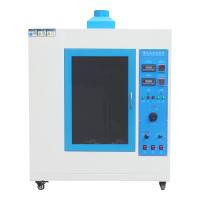
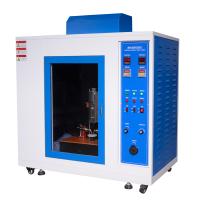
1. How to use
1. Introduction to test method
The tracking test is divided into the tracking resistance test and the comparative tracking test, and the tracking resistance index and the comparative tracking index of the solid insulating material are respectively determined.
During the test, two platinum electrodes with a cross-section of 2mm×4mm were symmetrically placed on the surface of the test sample with an included angle of 60°. The two electrodes faced each other with a distance of 4mm. The force that each electrode exerts on the surface of the sample is (1.00±0.05) No electrolyte drops from a height of 30mm to 40m on the surface of the sample between the electrodes, and the droplet size is 20+3mm3. The electrolyte is dripped at intervals of (30±5) seconds until the sample is destroyed or 50 drops are finished. When a current of 0.5A or more flows through the passage between the two electrodes on the surface of the sample, and the over-current relay operates with a delay of 2 seconds, or the over-current relay does not operate, but the sample burns, it is considered to have been destroyed.
In the tracking resistance test, when the test is carried out at a specified voltage, a test point needs to withstand the action of 50 drops of the solution. When the 5 test points all withstand 50 drops of solution without damage, the result of the tracking resistance test is that the voltage value passes, and the tracking resistance index is represented by PTI, such as PTI175.
In the comparative tracking index test, when the result of 50 drops of electrolyte is passed or failed at a certain voltage value, further tests are carried out at higher or lower voltages until the material can withstand the highest voltage value. Then reduce the highest voltage by 25V, and test on the other 5 points until 100 drops of solution are not damaged, then this voltage value is the comparative tracking index, expressed as CTI, such as CT125O. Some materials may not meet the latter requirement. For these materials, it is necessary to determine the highest voltage value that the sample can withstand 100 drops of solution at 5 test points, and attach this voltage value to CTI to express it, such as CT1425 ( 375).
The national standard GB4207-84 is equivalent to the third edition of the International Electrotechnical Commission (IEC) standard 112. The wording of these standards implies that the 50-drop solution withstand voltage test needs to be performed before the 100-drop solution withstand voltage is determined. At present, the new international standard EIC6011:22003, which determines the tracking index of solid insulating materials and the method of comparing the tracking index, has recognized that the test cost can be reduced by first determining the highest voltage value of 100 drops, so the standard This step is recommended.
IEC60112:2003 also stipulates that at least 25 seconds have passed after the 50th drop (100th drop) of the solution falls and no overcurrent device action or continuous flame occurs, the test is valid and the sample passes the test.

2. Adjustment of tracking electrolyte
Electrolytes are used to simulate conductive deposited impurities on the surface of solid insulating materials. From the purpose and method of the tracking test, it can be seen that the setting of the electrolyte is a key factor for the tracking test. The electrolyte of the tracking test is (ammonium chloride) NH4CI, and the configuration of the solution is 100ml Add (0.100±0.002) grams of NH4CI solid to distilled or deionized water, with a purity of not less than 99.8%.
3. Adjust the required number of drips and drip time, turn on the power, turn on the lighting, pour some water into the electrolyte bottle, connect the measuring cup under the drip nozzle, press and hold the drain, and drain the water Until now, put the product on the test bench, adjust the distance between the electrodes and the height of the dripping liquid, align the dripping nozzle between the two electrodes, pour the ammonium chloride into the bottle containing the electrolyte on the dripping nozzle, and close the door. Turn the voltage gear to the required voltage gear, press the start button, press the electrode short circuit to adjust the voltage and current to the required voltage and current to 1A, release the electrode short circuit, and the experiment starts. When there is overcurrent and failure in the middle It will alarm to prove that the product test is unqualified, and the number of drops will stop automatically.
4. After finishing the test, turn on the fan to draw air. Finally, check the product condition, clean up, clean the electrodes, maintain, return the voltage adjustment and current adjustment to the original position, and then turn off the machine.
2. Matters needing attention
1. Put the device flat on the ground
2. Keep the equipment dry and clean
3. Add lubricating oil to the mechanical movement
4. Unplug the power after the test stops