Gardner color is widely used in petroleum, printing and chemical fields, such as the determination of transparent liquids such as resins, varnishes, paints, drying hot oils, fatty acids, lecithin, sunflower oil and linseed oil.
The Gardner chromaticity scale is divided into 18 grades according to the chromaticity of standard filters from 1 (light) to 18 (dark). The international general chromaticity is an even-numbered grade of 2-16.

Figure 1 Gardner standard solution
Disadvantages of standard liquid colorimetry
1. The preparation process of Gardner standard solution is complicated
First, use a pipette to transfer the potassium chloroplatinate solution to eight 25mL volumetric flasks according to the amount shown in the table in Figure 2, and dilute it to the mark with dilute hydrochloric acid solution. The prepared solution is Gardner color code 1-8.

Figure 2 Color specification with reference to the standard
Use a pipette to transfer the cobalt chloride solution and ferric chloride solution to ten 100mL volumetric flasks according to the amount shown in Table 1 (continued) in Figure 3, and dilute it to the mark with dilute hydrochloric acid solution. The prepared solution is Gardner color code 9-18.

2. Difficulty in storage
The Gardner color scale prepared according to the "Method for Determination of Color of Transparent Liquids (Gardner Chroma)" should be stored in a dark place and sealed. Use the reference solution to check at least once every six months. If the color is found to be different from that of the corresponding potassium dichromate sulfuric acid reference solution, it should be re-prepared.
With the passage of storage time and the influence of external environment such as temperature and light, the chromaticity value of the standard solution may change, which will affect the accuracy of colorimetry.
3. Limitations of human eye color measurement
Color is a visual effect produced by light stimulation of the human eye. The perception of color by the human eye cannot be quantified and will be affected by factors such as light source, viewing angle, object size, background, object shape, etc. Therefore, human eye color measurement is limited.
Accurate measurement with Spectrophotometer
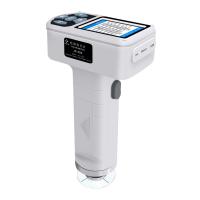
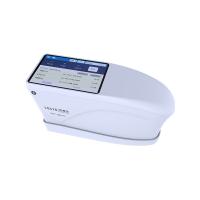
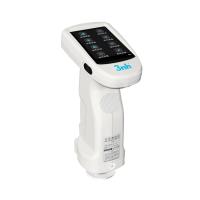
Caipu CS-810 transmission Spectrophotometer is a high-performance spectrometer specially designed to measure liquid transmittance, absorbance, concentration, chromaticity and other parameters.
CS-810 transmission Spectrophotometer can accurately measure the color value of Gardner standard solution.

The following describes how to use CS-810 to measure the color of Gardner standard solution.
Step 1: Install the instrument and perform black and white calibration and air calibration
Step 2: Prepare test samples
Step 3: Measure the first group of samples. Pour No. 1 standard solution into the cuvette, put it into the test port and close the upper cover, and click "Test Sample" to measure.
Step 4: In the same step, all samples are tested to obtain all parameter values.
With four simple steps, we can measure the chromaticity value of the standard liquid, and compare it with the standard chromaticity value stipulated in the "Method for Determination of Color of Transparent Liquids (Gardner Chromaticity)", and we will find that the data fully meets the standard.
The transmission Spectrophotometer CS-810 stores 18 Gardner standard solution parameters in the instrument, which can easily complete the colorimetric task and solve the limitation of human eye color measurement.