The burst factor is a property of materials such as paper and cardboard that provides very important information about the quality and strength of the material. In the packaging industry, there is a wide variety of materials used to package a large number of products in different industries. In order to ensure the proper safety and quality of the product, the product needs to reach a better quality level when it comes to packaging. When we talk about packaging, the packaging needs to be strong, strong, strong so that the product can be properly secured during storage, handling and transport. Industries that use paper and corrugated boxes to package products include textiles, food processing, pharmaceuticals, and more. In order to ensure an appropriate level of product safety, packaging material manufacturers and products need to test the quality of the outer packaging used for industrial products. There is a long list that can be used to evaluate the strength and quality of packing materials. One such test is known as the Mullen test or burst test, which allows a suitable assessment of the strength of packaging materials used to manufacture industrial goods packaging containers. This test gives the material's resistance to rupture tests, which allow the material to be tested at different stages of delivery. With this test, manufacturers of packaging materials and containers can easily analyze the strength of their products and ensure that they deliver better quality products to their customers, providing proper security for their products during shipping and handling.
What is burst resistance?
The burst resistance of a material refers to the resistance of a material to an applied force when the applied force comes from all directions and is uniform in nature. It is the maximum force a material can withstand before it breaks. When blasting force is applied to materials such as paper and corrugated cardboard, it causes the surface of the material to rupture. This force can be evenly distributed from all directions, or it can be unevenly distributed. The main issue that people are concerned about at present is that each industry has different packaging needs, so different industries have different requirements for the strength of packaging materials. That is why, manufacturers of these materials need to keep in mind that only by properly evaluating packaging materials will it be possible to provide customers with material of suitable strength. For example, papers used to package products need to have very low burst strength because they do not have to face very high amplitudes of stress during handling and shipping. But at the same time, it should be able to withstand the blast force applied to it, no matter how small its amplitude. On the other hand, cardboard and corrugated cardboard used to make the outer packaging of products need to have a higher burst resistance because they are subjected to high forces when stored, stacked or transported. If they fail within this time, it poses a great threat to the quality and integrity of the product packaged inside. Manufacturers of these materials therefore need to ensure that they test the strength of these materials in order to ensure the appropriate level of safety for the product during stacking and transport. The accuracy and precision of the test procedure is also an important aspect in determining the burst resistance of a material. Incorrect test data can lead to poor strength and therefore compromise the quality of the pack. Also, if the packaging is too strong, then it could be a loss of money for the manufacturer. The same applies to industrial fabrics that need to withstand higher forces, such as parachutes. Here too, the fabrics need to have high strength so that they can easily serve their purpose without failing.
What is the appropriate way to calculate the blow-up index and blow-up coefficient?
Burst test or Mullen test
The Mullen test is a test procedure used to determine the burst resistance of any material. This is very useful for calculating the capacity of crates and containers. The Mullen test gives the value of the force required for the material to crack or fracture. This force value is useful in calculating the strength of a material against blast or rupture forces. However, it cannot be used as an indicator of its performance or how much product can fit into the container, as it is determined by the structure of the container. In order to calculate the overall strength of corrugated boxes and containers, in addition to the burst resistance, several other values are required, such as edge crush test values and ring compression test values.
Calculation of bursting strength
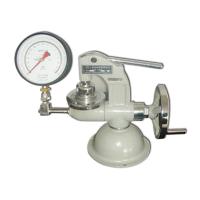
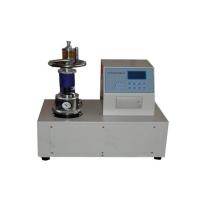
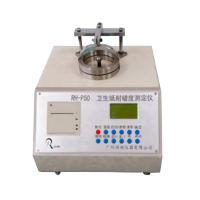
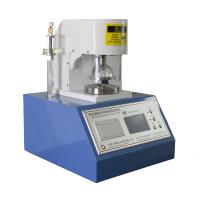
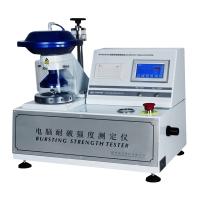
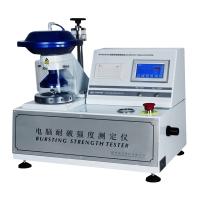
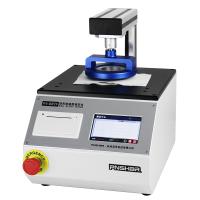
The burst strength of any material like fabric, cardboard, paper or any similar material is very important as it mainly affects the properties of the final product. This is why very high precision and accuracy are required when determining the burst resistance of test specimens. When measuring the burst resistance, it is necessary to choose a better instrument to calculate the burst force. Achieving such precision requires very sophisticated mechanisms. An instrument that can be used to test burst strength is called a burst Tester. It utilizes the force applied hydraulically to the specimen with the help of a rubber diaphragm. This ensures an even distribution of force during the test and thus a suitable precision of the results. When selecting a testing machine, ensure that the instrument is capable of producing results repeatedly so that its accuracy can be trusted. Another feature to keep in mind when choosing a machine is the ease of operation of the instrument. Complicated operating procedures can cause test results to deviate from expectations.
Relationship Between Burst Resistance and Bursting Coefficient Formula
When calculating the burst resistance of the sample, it is also very easy to determine its burst coefficient. The two properties of a material are interrelated and have a great impact on the quality of the material and the performance of the final product. Burst resistance can be calculated by the formula burst coefficient. The coefficient of rupture expressed in terms of rupture strength as a measure of the strength of the material per unit GSM.
Corrugated box formula calculation
After measuring the burst resistance of the sample with the Mullen test or the burst test machine, the burst coefficient can be easily determined with a simple formula. The formula of burst coefficient is expressed as
Fracture coefficient = burst strength (gf/cm2)/gram (g/m2)
Here burst strength is a value determined by Mullen's test, while grams is a measure of the weight of a material in grams per square meter of material. In addition to the burst coefficient, a simple formula can be used to calculate the burst index of the material. The burst index of a material is a measure of the burst strength per unit of gram expressed in pressure. The burst index formula is expressed as
Burst index = burst strength (kPa) / gram weight (Kg/m2)
Armed with these formulas, it is easy to find out key information about a material's performance that affects its ability to withstand forces during use. These formulas are applicable to various materials such as textiles, paper, corrugated cardboard and cardboard. A higher burst index or n=burst factor indicates higher quality and performance of the product. Manufacturers can use these values to increase or decrease the quality of their products. These factors are also used to determine the price of the material on the open market.
Perform Mullen test or burst test
The first step in determining the burst index, or burst coefficient, is to determine the burst resistance of the material through the Mullen test. The test needs to be performed in accordance with the guidelines given in standards such as ISO 1060 and ASTM D-3876. The following is the use of the burst test machine.
1 The first step is to prepare the sample for testing. To prepare the test specimen, a circular slice is cut from the material. The size of the sound sheet cut needs to be larger than the diameter of the ring clamp in the instrument. Since the larger the size, the better the grip is on the specimen without slippage.
2 The instrument is plugged into the specified power outlet.
3 Place the specimen in the clamp and tighten the clamp properly. It needs to be clamped in a proper way so there is no chance of slipping.
4 You can start the machine to start testing. This button is used to initiate hydraulic pressure to the diaphragm. This force is transmitted from the diaphragm to the specimen.
5 The force is continuously increased until the specimen breaks. Once the specimen ruptures, the application of force should be stopped immediately, and the peak force should be recorded on the pressure gauge provided with the machine.
6 If there are several other samples to be tested, replace them with new ones.
The instrument is equipped with a digital display or an analog gauge to ensure an accurate reading of the force applied to the specimen and thus its burst resistance. This value is used to calculate the burst coefficient and burst index.
Burst Coefficient Correlation
Manufacturers of products such as packaging materials need to remember that they cannot compromise on product quality, as poor packaging is also a threat to product quality. Breakage factor is also an important aspect affecting the efficiency of industrial packaging. With the aid of the fracture factor, it is possible to analyze the ability of a material to survive in harsh environments and protect the product from different threats such as dust, moisture and forces that can compromise the integrity of the product.
A better burst coefficient ensures that the packaging material is intact during transportation and ensures the proper safety of the product. Bursting factor is not only applicable to paper and packaging (paper testing instrument) but it also affects the quality of fabrics used in various industries for various purposes. In the industry where fabric is used, it requires that the fabric needs to have better quality and better strength so that it can perform well in this industry. If low-strength fabrics are used in industrial production, they can easily fail due to the many powerful forces acting on the fabric. Before the fabric can be used for any industrial purpose, the bursting strength of the fabric needs to be tested. Through this testing, manufacturers can be confident that the fabric will withstand forces and provide proper performance even under the harshest working conditions.
Bursting resistance is an important factor in determining the quality of materials, and it is helpful to calculate the bursting coefficient and bursting index of materials.
How to improve the burst resistance of corrugated boxes?
It can be seen from the formula that the burst coefficient is directly proportional to the burst resistance of the material. In order to increase the blasting coefficient, it is necessary to change the structure and composition of the material. Corrugated cardboard has several layers of corrugated paper that give the material the required strength. There are several types of sheets such as double-sided, single-sided and three-sided sheets. Product manufacturers need to understand that in order to increase the burst resistance of corrugated board, layers need to be added to achieve the required strength, ensuring better performance in the final product. Likewise, to increase the burst strength of a fabric, the weave pattern and yarns of the fabric can be altered to increase strength. While the burst strength provides a lot of information about the quality of the product, to ensure the proper quality and strength of the product some other tests are required such as edge crush, ring compression test, puncture resistance, water absorption etc.
Quality control of bursting strength
Improving quality is the goal of every manufacturing unit. While improving quality, there is also a need to optimize manufacturing processes and corporate profits. Bursting strength contributes to better quality control, as we know the strength of the material, we can ensure it is strong enough for better protection. Manufacturers can easily make changes during the manufacturing process to increase or decrease the strength of the material and have better quality control. The calculation of burst resistance and burst coefficient helps manufacturers to obtain a suitable manufacturing process, prevents the addition of more than required material in the manufacturing process, and thus ensures better profitability by optimizing the manufacturing process.