Copper plays an important role in human life. From power transmission to water supply, copper makes everything possible. It allows current to pass at the same voltage and it is a good conductor of electricity. Copper is used in electrical appliances, and almost every high-quality electric motor has copper wire. In the past, tableware was made of copper, which is a good conductor of heat and cold. Copper is soft on its own, but when you mix it with any other metal it hardens.
How hard is the metal?
Hardness is known as a metal's resistance to indentation. Hardness doesn't stay the same forever, it depends on the strength and malleability of the metal. The hardness of a metal depends on the method of measurement. The measurement results are expressed in quantitative figures. Resistance in metals makes them stiff, and resistance refers to four different things. They are scratches, abrasions, cuts and penetrations. The different properties of metals allow them to resist or deform under load for long periods of time. The greater the resistance to deformation, the harder the material.
The hardness of materials is usually used for quality inspection and quality control of materials. The main reason for quality control of materials is their rapid, non-destructive testing. Some important measures of material hardness are described below:
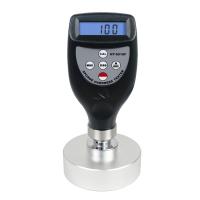
Indentation Hardness : This is a simple method that can be used to measure a material's resistance to deformation under constant pressure or a load from a sharp object. It can be measured by Rockwell hardness, Brinell hardness, Shore hardness and Vickers hardness.
Scratch Hardness : In this method, we measure the resistance of a metal to permanent plastic deformation or fracture due to the friction of a sharp object. The method is measured on the Mohs scale.
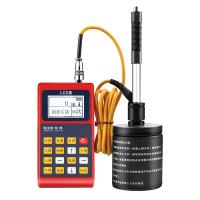
Rebound safety belt : Rebound hardness is a method of dropping a diamond hammer head from a certain height on a specific material to check its hardness. The rebound hardness was measured by a Bennett Hardness Tester and a Leeb rebound Hardness Tester.
A conversion table is used to convert one scale to another; it's for practice. Each level has a separate measurement scale.
Properties of copper: (related to hardness)
Copper is commonly used as sheet and strip. It is composed of 99.9% pure copper, 0.1% may be other metals. Pure copper is soft and highly malleable, and can be used for different purposes such as complex decoration projects. In the past, it was often used in the construction of buildings. Because copper has lower strength than other metals, thick gauge materials are used with copper. Over time, in construction, copper was replaced by other strong metals.
Many years ago, cold rolled copper was introduced and other materials were reduced in thickness. Cold rolled copper has a long life and requires less maintenance than other materials. Cold rolled copper is hard and not as malleable as soft tamped copper. It is the common form of copper used in construction.
The general mechanical properties of copper are strength, hardness and ductility, which determine its state. Copper can vary from soft to hard; the method used to determine copper content is cold working. Annealed (soft) copper has a hardness of 40HV and a tensile strength of 200N/mm2, and after cold working has a hardness of 110HV and a tensile strength of 360N/mm2. Annealed copper is more ductile than cold-worked copper. You can easily increase the strength and hardness of copper. A common way to increase the strength of copper is alloying, but it affects conductivity. The hardening process is completed by heat treatment and a tensile strength of 1500 N/mm2 can be obtained.
Hardness test:
There are different types of tests to determine the hardness of metals, but in the case of copper, there are only three different tests used to determine its hardness. The test types are described below:
Rockwell test:
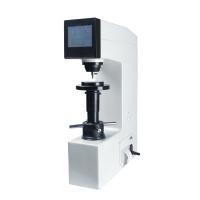
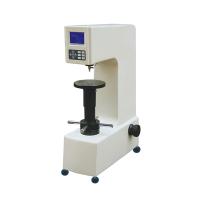
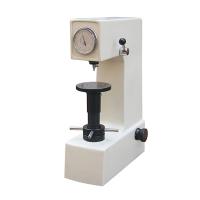
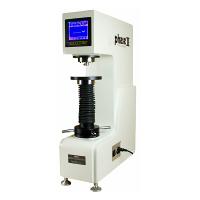
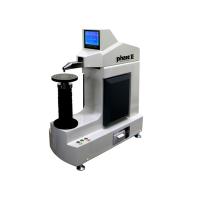
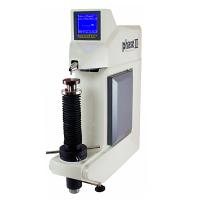
The Rockwell hardness test is a common test method for testing the hardness of copper.
It consists of 30 different tests, the number of loads tested and the configuration of the indenter. Scales B and C are only for a thickness of 1mm and can be used for copper alloys of this thickness. For thin products, it should be tested by surface scales N and T. The hardness of thin materials is checked with a microHardness Tester.
Brinell test:
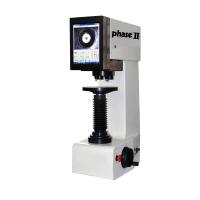
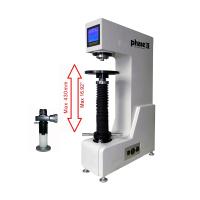
It is a large-scale, large-scale indentation test and is not suitable for fine-wire materials. It is widely used for testing large rods, rods, plates and other heavy materials. Testing of these materials produces large indentations. The Brinell test is only applicable to material thicker than the minimum of 3.2 inches.
Vickers and Knoop tests:
The Vickers test is also known as the diamond pyramid hardness test. The loads used in this test ranged from 1 to 120 kg. If the material weighs less than 1kg, perform a Vickers microhardness test. The Knoop test is specifically designed for microindentation hardness testing. Experiment with the help of an extension indenter.
The above tests are designed to test the hardness of copper, the choice of test depends on the quality and type of copper.