At present, commonly used dispersion techniques can be divided into two categories: physical dispersion and chemical dispersion. Physical dispersion mainly includes ultrasonic dispersion and mechanical dispersion.
( 1) chemical dispersion method
The chemical dispersion method is to use a chemical method to select one or more dispersants to improve the dispersibility of the dispersant, improve the stability and rheology of the dispersion system. The dispersant can quickly wet the particles. After the solution wets the surface of the particles, the dispersant is adsorbed on the particles to reduce the surface free energy. If there are gaps or cracks on the surface of the particles, since the dispersant penetrates into this place, the mechanical work required to break the particles can be reduced, and the dispersant can also prevent the particles in the system from agglomerating22.
Lin et al. used the electrostatic steric hindrance effect of low molecular weight polyacrylic acid (MW~2000) to effectively inhibit the aggregation of nanoparticles and stabilize the dispersion of nanoparticles in the aqueous phase. confirmed that the experiment successfully generated Fe3O4 with a particle size of about 10nm.
Yu et al. utilized (NH4)2Ce(NO3)6. Nano-CeO2 was prepared by thermal hydrolysis under the condition of a copolymer of polyethylene glycol and polypropylene acid as a stabilizer. Experiments show that the copolymer can effectively control the crystallization of inorganic particles and stabilize the dispersion of particles.
(2) Ultrasonic dispersion method
Ultrasonic dispersion is to treat the suspension with ultrasonic waves of a certain frequency and power, which is a very effective dispersion method. Its dispersion mechanism is generally believed to be related to cavitation. When the ultrasonic wave propagates in the medium carrier, it will form an alternating cycle with positive and negative pressure. The medium carrier is constantly squeezed and pulled under this action. When the amplitude of the ultrasonic wave is large enough to a certain extent, for the liquid medium, the average distance between the medium molecules in the negative pressure zone will exceed the critical molecular distance that keeps the liquid medium unchanged, and the liquid medium will break, forming microbubbles, and continuously Expand into air bubbles. Part of the bubbles will dissolve again in the liquid medium, some will float up and eventually disappear, and some will break away from the resonance phase of the ultrasonic field and collapse. The phenomenon that cavitation bubbles are generated, collapsed or disappeared in a liquid medium is called cavitation. Cavitation will cause local high temperature and high pressure, and form a strong impact force and micro jet, under the action of particles, the surface energy will be weakened, thus preventing the agglomeration of particles and making them fully dispersed.
Huang Yuqiang and others used ultrasonic waves to effectively break the soft agglomeration of nanoparticles and improve the dispersion of nanoparticles to a certain extent. However, after a long time of ultrasonic treatment, the agglomeration phenomenon became more serious. This is because the high-energy Ultrasonic waves promote the collision between particles, resulting in secondary agglomeration of a large number of particles, thus forming new aggregates.
Ultrasonic dispersion is mainly used in fine particle suspensions, but due to high energy consumption and high cost of large-scale use, it is currently used more in laboratories and is difficult to apply in road engineering.

(3) Mechanical dispersion method
Mechanical dispersion is the most widely used fiber dispersion method in engineering. It is a method to break up and disperse the agglomerated fiber bundles in the medium by means of mechanical energy such as mechanical shear force and impact force. Mechanical dispersion methods include grinding, ordinary ball milling, vibration ball milling, mechanical stirring, etc.
① Ordinary ball milling is a barrel-shaped container that rotates horizontally along its axis. The grinding efficiency is related to many factors such as the nature and quantity of fillers, the size and quantity of balls, and the rotational speed. It is a commonly used mechanical dispersion method. The disadvantage is that the grinding efficiency is low.
Li Yong et al. used ball milling method to prepare carbon black grafted aniline, and by studying the influencing factors, it was known that aniline would produce active chain segments after high-speed ball milling. Under the action of initiator decomposing free radicals, the conjugated electrons of active chain segments and The reactive groups on carbon black particles are capable of grafting reactions. When lead persulfate is used as the initiator, it has a greater effect on increasing the grafting rate of carbon black and aniline.
②Vibration ball mill uses two-dimensional or three-dimensional high-frequency vibration to form high-speed ball-to-ball impact to break particles. The dispersion efficiency of vibration ball mill is far higher than that of ordinary ball mill.
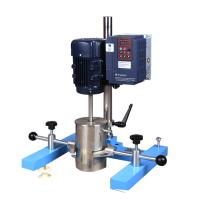
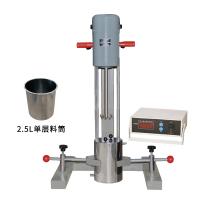
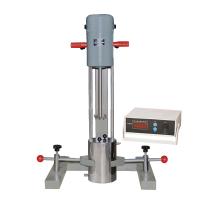
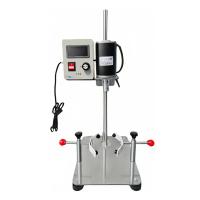
③Mechanical agitation can produce strong impact, shearing, stretching and kneading effects on fiber bundles. It is currently the most practical method to disperse fiber bundles. Most engineering also chooses this method to pre-disperse fibers.