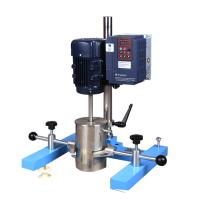
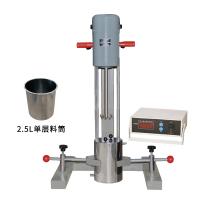
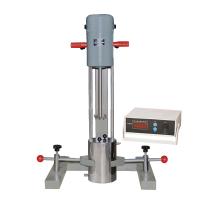
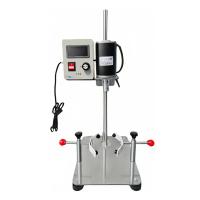
Diffusers are built for reliability and longevity, but in order to maintain the healthy life of the product, it is important to understand how they work and what can be done to keep them working properly.
How the diffuser works:
If you ask, "What is a disperser? How does it work?", you're in luck. Dispersion is a high-speed, high-shear process that requires more horsepower to achieve than simple agitation and mixing. Often confused with "blending", dispersion is a mixing process in which two or more individual components are mixed by swirling flow and uses a shear-driven process to break down solid component particles.
Dispersion process:
The dispersing blade turns.
The particles come into contact with the leaves inside the container and break down.
The flow then divides down the ship's wall into upper and lower parts, ensuring complete circulation.
Outside the attrition zone (the area where internal collisions occur), the decomposing material is effectively mixed and the particles are dissolved or dispersed by the horizontal laminar flow extending from the blade.
How to stay dispersed?
To ensure the life of your high shear diffuser, there are a few basic preventative maintenance steps to keep it running smoothly. When properly maintained, a diffuser will perform well for years - ensuring your output remains consistent.
Monitor blade tooth wear and replace when needed.
The disperser produces a homogeneous liquid product as a result of the high shear action of the blades. The scatter blades consist of teeth whose edge profiles are lost abruptly and which naturally wear away over time. Wear rates vary, depending on batch content. Abrasive solids such as silica sand greatly accelerate blade wear. As the blade edge becomes rounded and smooth with the original squared off profile the results of the process will start to suffer. Therefore, frequent inspection of the blades and replacement of wear is key to obtain the desired process results.
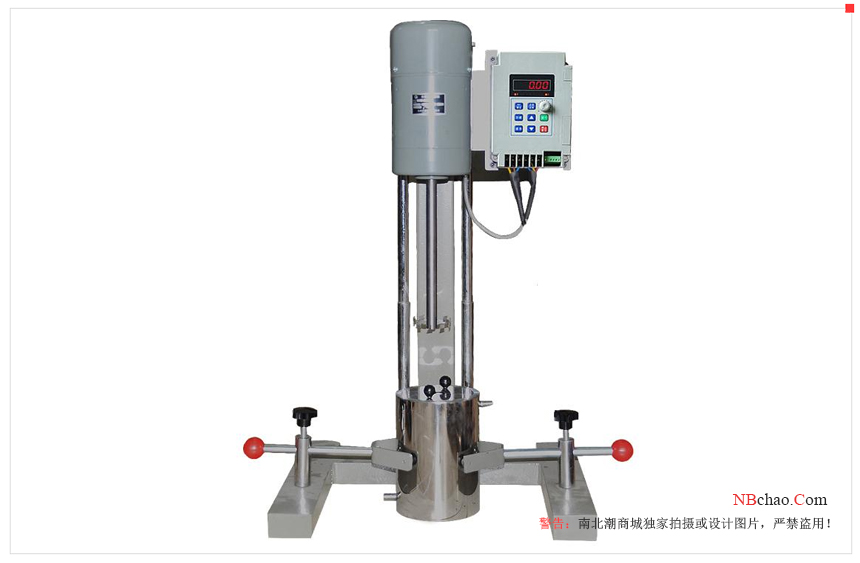
Maintain the motor
The dispersers are driven at high speeds to achieve the required blade tip speeds of 2500 to 5000 feet per minute associated with the dispersing process. Therefore, motor maintenance is very important. Most motors are relatively maintenance-free. However, overloading the motor is a common cause of premature failure. For each new application, especially those with high viscosity or high solids content, monitor the motor temperature during qualification. Most motors include an overload circuit that will trip before burning up the coils, but motors that are continuously run near their temperature limit will have a shorter lifespan.
Air powered motors won't burn out, but will just stop if overloaded. To ensure suitable long-term performance, the air supplied should be free of dirt water and condensation and the motor should be lubricated.
Carefully observe bearing and shaft vibration
Equipment with rotating axes is subject to critical speeds. The critical speed is the speed at which the natural frequencies of the machine exist and shaft vibrations are amplified. Engineers design equipment so that critical velocities are outside the speed range expected with dispersers. However, when ramping up the shaft speed to the desired operating speed, a critical speed is often experienced. Damage to the shaft and bearing system can be caused by prolonged operation at critical speeds. To prevent this, the rpm should be increased rapidly by noticing increased vibration. Also, the diffuser should never run dry, i.e. without immersing the blade in the liquid, as doing so will significantly increase the level of vibration, leading to potential bending of the shaft and damage to the bearings.
Maintain a routine cleaning schedule
Over time, the buildup of debris and ingredient residue in and around the diffuser can be problematic. Establish a cleaning schedule for the disperser's blades, shaft, and bearing housings. Clean the exterior of the machine of any buildup, including all electronic or pneumatic controls and peripherals.