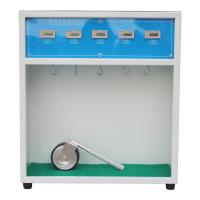
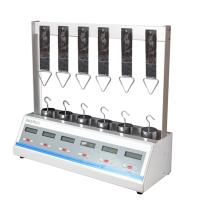
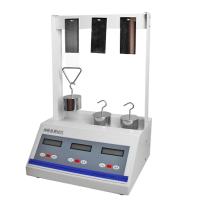
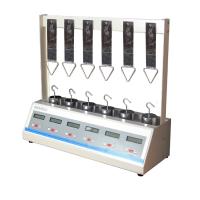
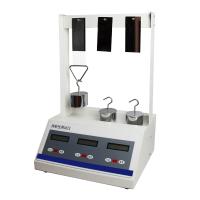
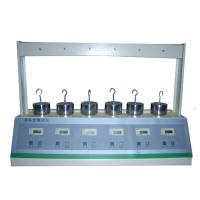
Device description
(1) Test piece: The test piece is made of SUS 304 (27CP) or SUS 3042 (40CP) steel plate specified by CNS cold-rolled stainless steel plate, with a thickness of 1.5-2.0mm, cut into a width of 50mm, a length of about 125mm, and The surface is fully ground along its length with No. 280 sandpaper specified by CNS1072 water-resistant sandpaper.
(2) Crimping device: The crimping device has a pressure wheel with a width of 45mm, a diameter of 82mm, and a metal shaft wheel with a mass of 2000±50g. The outer layer is covered with a spring hardness Hs 80±5 according to the CNS3555 vulcanized rubber hardness test method. It is made of a rubber layer with a thickness of about 6mm, whether it is manual or electric during the test. The test piece can only be pressed with the quality of the pressure roller itself.
Operating procedures
1. Cut three test pieces of 25mm*150mm, and do not touch the adhesive surface with hands or other corners. For tapes with a width of 25mm or more, cut to a width of 25mm. For tapes with a width less than 25mm, cut three test pieces with a length of about 250mm.
2. Clean the test surface with a suitable solvent such as oil, wipe it with a clean cloth after it is fully dry, and then paste the test piece on one end of the test plate so that the 25*25mm area of the test piece is in contact with the test plate , the unglued part will be folded inward with the adhesive side.
3. On the test piece, use a rolling wheel to reciprocate once at a speed of about 30mm/second. After about 20 minutes, fix one end of the test plate to make the test piece sag. At one end of the folded part, it can be evenly loaded Under the principle of hanging the load of 1000±10g.
4. Measure the sliding distance after 1 hour with a vernier caliper conforming to CNS4175 with a scale of 0.05mm.
5. This test should be carried out three times, and the average value is taken as the retention force.
Maintenance and Precautions
1. Check the circuit before use, and whether the value displayed by the accumulator is reset to zero.
2. After the accessory weight is used, it is strictly forbidden to throw it away, damage it, or beat it, otherwise, the measured parameters will be distorted.