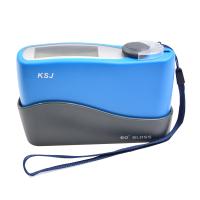
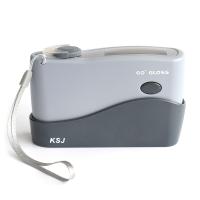
Gloss is an aspect of human visual perception. When a buyer considers the value of a product, the gloss and color of the product are equally important. Glossy objects appear to emit light. They are not metal but have a metallic sheen. The glossiness of an object's surface is affected by many factors, such as the smoothness after polishing, the thickness and brand of coating used, and the substrate of the object.
Manufacturers will continue to introduce new designs according to the needs of buyers, such as: highly reflective car panels, high-end magazine covers, satin black fashionable furniture and other gloss-treated products to attract buyers' attention to a greater extent.
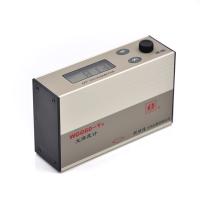
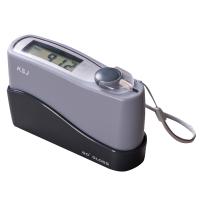
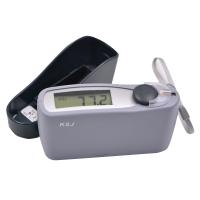
During production, the manufacturer must ensure that the gloss of the product is strictly in accordance with the standard, which requires a gloss meter as a testing tool. The application scenarios of the gloss meter can be used for incoming material inspection, quality sampling inspection in production, and factory inspection. Ordinary gloss meters are only suitable for measuring flat products such as paper and tiles, but small objects such as buttons, thermos cups, wrenches, or curved products are not suitable for measuring with ordinary gloss meters, which requires the use of microporous The gloss meter is used to measure products with special irregular shapes.
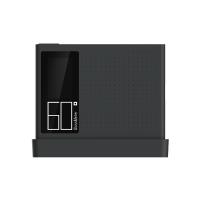
Caipu’s microporous gloss meter CS-300S (measurement aperture: 2*3mm) can solve the gloss measurement of irregular samples, suitable for measuring such as mechanical parts, jewelry, handicrafts, plastic pipes, hardware decoration, testing The surface to be measured, such as a sample, has a complex shape of surface gloss. (The same applies to flat gloss measurements).
CS-300S measurement steps
1. Power-on calibration
2. Sample measurement (the sample fits the measurement aperture to avoid light leakage)
3. Press the test button to get the glossiness of 60°