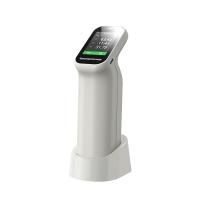
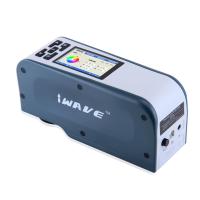
1. Principle of Colorimeter
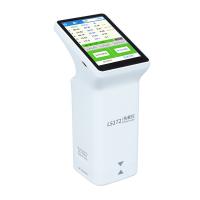
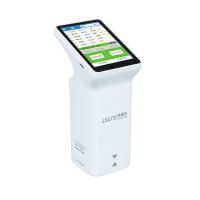
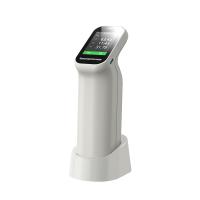
What is a Colorimeter ? Some people may be confused. Simply put, a Colorimeter is a color measurement tool that is used to provide color measurement and color comparison to change the color quality of a sample. Color meters used in different industries have different color measurement principles. Here, we will introduce two common measurement principles.
1. d/8° chromaticity principle
The Colorimeter adopts the d/8° integrated sphere principle. Simply put, there is a measuring aperture (event light) on the integrated sphere. The event light illuminates the integrated sphere, and the interior of the integrated sphere is reflected and refracted to make the light source uniform. The receiving hole receives light at an angle of 8° off the central axis, and is calculated by the color difference formula. The integrated sphere is a key part of the shader. Color measurement accuracy has a lot to do with integrating the sphere. If the quality of the integrated sphere is not good, it will affect the service life of the color meter, which will greatly increase the maintenance cost. Therefore, using a high-quality integrated sphere will extend the life of the instrument.
2. 45°/0 Chromaticity Principle
The color difference meter adopts the 45°/0 principle, that is (45° ring illumination, 0° viewing angle). Simply put, a light source shines from all directions simultaneously and is found to illuminate a reflective sample at a 45° angle. Hand-held color meters use four light sources, which are placed on the same horizontal plane. After repeated reflections, the light emitted by the four light sources will be evenly irradiated on the measurement sample.
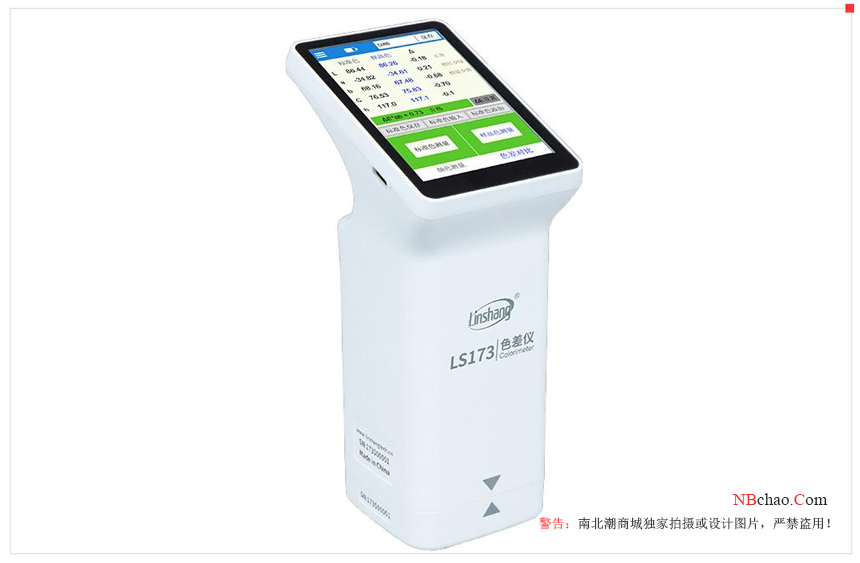
2. Color difference meter standard
The Colorimeter complies with relevant international CIE standards and GB standards. The specific standards are as follows:
GBT 3978-2008 Standard lighting lamps and geometric conditions, this national standard stipulates the relative spectral power distribution of CIE standard lighting mechanism A, D65 and other luminous C. The angular and spatial conditions of chromaticity correspond to the condition of 45°x:o°, ie receiving reflected radiation from a specific direction at an angle of 45°.
GBT 3979-2008 Object color measurement method. It stipulates the technical conditions of the white standard and the measurement method of the object. The color rice of Linshang Technology is a product developed by using the relative color stimulation function.
GBT 7921-2008 Unified color space and color difference formula. In this standard, the color difference calculation and the color difference formula are explained. In addition, the Colorimeter also complies with the following standards:
"GBT 11186.1-1989 Method for measuring paint film color - Part 1: Principles"
"GBT 11186.2-1989 Method for measuring the color of paint films - Part 2: Color measurement"
"GBT 11186.3-1989 Method for Measuring the Color of Paint Films - Part 3: Calculation of Color Difference"
"JJG 595-2002 Verification Regulations for Color Meter"
3. How to use the advantages of Colorimeter and Colorimeter
1. How to use the Colorimeter?
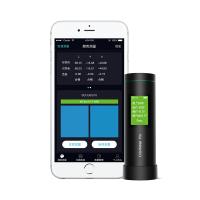
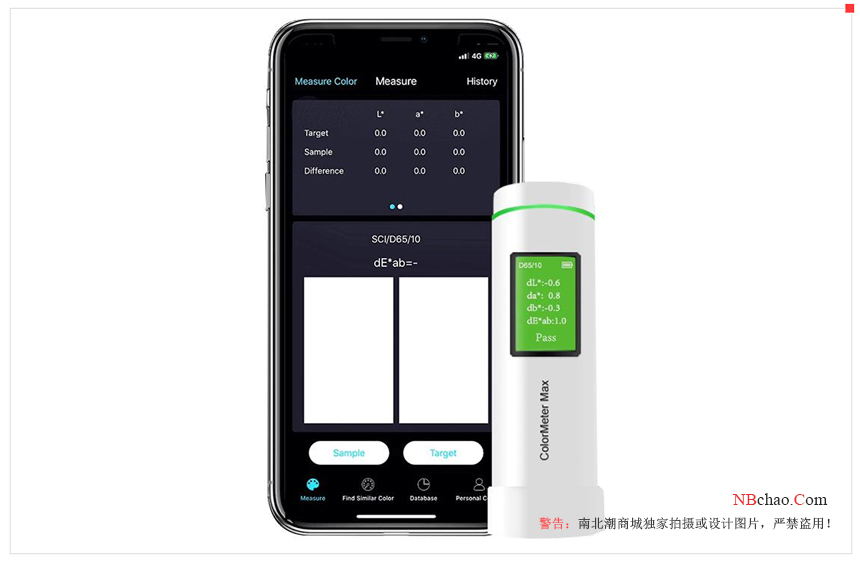
Both Colorimeters are required to be used with the Colorimeter app.
Use the browser to scan the QR code on the instrument to install the Colorimeter APP, and follow the prompts to download and install.
Turn on Bluetooth and find the same SN number as the instrument.
Choose to calibrate the meter or skip calibration.
You can choose "Color Scan" or "Color Compare".
Press the button on the pocket shader or press the measure button on the shader app.
The measured color will be displayed on the screen.
2. Advantages of Colorimeter
If you take color measurements, select the desired color chart, three closest color codes will be matched.
You can create a personal color chart and save this color.
You can then perform color comparisons, measure the color of a sample, and use the saved color as a standard. Two colors will be compared.
The Colorimeter also has a QC test function, and various color charts are installed in the color chart application.
Seven color positions and six color difference formulas can meet the needs of different industries.
The measurement aperture of the pocket shader is 8mm, which means that the surface area of the test sample only needs a measurement aperture larger than 8mm.
The measurement time of the instrument is very short, only 1s.
4. Color space
The 7 color spaces are mainly CIE Lab, Luv, LCh, Yxy, CMYK, s-RGB, Hex, so what does the lab mean? In fact, lab just refers to the color coordinate space of colors. Any color has a unique laboratory (color coordinate space). It represents color as three values: L* for lightness from black (0) to white (100), a* for green (−) to red (+), b* for blue (−) to yellow ( +). CIELAB is designed so that the same amount of numerical change in these values is about the same amount of change in visual perception. (From Wikipedia). △E means total color difference, △L+ means lighter, and △L means darker. △a+ means red, △a- means green. △b+ means yellow, and △b- means blue.
In LCh, "L" means lightness, "C" means saturation, and "H" means hue. Brightness, saturation and hue are the three basic properties of color. in the RGB color space. "R" is red, "G" is green, and "B" is blue. This color space is more used in the printing industry.
In the Luv color gamut, "L" represents brightness, "u" and "v" represent chroma RGB values, and Luv values can be converted by formulas. The "Y" value Yxy in the color space represents the Y value in the three-layer color, and xy represents the chromaticity characteristic of the color. The color space CMYK represents the printing color mode. Color space HEX Also known as hexagram space, it refers to the hexagonal representation of colors.