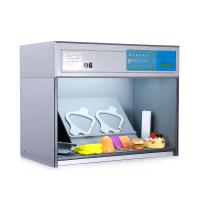
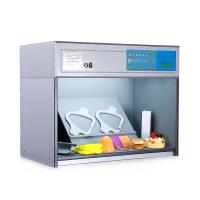
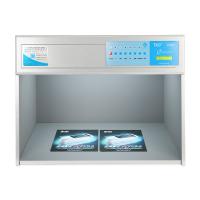
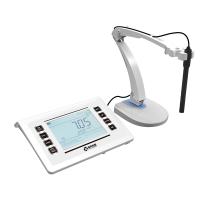
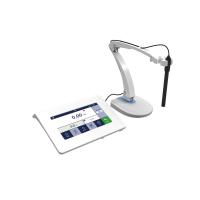
A Colorimeter is a light sensitive device used to measure the transmittance and absorbance of light passing through a liquid sample. This device measures the intensity or concentration of the color formed when a particular reagent is introduced into a solution.
There are two types of Colorimeters - color densitometers, which measure the density of primary colors, and color photometers, which measure color reflection and transmission.
Colorimeter Design
The three main components of a Colorimeter are the light source, the cuvette that contains the sample solution, and the photocell that detects the light passing through the solution.
Instruments are also equipped with color filters or specific light-emitting diodes to produce colors. The output of the Colorimeter can be displayed by an analog or digital meter in terms of transmittance or absorbance.
In addition, the Colorimeter may contain a voltage regulator to protect the instrument from fluctuations in the supply voltage. Some Colorimeters are portable and can be used for field testing, while others are larger benchtop instruments that can be used for laboratory testing.
working principle
Colorimeters are based on the Beer-Lambert law, according to which the absorption of light by a medium is directly proportional to the concentration of the medium.
In a Colorimeter, a beam of light of a specific wavelength is passed through a solution through a series of lenses that direct the colored light to a measuring device. This will analyze the color compared to the existing standard. The microprocessor then calculates the absorbance or percent transmittance. If the solution is more concentrated, more light is absorbed, which can be determined by measuring the difference between the amount of light at its origin and the amount of light after passing through the solution.
To determine the concentration of an unknown sample, several sample solutions of known concentrations are first prepared and tested. The concentration versus absorbance is then plotted to generate a calibration curve. The results of the unknown sample are compared to the results of the known samples on the curve to measure the concentration.

application
Colorimeters are widely used to monitor the growth of bacterial or yeast cultures. They provide reliable and highly accurate results when used in bird feather color assessment. They are used to measure and monitor the color of various foods and beverages, including vegetables and sugar. Certain Colorimeters measure the colors used in copiers, fax machines, and printers.
In addition to being used for basic research in chemistry laboratories, Colorimeters have many practical applications, such as testing water quality by screening chemicals such as chlorine, fluoride, cyanide, dissolved oxygen, iron, molybdenum, zinc, and hydrazine. They are also used to determine the concentration of plant nutrients such as ammonia, nitrate and phosphorus in soil, or the concentration of hemoglobin in blood. Colorimetry can also be used in color printing, textile manufacturing, and paint manufacturing for accurate quality inspection.
Colorimeters and Spectrophotometers
Like Colorimeters, Spectrophotometer s are used to measure the color-absorbing properties of substances. The key difference between the two is that a Spectrophotometer measures transmittance and reflectance as a function of wavelength, while a Colorimeter measures the absorbance of a specific color.
A Spectrophotometer measures how the reflectance and transmittance of all colors change. Colorimeters only work in the visible part of the electromagnetic spectrum, while Spectrophotometer s can use both infrared and visible light. A Spectrophotometer will produce Beer's law valid results and can be used effectively as a Colorimeter, but at a much higher cost and complexity.