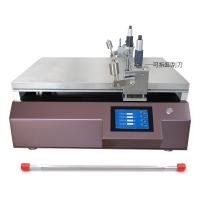
一、精密的狭缝涂布方式
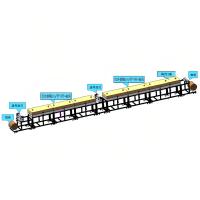
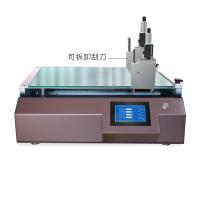
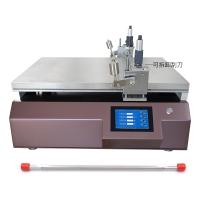
狭缝式涂布(slot die coating)是一种高精密的涂布方式,不仅应用于电子构装(fpc、 rcc、csp、loc等)、光学膜(增亮膜、hardcoat、偏光膜、扩散膜等)、电池极板等成卷基材的涂布,也应用于非连续基材如lcd 玻璃基板光阻涂布。其操作原理是将流体以一定量泵打入一能将流体均匀展开的模具。
狭缝涂布模头可以生产出非常薄的涂层以及透明的光学涂层,同时可使涂层量保持在非常公差范围内,与将涂布液擦拭到基材上的涂布系统不同,我们的窄缝涂布模头属于模唇缝隙相对较大(可达到 0.0762mm)的涂布模头,由此模唇缝隙抽吸出的液体可形成薄至 1μm 的涂层。窄缝涂布模头可在涂层厚度只有2μm 的情况下,将整个宽度上的涂层量控制在±2.5% 左右的公差变化范围内。我们生产的狭缝涂布模头模唇是固定的,因此可以利用可换的控隙片来改变涂层的厚度和宽度。涂布量从不足 1μm 到 254μm 的涂层厚度。该类模头可加工各种类型的胶粘剂(包括特殊的透明胶粘剂) 电池、、陶瓷电容器、装饰表面、电子显示介质、过滤膜、地板、燃料电池、磁性泥浆、医疗产品、光阻材料、压敏胶带、太阳能电池、超导体、撕带和窗用薄膜等。
模头的模唇是固定的,用填隙片来调节模唇间隙。这种模头不像可调模头那样把涂布料流 “涂抹” 到基材上,它是通过把料流从相对较大的模唇间隙中吸出而粘结到基材上。这种湿涂层厚度低可薄至2μm。基于这种湿涂层工艺,模头系统特别适用于超薄或透明涂层”。
目前,许多涂布厂家同时采用辊筒和缝口模头两种涂布工艺。辊筒涂布是一种传统工艺,它对涂在基材上的材料量是通过刮刀或预先设定的辊间隙来间接控制的;多余的涂布材料在刮掉后被送回涂槽;涂槽本身敞开放在车间内。与之相比,缝口模头则有很大不同。首先它是一个封闭的系统,其次它是通过精密计量泵来对涂布材料进行预先计量。正是基于这两点,缝口模头具有辊筒涂布所不具备的一些优势:
●涂层重量和整体分布更均匀;
●生产线速度更快;
● Minimizes volatile emissions, coating contamination, raw material waste, and workplace clutter.
Our slot coating dies have a coating width of up to 3m and a wet coating thickness from 2μm to 254μm. Slot dies are typically supplied as part of a complete system that includes positioners (to maintain orientation to idlers), vacuum boxes (to remove the distance from the coating stream to the point where it contacts the substrate surface) entrained air) and flow handling equipment (filters, pumps, drives and aerators). As an option, a die handling mechanism, called a "hinge," can be incorporated into the positioner to allow the operator to quickly disassemble and clean the die, replace shims if necessary, and retighten the die body.
2. Dimple coating method
At present, there are many coating methods in the coating field, such as direct gravure coating, reverse gravure coating, reverse roll coating, die extrusion coating, wire bar coating, knife coating and so on. But now many customers report that the coating methods such as steel wire bar and reverse roller have produced some disappointing coating effects, such as the streak phenomenon produced by steel wire bar, and the " "orange peel" phenomenon, and some other difficult quality problems. The micro-gravure coating method was developed to overcome the above coating defects. Micro-gravure coating can obtain a smooth, uniform and stable coating. This coating method is simple and reliable, and has good repeat stability. Micro gravure coating is relative to the traditional gravure coating method. Traditional gravure coating, the coating roller is an anilox roller, the diameter is generally between φ150mm ~ φ300mm, the rubber roller is used as a back pressure roller to press the material film on the coating roller, and the rotation direction of the coating roller is in line with the material film. The material direction is the same. Micro gravure coating, the coating roller is also an anilox roller, the diameter is generally between φ20mm ~ φ50mm, so it is called micro gravure coating (micro gravure), it is a reverse, contact coating method, that is, micro coating The rotation direction of the cloth roller is opposite to the feeding direction of the material film, and the material film is not pressed by the pressure roller on the coating roller.
How Micro Gravure Coating Works
Like the traditional gravure method, micro-groove coating also requires a drawdown blade, but the use of the drawdown blade in micro-groove coating is different in hardness and angle. Compared with the traditional scraper, the scraper for dimples is thinner and more flexible, the pressure of the scraper is lighter, the angle of the scraper is steeper, and the extension line of the scraper basically passes through the center of the coating roller. The coating roller is in gentle contact with the drawdown blade, so the service life of the drawdown blade and the coating roller is long in dimple coating.
In dimple coating, the role of the micro-anilox roll is also a coating metering roll, and its line number also has a wide range. The anilox roller is installed in the precision bearing seat, and is directly driven by the motor to rotate, and the direction of rotation is opposite to the direction of material feeding.
In dimple coating, the arc on the roller surface should be an arc less than 90 degrees from the coating roller leaving the liquid surface to the contact point between the roller and the substrate. For a coating roller with a diameter of 40mm, this distance should not exceed 30mm.
In dimple coating, what is important (and the main factor controlling coat weight) is the ratio of feed speed to dimple roll speed. The material film has speed, but the coating roller is stationary, and there is no coating amount at this time. As the speed of the coating roller increases, the coating amount will increase, and overflow will occur. If the speed increases, the coating amount will decrease again. Tests have determined that a "hump" curve occurs for coat weight vs. speed ratio.
A typical coating pattern will be the following pattern: (Applicator Roll Surface Line Speed / Material Line Speed)
When the speed ratio = 60%, the coating starts; when the speed ratio = ~ 130%, uniform and regular coating; when the speed ratio = 130% ~ 200%, the coating amount increases; when the speed ratio = 200 % or more, the amount of coating decreases and instability occurs.
Although the size of the coating amount is related to the cell capacity of the mesh roll, there is also a window on this curve, usually when the ratio is ~130%, the thickness or weight of the coating can be effectively controlled, and can further ensure uniformity Consistent coating surface. In actual conditions, the coating amount of each coating roller can vary within the range of ±10%. Through a certain number of coating rollers with different lines, different coating amounts can be obtained to achieve a more economical effect. Combined with the transmission ratio and adjusting the coating roller, a relatively continuous coating amount can basically be obtained. For more stringent coating, the curve between the coating amount and the speed ratio can be drawn by combining the cell specification of the coating roller and the rheological properties of the glue.
Advantages of Micro Gravure Coating
1 Micro gravure coating, which can apply very thin coatings to very thin materials. Since there is no back pressure roller, there are no "offset", wrinkles and other defects on the coated surface.
2 Since there is no back pressure roller, the edge of the material film can also be coated with glue, and there is no need to worry about the glue being applied to the back pressure roller and affecting the coating. In the traditional coating method, changing the coating width requires changing the width of the back pressure roller. Dimple coating can adapt to different widths of paper, film, textile, metal foil, etc., and the materials that can be coated can be from 2 micron pet Foil to 200 micron.
3 Since the drawdown blade touches the anilox roller lightly, the wear of both the drawdown blade and the anilox roller is very small.
4 Due to the small diameter and light weight of the micro-gravure roller, it is convenient to replace the micro-gravity roller for different coating amounts.
5 反向涂布(类似于剪切方式)可以获得比较平整的涂布,而不需要匀胶系统。微型涂布辊更适合易挥发的溶剂性胶液,而不用担心网穴堵塞。微凹涂布适合涂布的胶的粘度从1cps到1000cps( cps 布氏粘度单位 1cps= 1mpa.s室温下水的粘度一般为1 cps)。
微型凹版涂布的应用案例
1 电子领域:遮光膜,0.05 micron涂层厚度;耐刮擦热ito导电膜;绝缘与多层导电线路板;lcd背光源膜组;新型平面照明;透明导电树脂层;存储磁带及存储材料;触摸屏的硬质保护膜等
2 图像材料领域:数字出版打印层;菲林胶片;自动化标签等;
3 医用材料: 自粘胶带、带有涂层的医用材料,如试验材料等;
4 光学领域:各种光学膜,如反射膜,增光膜等;各种玻璃用隔热膜等
5 电池行业: 锂电池用材料
6 工业自动化领域
各种复合用胶带;薄的化学反应涂层;其他改变表面性能的涂覆材料。
如太阳能电池背板,耐摩擦材料,特氟龙材料等。
三、网纹涂布方式
片材在线涂布单元,利用涂布的方式可对片材表面进行处理,可实现防静电,防雾等特殊要求。由纳米级导电材料通过涂布机与片材复合而成的特殊片材,表面电阻10e4-10e6欧姆。
片材特征:高洁净,无析出,导电性能不随温湿度而改变,实现防静电,广泛应用于洁净度高电子吸塑包装。
片材涂布的方式:网纹辊,微凹辊,压延涂布,浸泡等多种涂布方式。可适用于对apet.petg.ps.pp.abs.pe.pc等所有塑料。
特点如下:
1、表面电阻:超薄的导电处理层,导电性能为104~109,可According to客户要求通过调整配方做出相对应的表面电阻。
2、稳定性:稳定的导电功能,不随温湿度变化可重复利用或回收使用而不丧失防静电功能。
3、可靠性:聚合体合成技术避免添加失误或不均匀涂附,加工性能好,导电处理后不影响印刷,成型等性能。
4、洁净性:无粉末及油污析出,环保,不含有害物质,无腐蚀性和挥发性气体,耐清洗。
5、灵活性:可针对不同片材及不同的表面涂布要求,灵活更换各种规格的涂布辊。可为客户定制各类涂布辊筒。
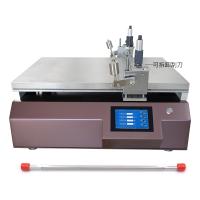
四、刮刀涂布
涂布参数
Viscosity: 1,000~200,000cps
Thickness: 20~300μm (wet state)
features
High coating precision
uniform surface quality
Coating thickness
The scraper coating often has uneven gluing, which is mainly related to the processing accuracy of the scraper, the angle of the scraper to the rubber wheel during coating, and the viscosity of the paint;
The flatness precision of the scraper is required to be high, which means that the scraper does not warp, deform or notch, otherwise the coating amount error will be large; when coating, the angle between the scraper and the tangent point of the rubber wheel is generally between 15°~30 ° If it is too large, it will scrape almost against the rubber wheel, and the scraper will easily vibrate when the rubber wheel is running at high speed, causing uneven coating and large differences in the amount of coating; in addition, it will also cause irregularities in the coated film surface Flat, scratches, but also easy to cause scraper blade damage.
5. Roll coating
Roller coating is characterized by a combination of edge drawdown blade and roller drawdown blade. The influence of the thickness of the glue is smaller than that of the blade scraper, the coating thickness is easy to adjust, and it can coat high-viscosity glue. Larger width, can be adjusted horizontally
advantage:
1. The scraper has high strength and hardness, and the straightness error of the cutting edge is small. The pneumatic fine-tuning mechanism can be used to adjust and control the position of the scraper, and the coating amount control and scraping precision are high.
2. It can be applied with a thicker coating. When coating, the glue solution flows from top to bottom between the scraper edge and the material film, so the glue solution can be fully used, and there is basically no waste of glue solution.
shortcoming:
1. The coating quality of comma roller coating has a great relationship with the operation of each component unit, especially because the transmission ratio between the driving motor and the rotating pressure roller is difficult to adjust and master, which often results in uneven coating and prone to horizontal or vertical When coating, the glue is easy to flow out from the gap between the baffle plate and the transmission pressure roller, the sealing is not complete, and when coating, it needs manpower to continuously stir the glue in the glue storage tank, so as to Ensure the uniform distribution of glue.
Application cases of comma roller coating:
All kinds of optical film, protective film, film, matte flexible packaging film.