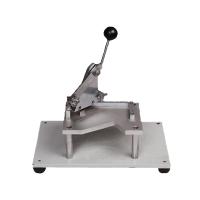
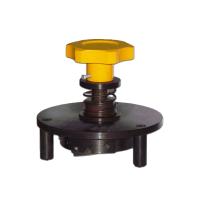
This article describes the sample collection and temperature and humidity pretreatment of paper and board.
1. Sample collection
Due to the inhomogeneity of the structure of paper and cardboard, its performance is different due to different parts, different vertical and horizontal directions, and different front and back sides. Therefore, the basic requirement for sample collection is to use as few samples as possible to better represent the characteristics of the entire batch of products. The collection process of paper and cardboard samples is: first select a number of units from a batch of paper or cardboard, and then extract a number of paper samples from the units, and the paper samples are further subdivided and combined into samples for various tests. The national standard GB450 "Collection of paper and cardboard samples" stipulates the method and quantity of paper and cardboard sample collection, as shown in Table 1 and Table 2. When selecting units, if n/20 is not an integer, the remainder is ignored, and n is the number of units in a batch of paper or cardboard. The sampling unit should be intact and in good condition.
unit selection
| Units per batch | Select the number of units | selection method |
| 1~5 | all | - |
| 6~99 | 5 | random |
| 100~399 | n/20 | random |
| ≥400 | 20 | random |
pattern selection
| Number of sheets per batch unit | Minimum number of samples |
| ≤1000 | 10 |
| 1001~4999 | 15 |
| ≥5000 | 20 |
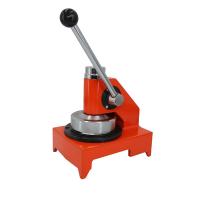
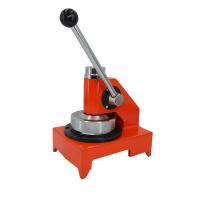
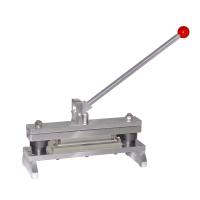
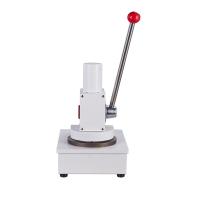
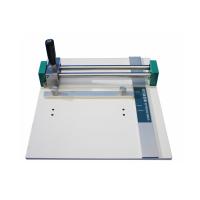
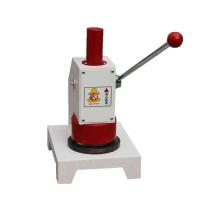
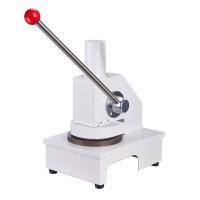
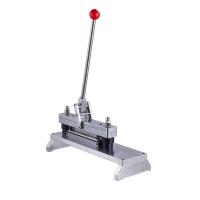
The number of paper samples randomly selected from each batch of units should meet the requirements of Table 2 and also meet the needs of the test. Cut the paper sample from the sample according to the given size (such as 450mm×300mm). When cutting the paper sample, the long side should be the same as the longitudinal direction of the paper. The cutting position of each paper pattern should be different. Paper samples should be kept flat, free from creases and creases, protected from direct sunlight, humidity fluctuations, and other detrimental influences. Care should be taken when handling the paper pattern so as not to affect the chemical, physical, optical, paper surface and other properties of the paper pattern. Each sample should be marked clearly, and the vertical, horizontal and front and back sides of the paper should be accurately marked. According to the sample size and quantity required by the specific test, cut the sample from the paper sample. The sample can sometimes be the paper sample itself.
2. Temperature and humidity pretreatment
Changes in air temperature and humidity will affect the moisture content of paper and cardboard, and also cause changes in their physical properties and mechanical strength to varying degrees. Therefore, before the performance test of paper and paperboard, the sample should be placed under constant temperature and humidity conditions for temperature and humidity pretreatment, and the test should be carried out under standard conditions as much as possible.
(1) Pretreatment conditions
There are two types of temperature and humidity pretreatment conditions for paper and cardboard, one is relative humidity 65% ± 2%, temperature (20 ± 1) °C, which belongs to normal temperature and humidity conditions, and is widely used in my country. The other category is relative humidity 50% ± 2%, temperature (23 ± 1) ℃, which belongs to the standard atmospheric temperature and humidity conditions stipulated by international standards.
(2) Processing method
According to the national standard GB 10739 "Standard Atmosphere for Pulp, Paper and Cardboard Sample Handling and Testing", the temperature and humidity pretreatment of paper and cardboard samples was carried out. The specific processing steps are as follows.
① Pretreatment Before temperature and humidity treatment, the sample should be pretreated for 24 hours in an environment where the air temperature is lower than 40°C and the relative humidity is not greater than 35%. If the moisture content of the sample is low and needs to be balanced by moisture absorption, the pretreatment can be omitted.
②Temperature and humidity treatment Hang the cut sample so that the airflow with constant temperature and humidity can freely touch the surface of the sample until the moisture is balanced. When the difference between two consecutive weighing results separated by more than 1h does not exceed 0.25% of the total weight, it can be considered to be in balance. Under the condition of good atmospheric circulation, the processing time of general paper is 4 hours, the cardboard with lower basis weight is at least 5-8 hours, and the cardboard with large basis weight needs 48 hours or longer.