(1) Test principle
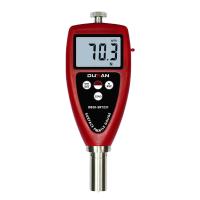
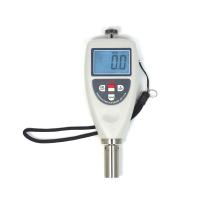
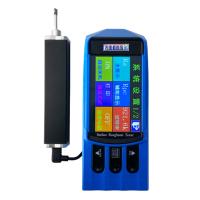
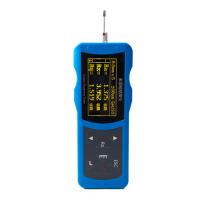
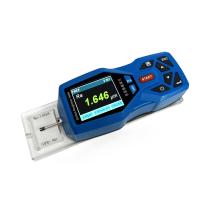
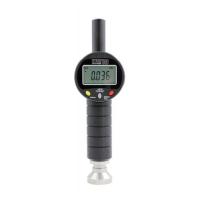
The Parker Printing Surface Roughness Meter is mainly used to measure the roughness of the printing surface of paper and cardboard, and its pressure can also be changed to measure the change of roughness and compressibility. It is composed of measurement, sample clamping, display part and operation panel, etc. If the porosity test head is replaced, it can also test the porosity (or air permeability) of paper and cardboard. The testing principle of the Parker Printing Surface Roughness Tester is to place the sample on the sample holder, and since the sample covers the light source, the sample holder is closed and clamped. First set a certain pressure, the measuring surface overlaps with the sensor, and the air leakage between the surface of the sample is measured, which is detected by the sensor and displayed on the display, that is, the roughness of the sample.
(2) Test method
①Sample collection and processing. Sampling according to GB450, cut 10 pieces of samples of 100mm×100mm along the transverse direction of the paper web, and the samples should be flat, without wrinkles, cracks, etc. According to the requirements of GB 10739, carry out temperature and humidity pretreatment on the samples.
②Select the appropriate pressure, the soft pad pressure is 10kgf/cm2, and the hard pad pressure is 20kgf/cm2.
③Insert the sample between the lower splint and the sensor. Since the sample covers the light source, the sensor head automatically clamps the sample.
④The indicator light marked AIR is on, and the counter indicates the roughness value of the sample after pre-adjustment.
⑤ Loosen the clamping device, take out the sample, and prepare for the next test.
The type of cushion should be indicated in the test report, H is a standard hard cushion, S is a standard soft cushion, and the clamping force is 20kgf/cm2, 10kgf/cm2, 5kgf/cm2 respectively.