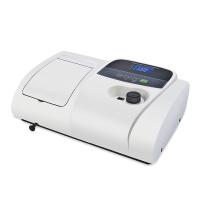
Standard illuminator and standard light source
The standard illuminant refers to a specific relative spectral power distribution of a person irradiated on the object observed by the observer. The physical reflector of the artificial light source that can realize this standard illuminating body is called the standard light source. Currently widely used standard light sources mainly include A light source and Dss light source. The Elrepho 2000 Colorimeter produced in Switzerland can simulate these two standard light sources at the same time. The photometer developed by the Automation Research Institute of the former Ministry of Light Industry of my country and the SBD Whiteness Meter produced by Wenzhou Instrument Factory can simulate the Ds light source.
Instrument geometry and spectral properties
Our country mainly adopts two kinds of 45°/0° photometer and d/0 photometer.
①45°/0° photometer
Refers to a photometer with 45° angle illumination and vertical observation. The SBD Whiteness Meter is an instrument with such geometric characteristics. GB 1542 "Determination of Whiteness of Paper and Cardboard (Blue Light Method)" stipulates that the angle between the axis of incident light and the normal of the sample plane is 45°±0.5°, and the angle between the axis of reflected light and the normal is 0°~0.5°. The maximum angle between the incident light axis and the incident light should be 9.5°±2.0°, the maximum angle between the reflected light axis and the reflected light should be 17.5° ± 2.0°, and the test aperture should not be less than 20mm. The spectral feature is to simulate the lighting of the DGs light source, and it must have the same rich ultraviolet content as the Ds light source.
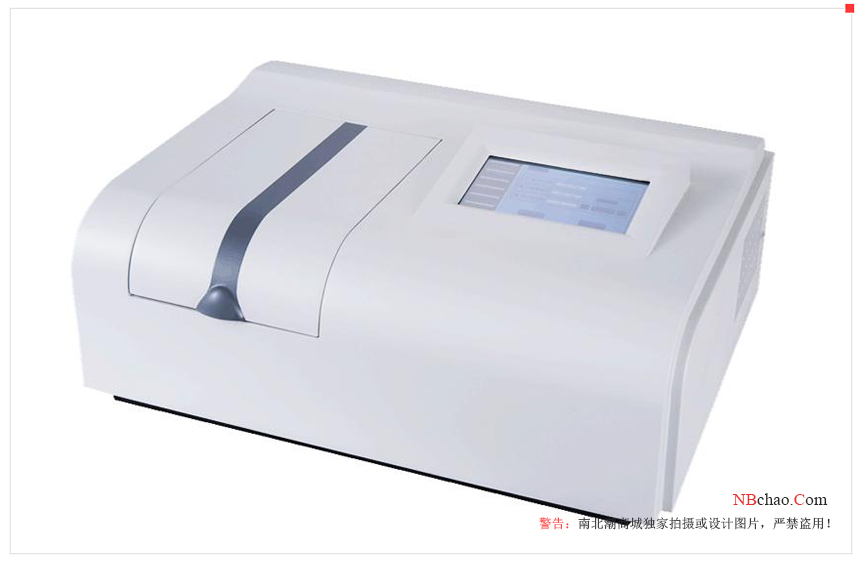
②d/0 photometer
Refers to a photometer with diffuse illumination and vertical observation. GB 7974 "Determination of Whiteness of Paper and Cardboard (Diffuse/Perpendicular Method)" stipulates that an integrating sphere is used to diffusely illuminate the sample. %, the test aperture is not less than 20mm, the angle between the normal of the sample surface and the axis of the observation beam is 8°, and the maximum angle between the observation axis and the observation line is ⒉.5° ± 0.2 ° . Open or closed gloss absorbers can be provided in the direction corresponding to the observation hole whose normal line of the sample surface forms an 8-angle. The spectral characteristic of the instrument is to simulate the D65 light source, which must have the same rich ultraviolet content as the D65 light source.