Test Principle
When the plastic film sample is stretched, the weakest part is the right-angle mouth. If the tensile load is gradually increased, the fracture of the plastic film must start from the right-angle mouth, and break point by point along the direction perpendicular to the tensile load until the sample is torn.
The right-angle tear strength of the plastic film is:
σtr=P/d
In the formula, σtr ——right-angle tear strength of the sample, N/mm;
P——the maximum tensile load when the sample breaks, N;
d—thickness of sample, mm.
Test Methods
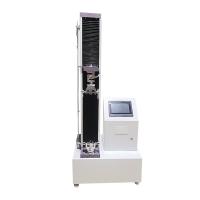
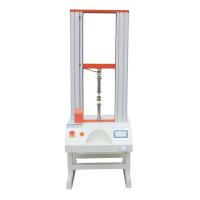
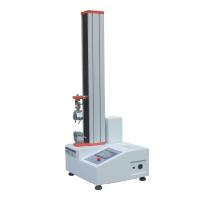
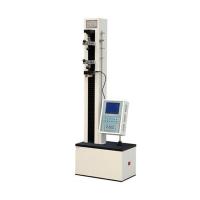
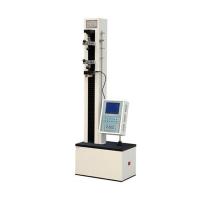
Cut 10 specimens longitudinally and transversely with a special tool. The shape and size of the specimens are shown in Figure 3-22(a). It is required that there should be no cracks or scars at the right-angled mouth of the specimens, and they should be treated in a standard environment until they are balanced. . The test equipment can be an electronic multifunctional testing machine, which is suitable for the tensile strength test of paper, plastic film, composite film and composite non-metallic materials.

Figure 3-22 Right-angle tear test
1—upper chuck; 2—sample; 3—lower chuck
The specific test methods include the following points.
①Measure the thickness of the sample according to the national standard GB 6672, measure the thickness of each sample at three points within the marking line, and take the arithmetic mean value, accurate to 1μm.
② Clamp the sample between the upper and lower clamps according to the method shown in Figure 3-22(b).
③ Stretch the sample at a speed of 200mm/min until the sample breaks, and the crack should be at the right angle.
④Record the maximum tensile load when the sample breaks, and calculate the right-angle tear strength.