When using packaging materials such as plastic films, multi-layer materials often stick to each other, which causes certain . Therefore, it is necessary to test the anti-bonding performance of plastic films. In addition, composite film is an important packaging material composed of plastic film and plastic film or other materials (such as aluminum foil, paper, fabric, etc.), such as paper/plastic composite type, plastic/plastic composite type, paper/plastic / aluminum composite type, etc. Therefore, it is also necessary to test the bonding performance of the composite film, that is, the peel strength test.
Adhesion resistance test

Figure 3-23 Adhesion test method
1-metal plate; 2-pressure weight; 3-support plate; 4-sample
Stack the samples together to make two groups, and put the two groups of samples on the flat plate for pressure, as shown in Figure 3-23. For moisture-proof barrier materials, place them at a pressure of 2.06×10^4Pa and a temperature of 70°C for 24 hours, then remove the pressure block, and place them at a room temperature of (23±2)°C for 30 minutes, so that the samples are mutually Slip or peel, check the state of the specimen at the time of peeling and the surface after peeling. The test results can be seen in the table.
| Adhesion resistance | Experimental results |
| The contact surfaces can slide freely on each other, and after the surface is peeled off, there are no cracks and defects on the surface | no cohesion |
| The contact surface is slightly unable to slide freely, and after the surface is peeled off, there are some traces of cracks | almost no adhesiveness |
| It is very difficult to peel off the contact surface. After peeling off, there are obvious cracks and defects in the show, and some parts are damaged | have a fairly strong adhesive |
Adhesion test
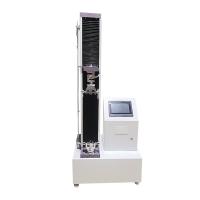
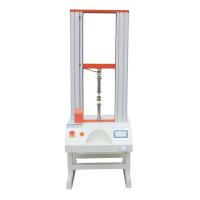
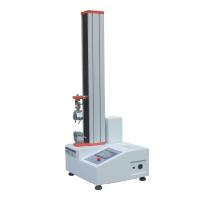
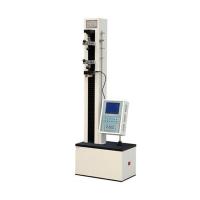
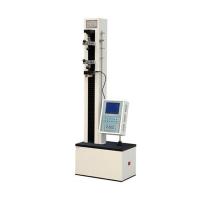
Peel off the bonded plastic film by 50~80mm in advance, and insert a 6.35mm aluminum round rod at the peeled position, as shown in Figure 3-24. Then install the plastic film and the frame between the upper and lower grips of the strain-type Tensile Testing Machine, and the lower grip drops at a speed of 125mm/min until the sample is completely peeled off. Read the tensile load at this time, The average load at the time of the peeling test was obtained. Divide the average load by the specimen width to obtain the bond force in N/mm.

Figure 3-24 Strain type Tensile Testing Machine
1-sample; 2-upper chuck; 3-aluminum round bar; 4-frame; 5-lower head