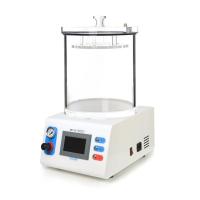
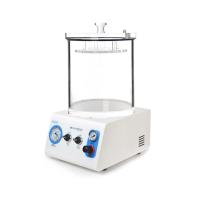
The sealing performance of plastic packaging containers is an important indicator, which mainly evaluates the penetration and leakage of gases, vapors and liquids.
(1 ) Penetration and leakage
① Penetration
It refers to the process in which gas or vapor directly passes through the packaging material due to the adsorption (or inhalation) effect of the high-concentration area, diffuses to the low-concentration direction through the wall of the material, and then absorbs from the low-concentration side. Penetration rate is related to the nature of the polymer, its thickness, and is affected by relative humidity. Permeation of gas or vapor can pass through the wall of the sealing gasket (or plastic seal), as shown in Figure 4-18(a); it can also pass through the upper surface of the seal, as shown in Figure 4-18(b ) and Figure 4-18(c ) . Infiltration mostly occurs at the seal of the plastic seal without a cover pad [ as shown in Figure 4-18(c)] and the heat-seal layer of the heat-sealed part [as shown in Figure 4-18(d)].
In order to reduce the penetration of gas or vapor in the plastic container, the container can be made thicker, and the material of the sealant should have a certain barrier property. In linerless seals, thicker structures or various geometries are often employed. In order to reduce the penetration of gas or vapor at the heat seal, the seal should be wide or the material of the heat seal layer should have a certain barrier performance against penetration.
②Leakage
It refers to the process of gas or vapor passing through limited discontinuities in materials or packaging containers. These discontinuities can be a pinhole in the plastic film, a crack in the edge of the bottle or the bottom of a blister, a tiny tear between the cap and neck end, or two layers of material in the heat seal area tiny pores in between. The rate of leakage depends on the ratio of the size of the breach to the molecular size of the gas or vapor, and the partial and total pressure of the closed system. Since the sample expands and contracts when it is heated and cooled, the ambient temperature has a significant impact on the leakage rate of the sample. Most airtight containers are not made of just one material, but multiple materials, and it is often difficult to ensure that these materials have the same coefficient of thermal expansion. Therefore, when the ambient temperature rises or falls, the seal may be loosened or tightened frequently, and leakage may occur at the end of the bottle neck and the gap between the plastic seal with a gasket [as shown in Figure 4-18 ( a ) and Figure 4-18(b)], may also appear in the gap between the bottle mouth and the closure without a gasket [ Figure 4-18(c)], or in the wrinkled or imperfect heat seal area [ As shown in Figure 4-18(d)].

Figure 4-18 Schematic diagram of penetration and leakage
In order to reduce the leakage of gas or vapor in the packaging container, the geometric design of the seal without a lid can be changed, or the thickness of the gasket of the seal with a lid can be increased to reduce the gap or crack in the contact part of the seal and the container.
In order to reduce the leakage of gas or steam at the heat seal, it is necessary to optimize the packaging process parameters, such as the tension and clamping pressure, temperature and residence time of the sample during heating or cooling; the thickness of the heat seal layer (too thick is not conducive to Heat conduction, too thin will lead to imperfect heat sealing); film layer thickness (too thin will cause pinholes and leakage, too thick, heat will transfer from the heat sealing area too quickly, affecting the heat sealing quality).
(2) Sealability test of plastic packaging bags
The test method is divided into vacuum test method and weight change method.
① Vacuum test method

Figure 4-19 Vacuum test method
1-ventilation valve; 2-exhaust valve; 3-vacuum valve; 4-vacuum cylinder; 5-test liquid; 6-support frame; 7-sample bag
This method is mainly suitable for packaging bags with more air content. This method cannot be used when the strength of the packaging bag is greatly reduced due to the influence of water. The vacuum leakage test device is shown in Figure 4-19, which is mainly composed of a vacuum cylinder, a sample support frame, and a vacuum gauge. Vacuum cylinders are transparent containers that are completely airtight and can withstand one atmosphere of pressure. The upper part of the vacuum circle is equipped with exhaust, ventilation and air extraction valves. The sample support frame is placed in the test liquid in the vacuum cylinder, and it is easy to observe whether the sample leaks through the sample support frame. The specific test method is: firstly, put the actual contents or similar contents in the sample bag, and heat seal the sample bag. At least 5 sample bags are required for each set of tests. Then put the appropriate test liquid (such as water or colored water) in the transparent vacuum cylinder, and then gently immerse the support frame where the sample bag is placed in the solution, and ensure that the surface of the sample bag is not less than 25mm from the liquid surface. Then cover the vacuum cylinder, close the ventilation valve, and start the Vacuum Pump. When the pressure is reduced to 1.33×10⁴Pa within 30~60s, close the Vacuum Pump and vacuum valve and keep it for 30s. Pay attention to observe whether there are bubbles overflowing in the sample bag, open the sample bag after the test, and observe whether there is water seepage.

Figure 4-20 Leakage test method
1-test solution; 2-sample bag; 3-leakage
When the air content of the packaging bag is small or cannot be measured by the vacuum method, a simple method can be used for detection. The test principle is shown in Figure 4-20. Take out the contents from the bag, clean the packaging bag, and use it as a sample bag. At least 5 sample bags are required for each set of tests. Fill the test solution into the sample bag, seal it and put it on the filter paper for 50 minutes, then turn it over and leave it for 50 minutes to observe whether the sample bag leaks.
② Weight change method
It detects leaks by measuring the change in bag (or container) weight. Fill the packaging bag (or container) with liquid, put the packaging bag (or container) into a desiccator with a relative humidity of 0, the weight of the packaging bag (or container) will change due to leakage. Weigh the packaging bag (or container) regularly, and the penetration rate of the sample in a steady state can be obtained from the slope of the weight-time curve. A positive slope indicates weight gain and a negative slope indicates weight loss.
(3 ) Plastic bottle sealing test
Inject water of nominal capacity into the sample bottle, then seal the bottle cap tightly according to the actual packaging state, and turn the bottle upside down for 12 hours to check for leakage.
(4) Plastic barrel sealing test
Pour nominal volume of water into the sample bucket and tighten the lid. For small-diameter plastic barrels, check for leakage after placing them horizontally on flat ground for 4 hours. For large-diameter plastic barrels, within the range of (120±10)s and 45° left and right tilt angles, check for leakage after reciprocating at a constant speed for 20 times.
(5) Sealing test of dangerous goods packaging barrels
For small-caliber dangerous goods packaging barrels, install sealing joints on the lid or the side of the barrel, inflate the sample barrel to the specified pressure, and check whether there are bubbles within 30 seconds. For large-diameter dangerous goods packaging barrels, fill the sample barrel with water of nominal capacity, then roll it on a flat ground, roll it twice within 20 minutes, each time the distance is 5m, and check for leakage.
For example, the LSSD-01 Leakage and Sealing Strength Tester can test the pressure resistance, sealing degree and leakage indicators of flexible packages by applying pressure to the inside of plastic and glass packaging containers, so as to achieve the purpose of testing their integrity and sealing strength. MFY-01 airtight Tester uses vacuum test method to test the airtight performance of plastic and glass packaging containers.