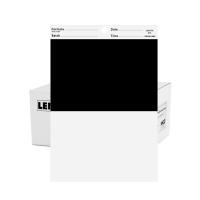
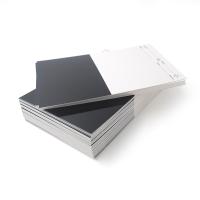
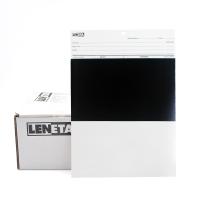
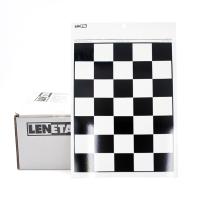
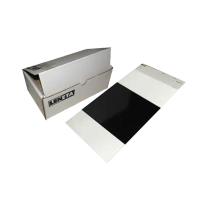
Hiding power refers to the ability of the color paint to be evenly coated on the surface of the object and cover the background color of the surface of the coated substrate. Black and white grid tests are often used, expressed as the minimum amount of paint per unit area to cover the background color (g/m), according to GB/Tl726-89 stipulates that brushing or spraying on the surface of the black and white grid glass plate is adopted, while foreign countries use disposable black and white grid hiding power paper, which is very convenient to use. The hiding power of the paint depends on the degree of scattering and absorption of light by the pigment. It is also related to the difference in refractive index between the pigment and the base material. The higher the hiding power, the larger the construction area of the color paint. Examples of the construction volume per unit volume of several types of color paint are as follows:

For white and light-colored paints, a reflectance meter can also be used to measure the ratio of the reflectance of dry films of different thicknesses on blackboards and whiteboards, that is, the contrast ratio. When the contrast ratio is equal to 0.98, it is considered that the thickness of the paint film is completely covered. , the covering power can be calculated according to the thickness.