Leveling and sagging
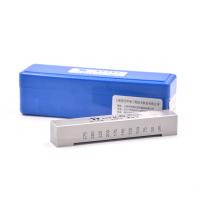
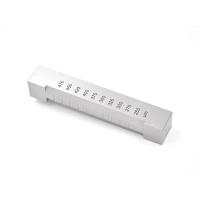
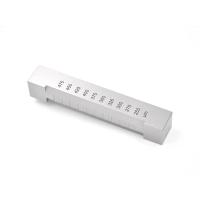
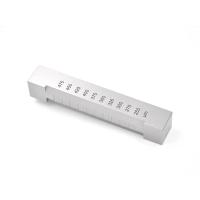
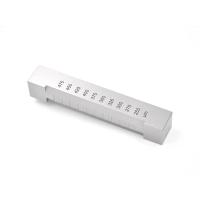
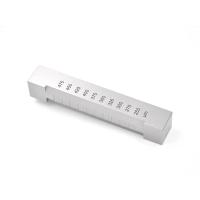
The leveling and sagging properties of the paint film can be evaluated by the leveling ability or sag resistance of the paint by observing the adjacent paint strips with successively changing thicknesses flowing together or not flowing together after scraping with a toothed scraper .
Leveling and anti-sagging are a pair of contradictions. For coatings with excellent thixotropy, after construction, they have good leveling ability, anti-hanging and pushing properties, smooth and flat coating film, uniform film thickness, and good decorative appearance.
Grinding (GB/T1770-89)
Because in the process of painting, it is always necessary to carry out local grinding and repairing; for the surface of old paint film painted or putty, effective overall grinding is required. Therefore, grinding is a process required in the painting process. The difficulty of grinding directly affects the construction efficiency.
The sandability is generally judged by the degree of sanding or the difficulty of sanding when sanding. If it feels greasy when it is heavily sanded and polished, it will not be easy to polish and smooth, and the polishing performance will be poor. Generally, hard coating films have better sandability, and soft paint films have poor sandability.
recoatability
Removability refers to the same problems as whether the second coat has biting, bleeding, non-drying and poor bonding on the bottom layer within the specified interval time.
Undercutting, bleeding, and non-drying are usually caused by improper use of paints, or too short coating intervals, too long coating intervals, or poor adhesion due to recoating on old paint films. Therefore, in the case of composite coating systems or multiple coats, recoatability appears to be a very important application performance. Of course, the recoatability can be improved by adjusting the construction process conditions.