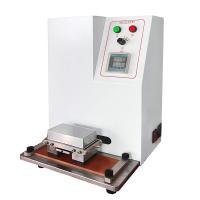
The inking principle of gravure printing is basically similar to that of engraving gravure printing, except that the wiping (wiping) of ink on the graphic part is carried out with a scraper (a scraper is used to roll the printing plate on a flat surface) The ink is scraped off). The ink used is completely different from the gravure ink. From a rheological point of view, the two oil penetrations are completely different, one is thick and viscous, and the other is very thin Fluid. One basically depends on the drying of the oxidized conjunctiva, and the other depends entirely on the volatilization of the solvent.
The gravure ink also has the problem of settling because it is relatively thin. Circulating agitation also promotes the formation of air bubbles and crusts. Pigment settling can cause light-colored prints, while air bubbles and skinning can affect printing operations, print quality and damage paper. When using a heated and dried cylinder, the web is easy to wrinkle, which may cause inaccurate registration and so on.
The gravure ink is the same as the flexographic oiler. It can be used to print non-absorbent substrates (such as plastic film, aluminum foil, etc.) in addition to printing paper. So it has some similar glitches about that as well.
This type of ink has the same disadvantages as flexographic inks and similar faults as engraving gravure inks.
In solvent-based gravure inks, except for water-based ones, almost all are toxic and flammable; problems. Therefore, the air pollution of solvent-based inks has become a very serious issue. For this reason, alcohol-soluble inks, especially water-soluble inks, have a bright future.
(1) Settlement.
1. Phenomenon: After long-term storage, the upper part of the ink appears thinner, less viscous, and poor in color and concentration, while the lower part is the opposite. The solid components of the ink (pigments or fillers) settle to the bottom of the container or settle in the ink fountain. Sometimes hard lumps can form on the bottom of the container. Of course, it should be noted that some pigments can form large flocs and precipitate.
2. Reason: This type of ink itself is a relatively thin fluid, so it is prone to settling after long-term storage. The specific gravity of the pigment or filler is too high. Pigment dispersion is poor. Pigment flocculation. Generally speaking, Shen Gong is fast because of pigment flocculation. The powder binder in the binder has poor solubility and precipitates out.
3. Solution: fully stir the ink, so that the pigment and the binder can be fully mixed and evenly mixed. When manufacturing, the viscosity of the ink is made larger or slightly thixotropic . Ink dispensing try not to use large specific pigments, but use deflocculants. Replace with new ink with good dispersibility. Add a strong solvent.
(2) Adhesion or Flexibllity poor.
1. Phenomenon: The ink imprint (film) can be scratched, wiped (or stuck) with your fingers, or the color will fall off when you wipe it lightly. This phenomenon is called graying when it is printed on paper.
When printed on a non-absorbent substrate (such as a polyolefin film), its fingering strength and rubbing strength are extremely low. When a tape is used for a peeling test, the imprint is easily peeled off, and sometimes it will fall off in flakes when rubbed. This is called Adhesion is poor.
2. Reason: The ink film becomes brittle after drying. The binder in the ink does not adhere (grab) on the surface of the substrate. The linking material (binder) component in the ink is too little or the linking material is not suitable. Paper is too absorbent.
When printing plastic film, the main reason is that there is a problem with the quality of the plastic film or improper handling. Ink adhesion is poor. Unsuitable solvent used. Poor drying. Additives in the film such as plasticizers, stabilizers, antistatic agents, etc. float to the surface of the film. Inks of several different colors are superimposed and printed together.
3. Solution: Add some plasticizing substances to the oiler, but add some anti-sticking additives in a balanced manner to avoid the disadvantage of "sticking together". Heating can be used when printing materials such as cellophane. Replace with new ink with more binder. Switch to less absorbent paper.
When printing polyolefin films, qualified films should be selected and treated well. Use ink with good adhesion. Use an appropriate thinning solvent instead. Use heating and drying as much as possible. It is best to wipe off the additives on the film with solvent before printing. If necessary, the film can also be preheated before printing. When carrying out color printing, it is necessary to choose a type of oil or a better compatibility.
(3) The color is too strong or too weak (Color tco Strong or too weak).
1. Phenomenon: the color of the printed matter is too strong or insufficient and light.
2 Reasons: The ink is too thick and sticky. The printing plate is corroded too deeply. Paper is poorly absorbent. Or the complete opposite.
3 Solution: Add some linking material or solvent to the ink to dilute it. On the contrary, you can add some new thick ink and thick linking material or lightening agent. Use new paper. Replace with a new printing plate.
(4) The thickness of the ink is not suitable (Consistency Incorrect).
1. Phenomenon: The printed matter is too weak. There are spots on the solid part, the lines have a sense of spreading, and the contrast is poor and shows through.
2 reasons: the ink is too thick. Ink is too thin.
3. Solution: Add appropriate amount of solvent to the oil poppy to get the correct printing effect. If the ink is too thin, you should add new ink or thicker lightening agent and connecting thread material.
(5) Crawlng And Squeezing out (Crawlng And Squeezing out).
1. Phenomenon: The printed product looks like it has been misplaced and squeezed, and it has a feeling of spreading on the paper.
When printing plastic film, short beard-like hairs appear on the line part, which is generally called static whisker.
2 reasons: the ink is too thin. Printing speed is too slow. The scraper is not installed correctly.
3 Solution: Do not over-dilute the ink. If it has been over-diluted, you can add new ink or thinner to adjust it. Increase printing speed. Change the angle of the scraper so that it is a bit smaller (sharp). Adjust printing pressure.
When printing plastic films, remove static electricity from printing materials and inks. Antistatic agents and polar solvents are used. Increase the humidity in the pressroom and printed materials. Equipped with electrostatic device.
(6) Drying incorrectly adjusted (Drying incorrectly Ad justod).
1. Phenomenon: (1 ) High-profile and poor. Thin lines are lost. The contrast is too strong. (2) It is sticky and dirty, pasted into pieces, and sometimes there is hair pulling and dry joints.
2. Reasons: (1) Drying too fast. (2) The dryness is too slow. If the dryness of the ink is suitable at a certain printing speed, it may not be satisfactory at other speeds, which should be paid attention to.
3. Solutions: (1) Add a slow-drying solvent or a thinner made of a slow-drying linking material. Check for mechanical deposits. (2) Increase heat and blowing volume. Add quick-drying thinner or add some non-stick solution. The ink with high concentration can be printed thinner. Switch to quick-drying inks. Replace with a less corroded plate.
(7) The imprint is hard and porous (Hard And Porous Prints).
1. Phenomenon: The printed matter is broken and hardened.
2. Reason: The ink is too thick and sticky. The paper quality is not suitable.
3. Solution: Dilute the ink with an appropriate solvent. Replace with suitable paper. Absorbent paper requires thinner inks to ensure better embossing effects in shallow, high-profile parts. Paper with a smooth surface requires thicker inks.
(8) Lay Of lnk Poor.
1. Phenomenon: The layers of the printed matter are unclear, the ink marks are uneven, and the dots are not smooth.
2. Reason: The ink is too sticky. Oil plastic dries too quickly. In multi-color overprinting, the dots of the previous color are not satisfactory.
3. Solution: Dilute the ink with a solvent to an appropriate printing viscosity (property). Reduce ink drying time. In multi-color overprinting, the drying time of each color should be correctly grasped.
(9) Mottie.
1. Phenomenon: The printed matter is uneven and random, in the shape of peaks or grains. The print is uneven.
2. Reason: The ink uses a solvent that dries too slowly or the printing speed is too low. If the ink is over-diluted and the viscosity is too low, although it can print satisfactorily in high-key areas, spots may appear in low-key areas, and the ink will spread on the paper and smear the dots. The ink is relatively thick, especially when there are too many solid components (pigments, fillers) in the oil, its thixotropy is too large and it is easy to cause spots. The ink level is low. The surface of the paper is uneven. The wettability of the ink to the substrate is poor. When water-based gravure ink is used, it is prone to spots because of its poor wettability to the plate cylinder and paper. static electricity. Ink leveling is poor. Plate is too dark. The angle of the scraper corner is not suitable.
3. Solution: Add some binders to the ink to improve its fluidity (flatness). Use appropriate fast-drying solvents to improve printing performance and printing quality, of course, the drying should not be too fast. The ink can be properly thickened, do not over-dilute. This can get better results. Increase the ink supply. Use paper with a better surface quality. Properly increase the viscosity of the oil. Increase printing speed. Special additives are used to increase the wetting performance of the ink. Replace with new ink. Pigments or fillers with relatively low oil absorption should be used in the ink to properly reduce its thixotropy. There should be more linking materials in the ink to properly improve its fluidity. Use a faster-drying solvent. Use a co-solvent system, but the diluent solvent must evaporate faster than the true solvent. Evaporation conditions should be guaranteed for imprinting and early drying. The printing plate is lighter. The angle of the scraper corner is reduced a little.
(10) Beaded (aariing).
1. Phenomenon: The printed matter is in the shape of wrinkles and fuzzy pearls, which is commonly called fish scales in my country.
2. Reason: The ink is too thin. Paper is too stiff.
3. Solution: Add some thicker ink. Replace with suitable paper.
(11) Oor HighlIghts.
1. Phenomenon: the dots in the bright part of the printed matter are not solid and lack layers.
2 Reasons: The ink dries too fast (the solvent evaporates too fast), the printing speed is too slow, and the ink dries in the ink hole of the printing plate cylinder. The resolubility of the binder (resin) in the ink is poor. The printing pressure is less.
3. Solution: Add a slow drying solvent to the ink. Appropriately increase the printing pressure. Scrub plate rolls frequently. Add a strong solvent. Replace with new ink.
(12) The quality of neutral gray is poor (oor Neutral Greys).
1 Phenomenon: In multi-color overprinting, due to incorrect overprinting, neutral gray cannot be balanced (in three-color overprinting, neutral gray should be balanced, but due to ink color, ink supply, overprint quality, etc., Often results in an unbalanced neutral gray.
2 Reason: Some plates have wrong corrosion depth. The color of the ink is not selected correctly. When printing, there is a color change that is not consistent (referring to density). The color overprint is poor, and the black is purple or blue.
3. Solution: lighten the ink properly. It is better for several colors of each print to be printed continuously on the same machine. Improve overprinting performance, too much shortening of ink drying time will lead to poor overprinting.
If the contrast of some ink colors on the printed matter is too strong, you can add a small amount of complementary color to the ink, such as adding orange to blue and green to red. Adding a third ink means making the color gray or black.
(13) Adhesion {Sticktly When Re-reellng Theweb) when reel printed matter is rewinding.
1. Phenomenon: The web ( or plastic, etc.) printed matter is sticky after printing and sticks to the back of the paper (or plastic, etc. ) when it is rolled . Commonly known as sticky dirt.
2 reasons: the drying of the ink is too slow. The evaporation rate of the solvent is too slow. The solvent contains high boiling fractions. The resins used in the inks are solvent retentive (poor solvent release). The content of solid components such as pigments and fillers in the ink is too small. The printing plate is too dark, and the ink layer of the printed matter is too thick. Inadequate heat drying was used. Too much plasticizer in the ink.
3. Solution: reduce the speed of the printing press and improve the efficiency of the drying roller. More fillers should be added to the ink. The solvent used in the ink should be narrower, and the resin with good solvent release should be selected (that is, the resin should not have solvent retention). Reduce the amount of plasticizer used. Use a shallow plate to lengthen the distance between the printed matter and the winding device. Use hot air to blow off the solvent pet. Switch to a more absorbent substrate.
(十四)条痕和重影(Streaks And Slurs) 。
1.现象:印品有的地方呈密度比较大的条纹状,出现不均勾的图纹。
2原因:(1)油墨性能不适合:油墨中出现外部颗粒(如纸粉、纸毛、版上的铬粒、刮J的垫衬、干的油墨颗粒等)。油墨太稀,造成油墨从凹版着墨孔中拉出。带毛刺(羽毛状)是由纸张纤维所造成的。软条痕经常是由于使用了加入过多撤淡剂的油墨之故,因这会造成油墨中粘结剂的沉淀(析出)。油盎有斑点。油墨粘性太大,有拉《纸)毛现象。油器中的脏点粘在纸卷上,而它又粘附在下一个顺序的印版滚筒上。(2)印版滚简问题:版面有划痕、裂缝或印版腐蚀粗糙。滚筒表面有低斑点。腐蚀太深。镀铬不良。(3)刮刀的问题:刮刀迟钝。刮刀的压力不够或不均匀。刮刀角太大。
重影可能是由印刷机齿轮的啮合不良以及纸张等因素所造成的。而印品网点拉长成“尾巴”状则是由于静电所引起的。
3.解决办法:使用良好无粗粒的油墨,否则就需要经过处理(例如过滤)。加入一些稠的油墨和撤淡剂。使用的溶剂要恰当。油墨的粘性要合适,干性要恰当。
(十五)印品复制质量差(weak Or Patchy Reproduction)。
1.现象:印刷品颜色不足,并有斑点状。
2原因:油墨中颜料沉淀,造成颜色不够。油墨表面有干皮。
3.解决办法:将油噩搅拌均匀。加入新墨。使墨斗密闭。
(十六)印品成网和网点损失(Screening nd Skipping)。
1.现象:实地印刷品呈网状。有的网点损失印不出来,有的网点区则太平而且印刷的面积也有所缩小。
2. Reason: Ink, printing plate cylinder, scraper, pressure system and paper may all cause this ill. (1) Ink: The ink flows out of the ink hole inconsistently or imperviously. This phenomenon is more common in multi-color overprinting, because the solvent in the second color will dissolve the first color prematurely, so that the second color is in a stagnant state and the oil bristle cannot flow well from the ink well. flow out. Ink is too viscous. Ink dries too quickly. Most oils have poor fluidity. The first color is poorly dry. The ink dries up in the burn hole. Not enough ink in the fountain, not enough ink in the wells of the plate. There are air bubbles in the grease. There is water in the ink. ( 2) Plate cylinder: The area of the ink hole is not properly selected, and the corrosion process has shortcomings. The wells are filled with chrome, making the wells shallow and rough. The rollers are not balanced or round. (3) Scraper: The pressure is too light and the scraping is too clean. Squeegee angle is incorrect. (4) Pressure system: The pressure is not enough and uneven. (5) Pulp: poor surface smoothness. The coating is too coarse. Paper is easy to lose paper dust and paper wool. The elastic deformation of the paper is too large (that is, the compressive dimension is too large).
3. Solution: Improve the dryness of the first color, or use different types of inks that can be mixed for printing (that is, use one type of oil ancient for the first color, and another type of pool ink for the second color), In this way, overprinting can be performed smoothly without webbing. Reduce stickiness and dryness of oil extraction. Improve ink flow properties. Add some defoamer to the ink. The plate cylinder should be fully polished and have good corrosion. The adjustment of the scraper should be correct. Permeable when increasing uniform pressure. Use better quality paper.
(17) Dirty version (Fogglng, Scumming).
1. Phenomenon: The non-printing surface of the printing plate cylinder is stained with a thin layer of ink , and then transferred to the substrate, that is, there is ink on the non-printing surface (commonly known as the layout is dirty).
2 Reasons: Some inks have strong wettability to the chrome surface, resulting in unclean scraping by the scraper. The scraper is blunt or at the wrong angle. The surface of the drum is rough, and the initial noise of the oil submersible is too slow.
In an environment with high humidity (such as relatively high relative humidity in summer), the charged ink has an affinity for chromium.
3. Solution: If the chrome-plated surface of the new roller is relatively rough, you can use a quick-drying solvent in the oil to dry the thin layer of ink formed between the scraper and the impression roller. After a few hours, the chrome surface will After being polished, replace with normal solvent. Replace with a new scraper and adjust its angle. Add a solvent to reduce the viscosity of the ink, or add a lightening agent.
(18) Snow Flaking.
1. Phenomenon: The ink distribution on the printed matter is poor.
2. Reason: The surface of the paper is uneven. Insufficient printing pressure.
3. Solution: Change the hardness of the impression cylinder pad to increase the contact between ink and paper. A slow-drying solvent is added to the ink to reduce the viscosity. Install the electrostatic ink absorber. Use paper with a flat surface.
(19) Crater-shaped spots (volcanoes, Cra tering).
1. Phenomenon: There are many spots in the dense part of the printed matter, and these spots are shaped like a crater (commonly known as printed matter blistering).
2. Reason: Due to the sudden volatilization of the solvent between the thick ink layers, it seems that the boiling solvent has destroyed the surface of the ink, leaving a colored face ring.
3. Solution: reduce the dryness of the ink and increase the fluidity of the ink.
(20) Pinholing.
1. Phenomenon: When printing on-site printed matter, especially when printing transparent substrates, many blank areas like pinholes appear on the ink layer of the printed matter-many tiny round holes appear on the ink layer.
2 Reasons: The pinholes in gravure printing are exactly similar to the chemical pinholes in flexographic printing, because the ink cannot completely wet the substrate, and as a result, small round holes are formed in the ink film. Air bubbles cling to the plate cylinder.
3. Solution: add hydrocarbon solvent or special additives. Add defoamer.
(21) The scraper is adjusted incorrectly (Doctor Blade Incorrectlyadj-usted).
Whether the adjustment of the scraper is correct or not has a great relationship with the printing quality, which is well known.
(1) The scraper angle is relatively small.
The angle of the scraper against the plate is relatively oblique, so that the scraping is relatively clean, and the lower end of the scraper is also relatively clean. If the scraper is too flat, a lot of ink will accumulate under the scraper and pressure will be generated, causing the scraper to leave the plate cylinder, resulting in streaks and unclean scraping. When the scraper is sharper, it can scrape more cleanly, and it can scrape off more ink in the mesh.
(2) The blade angle is relatively flat.
If the angle between the scraper and the plate roller is relatively small, more ink can be retained in the ink well, and the density of the printed matter is also relatively high. Generally speaking, for old plate cylinders, the drawdown blade can be installed flat, so as not to grind the cylinder too much.
(3) Side adjustment.
Adjust the side of the scraper so that it is parallel to the plate cylinder, so that the entire area of the scraper is equal to the pressure of the scraper.
(4) Movement of position.
The scraper can be moved closer to or away from the pressure point. If the ink is not scraped clean, the scraper can be slightly away from the pressure point, so that the ink film on the cylinder dries before the pressure is generated.
(22) Doctoring Of Inks incorrect.
如果在油墨中随便加人附加剂,则就可能产生一些麻烦。
(1)防脏剂加入过多,造成颜色强度差,影响粘附性,降低亮光,改变了油墨的粘度,油墨膜干后发脆。
(2)撤淡剂加入过多,造成降低颜色强度,改变了油墨粘度。
(3)调墨油加入过多,颜色强度降低,亮光增加,使印品变脆,湘墨膜中形成火街口状的点子,容易产生气泡,改变油墨的粘度。
(4)增塑剂加入过多,降低干性,容易造成粘连。
(5)稀释剂加入过多,油墨太稀,改变了油墨的身骨,降低了油墨的颜色强度。
(二十三)印版滚筒磨损(Cylinder wear) 。
如果油墨中的颜料含量少,而且颜料的分散性好,油墨中的连结料又有比较好的滚筒润滑性,则可大大降低滚筒的磨损程度。
(二十四)剥(脱)铬(Stripplng of Chrome) 。
有些油墨组分能够腐蚀滚筒上的铬,最后造成版面剥离。印铝箔用的染料型油墨可能含有磷酸。大多数T型油墨中是含有氯化橡胶,它能释放出氯气海形成盐酸,以上这两种酸都能粘附在铬的表面而使之腐蚀。
在水型凹印油墨中,过量的碱同样有腐蚀印版滚简的问题,一般它是先通过镀铬表面的砂狠腐蚀掉铬下面的铜,当锏腐蚀掉后,镕也就支撑不住而脱落了。
(二十五)印品掉灰(粉)(halking,Rub-off) 。
1.现象:印品在移动或装订时,印迹掉色而沾污别的印品及工作人员的手指等。
2原因:油墨中树脂量与颜料量的比例不当(粘结剂-一树脂的含量太少)。树脂的分子量太小。树脂的溶解性欠佳或树脂与颜料的润湿性不良。油墨太稀。纸张的施胶不足,纸张掉毛(粉),纸张吸收性太强。溶剂失去平衡。
3.解决办法:油墨中加入一些稠、粘的连结料,提高油墨中粘结剂的含量。油墨不可调整得太稀。换用良好的纸张。换用良好的油墨。
(二十六)刀线(Continuous Streak,Slnuous Line) 。
1.现象:印品出现条痕,有时印迹图文上出现空白道条痕,有时印迹图文上出现油墨条痕。
2. Reason: The precipitated hard particles in the ink or the external hard particles, paper powder, and paper wool stick to the bottom of the scraper. White streaks are generally caused by hard particles, while ink streaks are generally caused by soft particles. The scraper blade is damaged and chipped. The plate cylinder is scratched.
3. Solution: If the scraper and roller are faulty, they can be replaced. Wipe any sticky material from under the scraper. Filter the ink. Use paper that does not shed powder or lint.