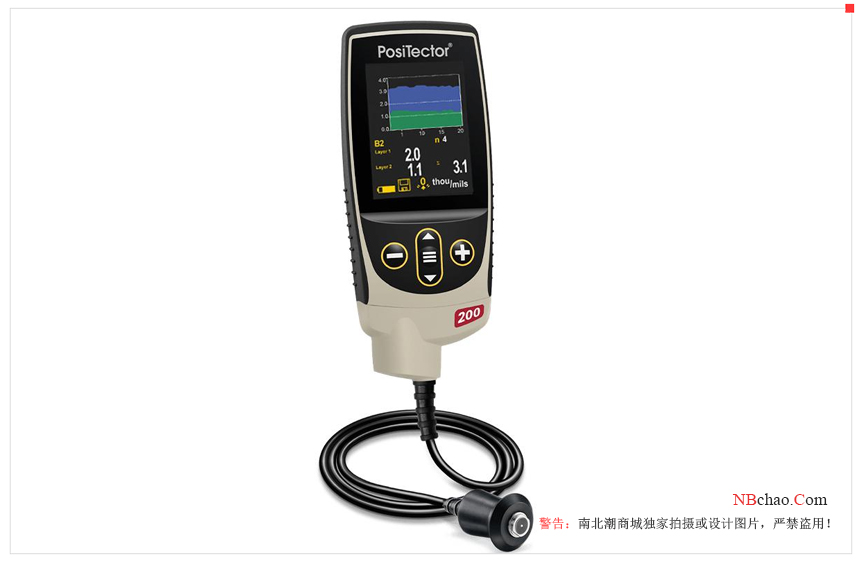
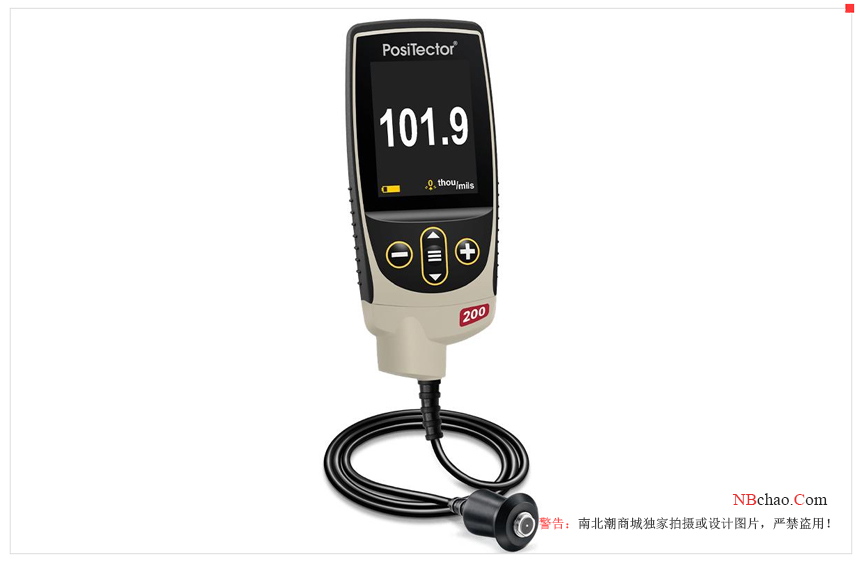
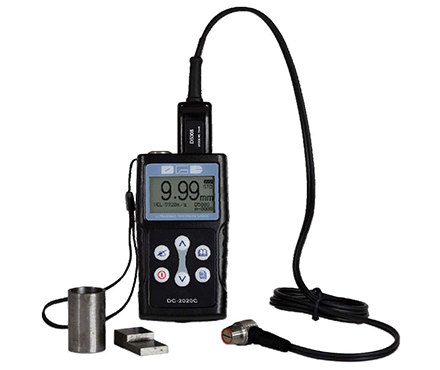
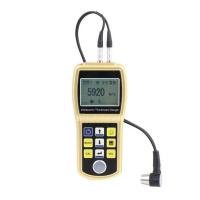
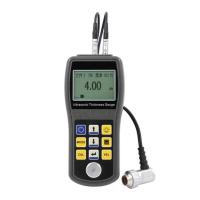
The Defelsko Ultrasonic Thickness Gauge is via a coupling gel that travels to the coating and reflects the density difference from any surface. Coating thickness readings are obtained by measuring the time it takes for an ultrasonic signal to travel from the probe to the coating/substrate interface and back. B-type Thickness Gauge is mainly used to measure the thickness of polymer coating on plastic, wood and other substrates; C-type can measure glass fiber, concrete, etc.; this article introduces some common problems and solutions of PosiTector series ultrasonic Thickness Gauges.
The instrument cannot be turned on
Make sure the positive and negative poles of the battery are correct
Replacement battery
After the instrument is turned on, it cannot maintain
Replace the battery, if it cannot return to normal, you need to return to the factory for repair
The measured value is lower than the actual value
Increase the value of gate A when possible due to the roughness of the measurement surface
The measured value is higher than the actual value
When possible, since the instrument measures the total thickness of the coating and substrate, reduce the value of gate B
Poor measurement accuracy or repeatability
Check the gate value and perform a thickness calibration to ensure the instrument is set up for your application
Error message during zero point adjustment
Lift the probe in the air to ensure that there is no couplant at the probe
Replacement battery
If the problem cannot be solved, return to the factory for repair