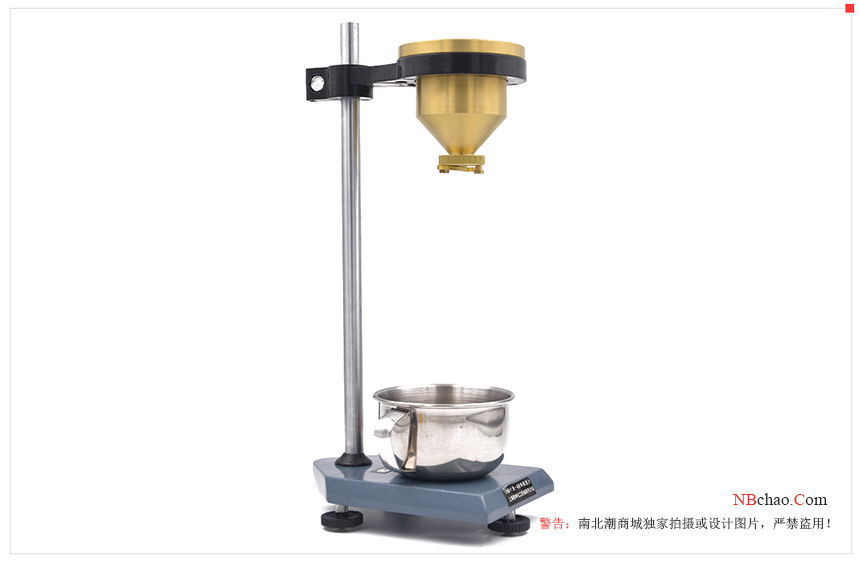
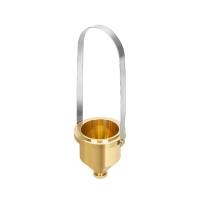
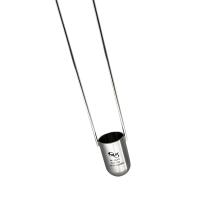
The Viscosity Cup is a simple shape and structure, but it is commonly used in the coating industry. The viscometers used in various countries in the world can be divided into Tu-1/Tu-4 Viscosity Cups, ISO Flow Cups, Ford ( Ford) cup, DIN cup and other different models. During the measurement process, two identical Viscosity Cups may cause measurement errors due to different workmanship, or it may be caused by the unreasonable operation of the user. This article describes some considerations for using Viscosity Cups.
1. Before or after measurement, use gauze dipped in the solution to wipe the viscometer clean and dry it in the air or blow dry with cold wind. No residual liquid from the past measurement solution is allowed to adhere to the cup or flow out of the tube hole. The inner wall and outflow hole of the cup should be kept clean, and the original roughness should be maintained when observing the light.
2. The test should be carried out in a constant temperature room at (25±1)°C, and the cross platform should be adjusted to maintain a horizontal position.
3. Stir the test solution evenly, filter it through a sieve with no less than 567 holes/cm2 and keep it at a temperature of 25°C±1°C.
4. Fill the test solution into the viscometer, and block the outflow hole with a finger at the same time. After filling, use a metal or glass plate to scrape the cup flat, and scrape the excess test solution into the groove on the edge of the viscometer.
5. Let go of your finger, the test solution flows out vertically, take it up with a cup, start the stopwatch at the same time, the test solution flows out into a line, stop the stopwatch when it is disconnected, the measured time represents its viscosity, and the unit is second.
6. For the second parallel test, the error shall not exceed 3% of the average value.
7. After each use, the first method should be used to clean it.