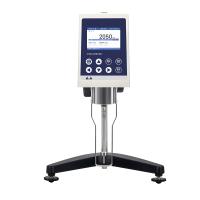
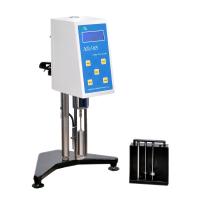
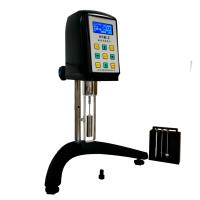
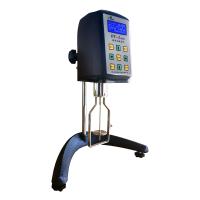
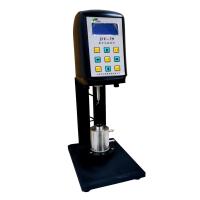
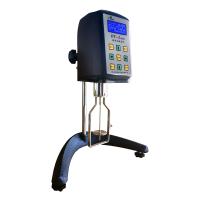
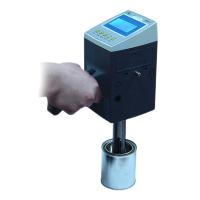
 Rheology, that is, the flow and deformation properties of the coating, which includes viscosity, thixotropy, yield value and flow curve. We all know that when the paint is stirred or shaken, the viscosity will decrease, but after stopping stirring and standing for a period of time, the viscosity will rise again. This property of coatings is the so-called "thixotropy", which is the main content of rheology.
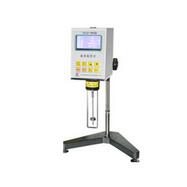
To measure the thixotropy of coatings, a Rotational Viscometer can be used. Its structure is generally two concentric circles, the space between the circles is small, and one of the two cylinders can be rotated. It can be driven by a motor, and the rotation speed can be adjusted. The internal cylinder rotates at a given lower rotation speed (about 6 to 120 rotations per minute), so that the flow conditions of the liquid conform to the simple motion of the child. It can be converted into absolute viscosity value by measuring the force caused by the inner cylinder outside.
When measuring thixotropy, an appropriate rotor can be selected according to the viscosity range of the paint. First start at low speed, gradually increase the speed, and read each reading; then gradually increase and decrease the speed and measure again, and also record each reading, and multiply each reading by a specific coefficient in the coefficient table to obtain the absolute viscosity (centipoise). After plotting, a circular curve can be obtained, which represents the thixotropy and its size of the tested paint.