The coating pigment commonly used today in inkjet printing paper is silica, especially fumed silica. Silica has the characteristics of small particle size, large specific surface area, and many microporous structures. These characteristics enable silica to quickly absorb ink and have excellent ink-fixing characteristics, thereby ensuring the image quality of inkjet printing paper, so silica is an optional pigment for inkjet printing paper. However, the price of silica pigment is high, and when its solid content is too high, the viscosity of the coating is likely to increase significantly, and because of its large specific surface area, the amount of adhesive used is large. These disadvantages limit the application of silica in inkjet printing paper.
Therefore, it is very necessary to find a pigment to replace or partially replace silica. As a promising alternative pigment, zeolite is used as a coating pigment for inkjet printing paper. It has the following characteristics: high hydration, low density and large pore volume and stable structure during dehydration, and a large number of pore structures inside, which can Exchange with a large number of cations, absorb gas and water vapor. Zeolite as a coating pigment can overcome the limitations of traditional pigments and other specialty pigments in various paper coating applications, such as eliminating mottling and strike-through, improving ink dot fidelity, etc.
In this experiment, the suitable dispersion conditions of zeolite are discussed through the effects of the type and amount of dispersant, the concentration of dispersion liquid, the speed of disperser, the dispersion time and the stability of dispersion liquid on the dispersion performance of a micron zeolite.
experimental design
In order to ensure the dispersion effect, when screening the dispersant, the dosage of the dispersant should be appropriately increased, the speed of the disperser should be slightly higher, and the dispersion time should be extended appropriately; 60 min, dispersant concentration 50%, dispersant dosage 3%) to study the dispersant effect of the selected 6 dispersants to obtain a suitable dispersant. Then, the concentration of the zeolite dispersion, the amount of the selected suitable dispersant, the speed of the disperser and the dispersion time were discussed by using the single factor control variable method, and the suitable dispersion conditions of the zeolite pigment were obtained.

Zeolite Dispersion
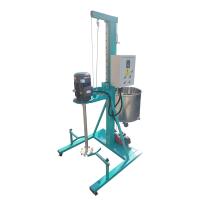
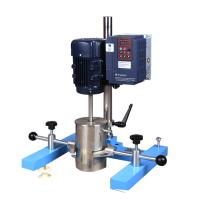
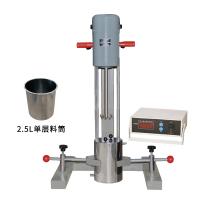
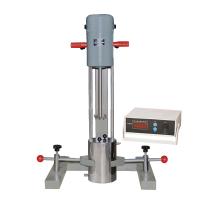
(1) Weigh a certain quality of zeolite powder, and measure a certain quality of distilled water. Accurately weigh a certain mass , and use part of the measured distilled water to dissolve the dispersant several times and transfer it to the dispersion bucket of the high-speed disperser.
(2) Start the disperser and mix the dispersant in distilled water for 5-10 minutes at a low speed (about 400 r·min-1) to completely dissolve the dispersant in the water. Then slowly add the zeolite powder into the dispersing bucket, making sure that the pigment powder does not splash out.
(3) After adding the zeolite, rinse the inner wall of the dispersing barrel with the reserved distilled water, then slowly increase the speed of the disperser to the required speed, and disperse for a certain period of time according to the needs of the experiment.
(4) After the zeolite dispersion is completed, the zeolite dispersion is sieved, and its particle size and viscosity are measured by LS 13320 laser particle size diffractometer and NDJ-4 Rotational Viscometer respectively.
Evaluation of Zeolite Dispersion Effect
The purpose of dispersing the zeolite is to make the zeolite pigment dispersion neither aggregate nor agglomerate, and make the basic particles of the zeolite evenly distributed in the water, even if the particle size of the zeolite pigment particles is as close as possible to the primary particle size of the zeolite pigment and Keep the entire zeolite dispersion system stable for a certain period of time. For the evaluation of zeolite dispersion effect, it can be divided into two methods: direct method and indirect method. The direct method is to use a particle size analyzer to measure the average particle size and particle size distribution of the zeolite dispersion, and the indirect method is to measure the relative sedimentation volume and dispersion viscosity of the zeolite dispersion [9]. Since the indirect method cannot truly reflect the particle size and particle size distribution of the zeolite pigment dispersion, and there are certain errors in the indirect method, the evaluation of the indirect method is not objective and accurate enough. Therefore, in this experiment, the direct method (detecting the particle size of the dispersion liquid with a particle size analyzer) was used as the main evaluation method for the dispersion effect of zeolite, and the indirect method (measuring the viscosity of the dispersion liquid with a Rotational Viscometer) was used as an auxiliary evaluation method.