For automotive galvanized sheets, in addition to excellent corrosion resistance, good formability is also required. Generally, the formability of galvanized steel sheets is determined by the microstructure of the substrate, intermediate layer and coating. Since the coating on the surface of the galvanized sheet is inconsistent with the performance parameters such as the elastic modulus and yield limit of the substrate material, its interface friction and formability are also different from those of ordinary steel sheets. The substrate and the coating will have different deformation states during the forming process. Residual stress is generated at the interface, and failure forms such as interface peeling and coating cracking appear, which affect subsequent processing and use.
Based on the cupping test, this paper studies the stamping formability of the zinc steel sheet with and without lubrication, analyzes the influence of the zinc coating on the stamping formability through microstructure observation, and discusses the failure mechanism of the zinc coating.
test equipment
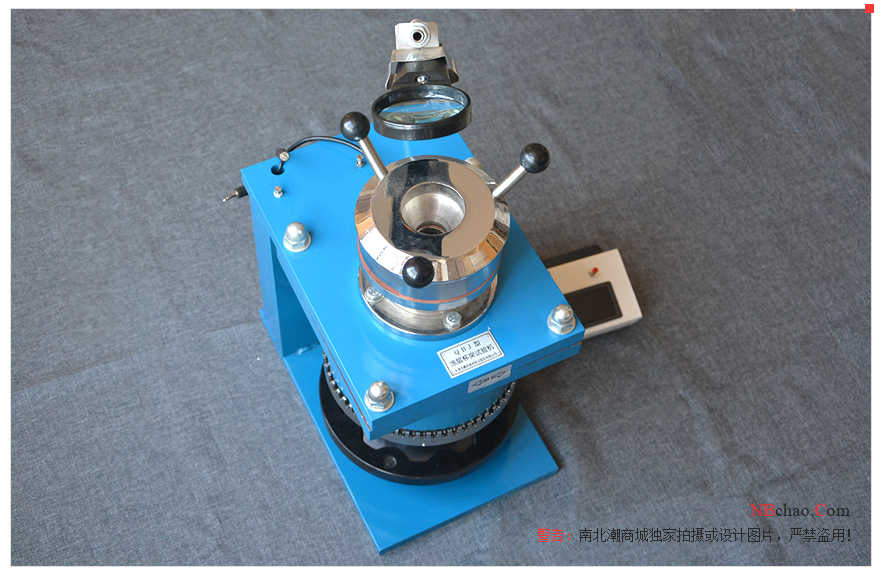
The cupping test is a test method for evaluating the formability of metal sheets, also known as the Erichsen test or the Erichsen cupping test, which is the oldest and most popular of the sheet metal formability tests. During the test, use the ball head punch to push the metal sheet whose periphery is pressed by the die and the blank holder into the die to form a hemispherical bulge until cracks appear on the top of the bulge. The test uses a quasi-20mm hard steel ball or hemispherical punch to press the metal sheet into a die with an inner diameter of 27mm and a fillet radius of 0.75mm. The edge of the sheet is pressed between the die and the blank holder. During the test, the metal sheet is pushed into a hemispherical bulge by the punch. The indentation depth of the punch when the top of the bulge is necked or visible (transparent) cracks is taken as the test index, which is called the cupping value (IE value). The larger the cupping value, the better the formability. Therefore, the cupping value can be used to evaluate the formability of the sheet.
Experimental protocol
A semi-automatic cupping test machine is used, hot-dip galvanized steel sheets of the same batch, furnace, and thickness are selected, and cups are cupped with and without lubrication. After flushing the cup, cut the sample along the meridian plane. The change and failure mode of the galvanized layer at three different positions were observed, and the failure mechanism of hot-dip galvanized steel sheet stamping was discussed.
Test materials and parameters:
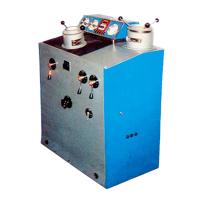
① The test instrument is GBW-608 semi-automatic cupping test machine. According to the GB4156-84 standard, the cupping speed is controlled at about 10mm/min during the test, and the clamping force of the sample is 10kN[5].
②The test material is Baosteel continuous hot-dip galvanized steel sheet (brand DC51D+Z), the plate thickness is 0.8mm, the coating thickness is 6μm, and the coating quality is 40g/m2. The test surface is flat and the edges are smooth, and it is cleaned and wiped clean with alcohol before the test.
③ In order to prevent the edge metal from flowing into the die, the size of the sheet should be large enough, the sample is square, and the size is 90mm×90mm.
④ The lubricant is 9700 type deep drawing lubricant, which is evenly coated on the surface of the sample and the punch.
⑤ Microstructure photos were taken with S-570 linear scanning electron microscope.