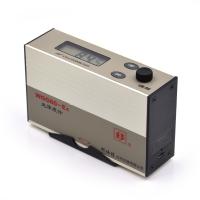
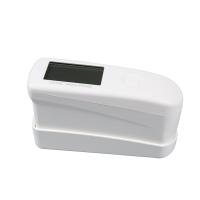
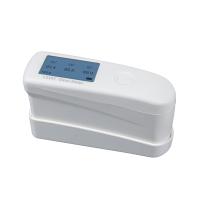
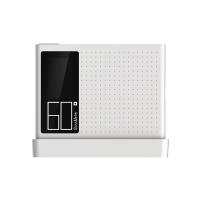
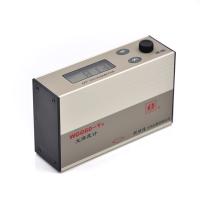
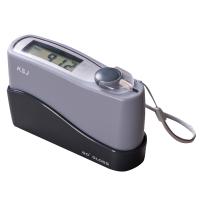
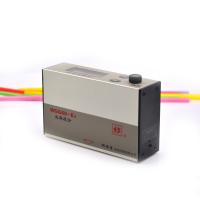
Gloss on cotton is a complex issue, which is related to the optical properties of individual fibers , as well as the state of fiber alignment . In order to quantitatively measure the gloss of cotton, several methods have been designed at home and abroad. All of these methods generally measure the reflected light on the surface of the sample that is a function of the angle of the incident light source . The following mainly introduces a method designed by us and three methods abroad.
(1) Cotton color meter
Use 60 ° illumination on both sides and 0° receiving light, expressed by gloss .
Glossiness =Y1/Y2·100
In the formula: Y1 is the laser value of the green beam ;
Y2 is the green light stimulation .
The trial results show that the coincidence rate of the gloss measured by the instrument and the gloss measured by the eye reaches 98.8%.

(2) Cotton color measuring instrument
Using 45° illumination on both sides and 0° receiving light, expressed in reflectance Rb
Reflectivity Rb = Y1/Y2·100
In the formula: Y1 and Y2 are the same as above.
(3) Gloss meter
The incident angle is fixed at 45 ° from the normal, so the specular reflection angle is 45°, and the diffuse reflection is received at 0 ° from the normal , expressed in contrast gloss %.
Contrast gloss%=(SD)/S 100
In the formula: S -45° specular reflectance
Diffuse reflectance at 0°
(4) φT-2 gloss meter
The instrument is used to measure the gloss of cotton, which is represented by the gloss coefficient K.
K=fc/ft
In the formula: fc - the highest reflection coefficient measured by the instrument,
ft is the reflection .