The table below lists the main tests performed on powder coatings.
The reactivity of thermosetting coating powders was evaluated by gel time and inclined plate flow.
A simple test called blocking or sintering can be used to infer the resistance of coating powders under storage conditions. Caking is often a challenge for products with low glass transition temperatures during transport.
The glass transition of the coated powder can be measured by differential scanning calorimetry.
| test | Measurement | need | standard |
| gel time | Gel time (seconds) | Hot Plate, timer | ASTM D4217-07(2017); ISO 8130-6:1992 |
| Inclined plate (flat) flow or Hot Plate melt flow | Melt flow (mm) | A metal or glass plate on a scale, pill press, oven, holder or Hot Plate at an angle | ASTM D4242-07(2017); ISO 8130-11:2019 |
| particle size | Particle size distribution | Standard sieve or laser diffraction particle size analyzer | ASTM D1921-18; ASTM D5861-07(2017); ISO 8130-13:2019 |
| clogging or sintering | storage stability | oven, weights | ISO 8130-8:1994 |
| Dry Stream (via Fluidization) | fluidization coefficient | Fluidized bed, ruler, timer | ISO 8130-5:1992 |
| Main stream (according to angle of repose) | cone height or angle of repose | funnel, protractor | ASTM D6393-14; ISO 4324 |
| Specific gravity (by calculation) | Material Weight to Volume Ratio | Density and quantity of raw materials used in the recipe, calculator | ASTM D5965-19 |
| Specific gravity (by gas displacement) | Material Weight to Volume Ratio | Gas pycnometer, balance | ASTM D5965-19; ISO 8130-2: 1992 |
| glass transition temperature | Glass transition temperature, °C | Differential Scanning Calorimeter | ASTM E1356-08(2014); ISO 16805:2003 |
gel time
One of the first tests performed on thermoset coating powders is gel time. This test measures the time required for thermoset powders to melt, flow and crosslink.
In this simple test, a small amount of powder (approximately 0.25 grams) is placed on top of a polished Hot Plate at a temperature sufficient to induce a curing reaction (typically 180-200°C).
The timer starts and the powder is stirred with a wooden spatula (tongue depressor) until it solidifies into a solid and cannot be stirred any more.
The time is recorded along with the temperature of the Hot Plate.
This test is very operator dependent. How quickly a person stirs the powder on the Hot Plate can affect the measured gel time. However, this test is a quick way to ensure that all ingredients are included in the batch.
If the gel takes too long or the powder never "sets," this could indicate missing or wrong ingredients in the batch.
The criteria used for gel time are:
gel time
ASTM D4217-07(2017) Standard Test Method for Gel Time of Thermosetting Coating Powders
ISO 8130-6:1992 Coating powders Part 6: Determination of gel time of thermosetting coating powders at a given temperature
Inclined plate flow, inclined plane flow or Hot Plate melt flow
The extent to which the powder melts and sheds on the substrate is a very important aspect of the final coating step in coating formation. Inclined plate flow is a simple and effective method for evaluating the melt viscosity of paint powders as they melt and crosslink.
A given amount of powder is pressed into pellets, placed on a surface inclined at an angle (typically 65° or 35°), and maintained at a given temperature (usually at the specified temperature to cure the coating).
The pills will melt and flow down the heated sloped surface. The distance covered by the molten powder is a characteristic of a particular formulation.
The sloped surface is either a plate placed in a furnace, or the polished metal surface of a heated plate that has been fixed at a specific angle.
Typically, textured and fast cure formulations have very short melt flow. In both cases, melt flow was inhibited. Texturizers tend to reduce melt flow. For fast-cure systems, the powder is cross-linked before being extruded.
Gel time and inclined plate flow were used as a first check of the reactivity of thermoset coating powders.
If the gel time or melt flow is out of specification, it could mean that there is a problem with the raw material, or that the stoichiometry of the formulation is incorrect.
These two tests are mainly used to compare the production consistency of one batch of coating powder with another batch of powder.
Gel time and melt flow depend on the chemistry of the formulation.
The reference standard for inclined plate (surface) flow is:
inclined plate (planar) flow
ASTM D4242-07(2017) Standard Test Method for Inclined Plate Flow of Thermosetting Coating Powders
ISO 8130-11:2019 Coating powders - Part 11: Flow test on inclined plane
dry flow and fluidization
The key to the application of powder coatings is the degree of fluidization of the powder. Powders can be applied by fluid bed dipping or electrostatic spraying. In both cases, the powder is mixed with compressed air in a fluidized bed. This powder-air mixture acts like a fluid.
For electrostatic spray applications, this mixture is pumped from the bed to the Spray Gun through a hose.
Continuous and consistent delivery of powder to spray equipment is important to achieve a uniform coating. This depends on the degree of fluidization of the powder.
Factors affecting the degree of powder fluidization are:
particle shape
Particle size distribution
chemical composition
moisture content, and
Tendency of powder agglomeration
To see how the powder flows by itself (without air), measure the angle of repose or cone height.
In this test, a certain amount of powder is poured onto a horizontal surface to form a cone (think of it as a hill or hill).
Measures the angle formed by the sides of the cone and gives an indication of dry powder flow.
This test is primarily used to compare one batch of powder to another.
The angle of repose does not directly measure the fluidization ability of the powder.
To directly measure the degree of fluidization of a powder:
Put a given amount of powder into a small fluidized bed or flow meter.
Measures the height of powder during and after fluidization and the rate at which fluidized powder flows through a designated orifice.
From these measurements, the fluidization factor is calculated.
The reference standards for taper and fluidization height are:
angle of repose
ISO 4324: Surfactants - Powders and granules - Measurement of angle of repose
fluidized
ISO 8130-5:1992 Coating powders – Part 5: Determination of flow properties of powder/air mixtures
Particle size distribution
The particle size and particle size distribution of the powder have a great influence on the fluidization, charging and application of the powder. Generally, thermoplastic coating powders have larger particles than thermoset coatings. For example, thermoplastic powders have an average particle size in excess of 100 µm, while typical thermoset powders have an average particle size in the 50 µm range. The fines level or the fraction of the particle size distribution below 10 µm is responsible for the most problems in thermoset applications. Small particles tend to agglomerate which can cause all types of problems in fluidization and spray applications. It is important to know the complete particle size distribution of a powder, not just the median or average particle size.
There are various ways to measure particle size distribution. Sieve analysis and laser diffraction are commonly used in powder coatings.
In sieve analysis, a given amount of powder is passed through a calibrated sieve.
The amount of powder that passes through (or is retained by) two or three calibrated screens gives a fairly rough idea of the particle size distribution.
A more complete picture of the particle size distribution can be obtained by laser diffraction methods.
In these methods, powder particles are passed through a laser light source.
The particle size is determined by the amount of light it diffracts.
The analyzer will output a graphical representation of the particle size distribution along with other calculated values.
The laser diffraction method is suitable for particles in the size range 1-300 µm.
For some thermoplastic powders, the particle size distribution may contain fractions above 300 µm and different optical characterization methods should be used.
Due to the irregular shape and size of the particles, the particle size distribution determined using sieve analysis can differ significantly from that determined by laser diffraction.
It is important to specify which method is used to determine the particle size distribution, since results from different methods cannot be compared.
The test methods for particle size distribution are:
Particle size distribution
ASTM D1921-18, Standard Test Method for Particle Size (Sieve Analysis) of Plastic Materials
ASTM D5861-07(2017), Standard Guide for the Significance of Particle Size Measurement of Coating Powders
ISO 8130-13:2019 Laser Diffraction Particle Size Analysis
Sticking, sintering or storage stability
A paint powder that fluidizes and sprays well in a controlled laboratory environment might not after you put it in a box in a hot warehouse. Storage or blocking tests are designed to simulate what happens to powders after packaging, shipping and storage.
Storage tests are performed by placing a known amount of powder in a container and placing the container in an oven maintained at a constant temperature for a period of time.
During the test, a weight is placed on top of the powder.
After a certain period of time (one week to one month), the powder is removed and evaluated for physical and chemical changes.
If the powder melts into unbreakable clumps, it can cause problems in the field.
If the powder looks fine physically, gel and flowability should be measured and compared to before storage testing.
It's also a good idea to spray out a panel to ensure the behavior of the powder is not affected by storage conditions. This will help us understand the chemical stability of powder coatings.
If the powder coating has physical agglomeration, which can be broken down into powder again, it can be used. But if it is chemically changed, it cannot be used.
Guideline:
storage stability
ISO 8130-8:1994 Evaluation of storage stability of thermosetting powders
glass transition temperature
Glass transition temperature is a second-order thermal transition that is characteristic of amorphous and semicrystalline polymers. It's the temperature at which glassy, brittle resin turns into a sticky, taffy-like material. It is not the melting transition point, but involves the material becoming "softer". A detailed description of Tg can be found here.
Most resins used in thermoset powder coatings have a Tg range of 50 to 70°C. If the Tg of the coating powder is close to room temperature (ie below 50°C), the powder particles will tend to fuse together and form unsprayable clumps.
The Tg of a formulated coating powder is not only dependent on the resin, as crosslinkers and additives can alter the glass transition temperature.
Knowing the Tg of the uncured powder is especially important for low temperature cure or fast cure systems since these formulations often contain high amounts of catalysts, crosslinkers and/or use lower Tg resins. If Tg it is low, special handling (air conditioned transport and storage) is required.
Differential Scanning Calorimetry (DSC) is an alternative technique for measuring Tg and other thermal transitions of coating powders. DSC is a thermal analysis technique that measures how the heat capacity of a material changes with temperature.
The criteria for determining the glass transition temperature using DSC are:
ASTM E1356-08(2014) Standard Test Method for Specifying Glass Transition Temperature by Differential Scanning Calorimetry
ISO 16805:2003 Paint and varnish binders - Determination of glass transition temperature
proportion
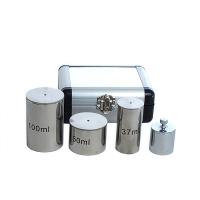
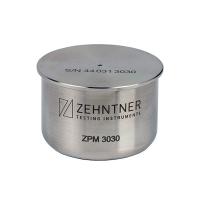
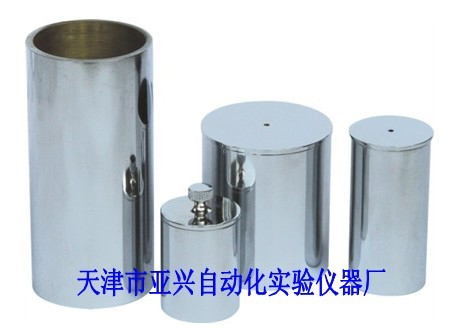
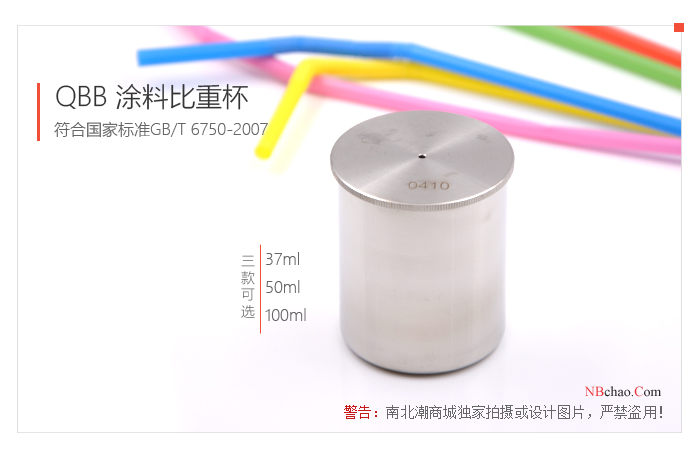
Density is defined as mass per unit volume. Specific gravity is the density of a material at a given temperature divided by the density of water at a given temperature. The reference temperature is usually 20°C. Density is converted to specific gravity by dividing the density by the density of water at a given temperature (0.99823 g/cc at 20°C).
The specific gravity of the powder is required to determine how much area a given amount of powder will cover. This number is needed to calculate the all-important real cost per unit area covered at a given film thickness.
There are three main methods to obtain the specific gravity of coating powder:
Displacement – A known amount of powder is placed in a non-solvent and the volume change is measured. The mass and volume of the sample are now known and the specific gravity can be calculated.
Calculation - Calculates the specific gravity of the paint powder using the specific gravity of each ingredient in the formulation and the amount of each ingredient.
Gas Pycnometer - Can operate with air or helium. The device directly measures the volume of air displaced by a known weight of powder.
Specific gravity is the key to determining how much powder is needed to cover a given amount of substrate. It is also used to calculate the cost per unit area of coating.
Formula to calculate powder coating coverage (ft 2 /lb):
Actual coverage=192.3/specific gravity/dry film thickness×transfer efficiency
Where, 192.3 ft 2 /lb is the theoretically suitable coverage, a pound of powder with a specific gravity of 1.0, applied at a thickness of 1.0 mils, will deliver 100% efficiency.
Transfer efficiency is the percentage of powder sprayed onto a part that is not wasted as overspray. Transfer efficiency is largely dependent on how the operator applies the powder, how well the part is grounded, the gun settings, and the powder itself. It can be as low as 25% or as high as 85%.
Dry film thickness is the thickness of the powder on the part, measured in mils (1 mil = 1/1000 th inch).
The reference standard for determining specific gravity is:
ASTM D5965-19 Standard Test Method for Coating Powder Density
ISO 8130-2:1992 Determination of density by gas comparison pycnometer